By using this site, you agree to the Privacy Policy and Terms of Use.
Accept
Travel Radar - Aviation NewsTravel Radar - Aviation News
  • Breaking News
  • Aviation
    • Aircraft
    • Airlines
    • Airshow & Events
    • Careers
    • Manufacturing
  • Travel
    • Airports
    • Points & Loyalty
    • Technology
    • Trip Reviews
  • Newsletters
  • Aircraft for Sale
Reading: IndiGo Flight First to Use India’s New Navigation Technology
Share
Sign In
Notification Show More
Font ResizerAa
Font ResizerAa
Travel Radar - Aviation NewsTravel Radar - Aviation News
  • Breaking News
  • Aviation
  • Travel
  • Newsletters
  • Aircraft for Sale
  • Breaking News
  • Aviation
    • Aircraft
    • Airlines
    • Airshow & Events
    • Careers
    • Manufacturing
  • Travel
    • Airports
    • Points & Loyalty
    • Technology
    • Trip Reviews
  • Newsletters
  • Aircraft for Sale
Signin Sign In
Follow US
Copyright © Travel Radar Media Ltd. 2025 | All Rights Reserved
Travel Radar - Aviation News > News > Aviation > Airlines > IndiGo Flight First to Use India’s New Navigation Technology
AirlinesAviationTechnology

IndiGo Flight First to Use India’s New Navigation Technology

Melissa Thomas
Last updated: 3 July 2026 07:49
By Melissa Thomas
5 Min Read
Share
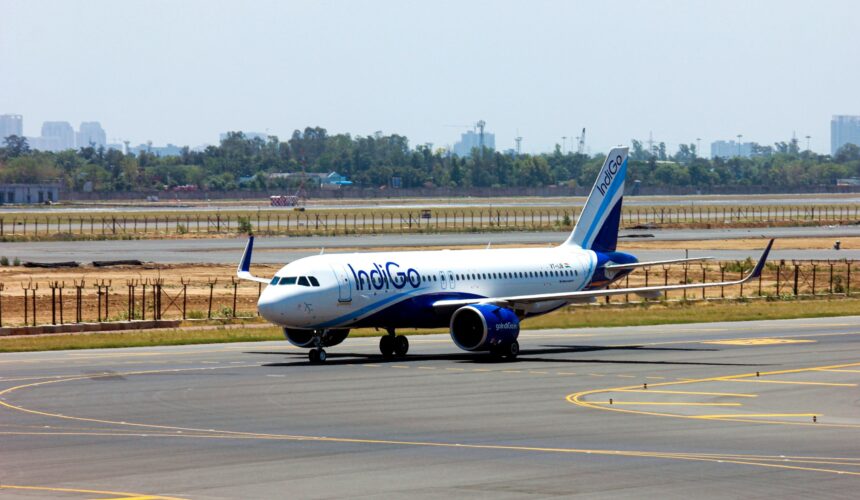
An IndiGo plane is on an airport taxiway. It is white with blue branding on the side, underbelly, engines, and tail. It is positioned in the centre of the image wit the nose facing left and the tail facing right. A line of trees and bushes beyond a field can be seen in the background, and the top of the image shows a grey sky.
The IndiGo A320 has become the first passenger jet to land with the new technology © Rudraksha Banijhal
SHARE

A brand new aviation technology was utilised by an IndiGo flight for the first time at the end of June. The new satellite navigation system, called GAGAN, was used to safely land the passenger jet in Udaipur, representing a critical point in the development of Indian innovation in navigation technology.

A the dashboard controls in an aircraft. The hardware is black. Two screens are can be seen with maps and navigation displays visible. Sunlight beams into the cockpit from the windscreen.
The new navigation technology was developed in India © Oskar Kadaksoo

Innovative IndiGo

On June 27, it was reported that an IndiGo A320 became the first passenger jet to land using India’s new satellite navigation system, GAGAN, under the supervision of the Directorate General of Civil Aviation (DGCA). Previously, only smaller, slower aircraft powered by jet engine spun propellers called turboprop planes has used the system, which paved the way for this milestone. The A320 touched down at Maharana Pratap Airport (UDR) in Udaipur with the help of the new technology, which guides aircraft to the runway without the use of the standard ground-based equipment operating at most airports.

Built by the Indian Space Research Organisation (ISRO) in collaboration with the Airports Authority of India (AAI), GAGAN stands for GPS Aided GEO Augmented Navigation. Unlike most large airports around the world, the system does not use ground-based radio beams, and instead uses satellites located thousands of kilometres above India. It is designed to work with GPS systems to enhance their accuracy.

Because GPS signals are slowed down and bent by the electrically charged layer of the upper atmosphere as they approach Earth, GAGAN is constructed to sharpen and police signals to correct any mistakes before they reach the pilot. This is particularly important because GPS while these slight distortions and mistakes are common with all GPS signals, over India, these errors are unusually large and shift from minute to minute because the country sits beneath the equatorial ionisation anomaly.
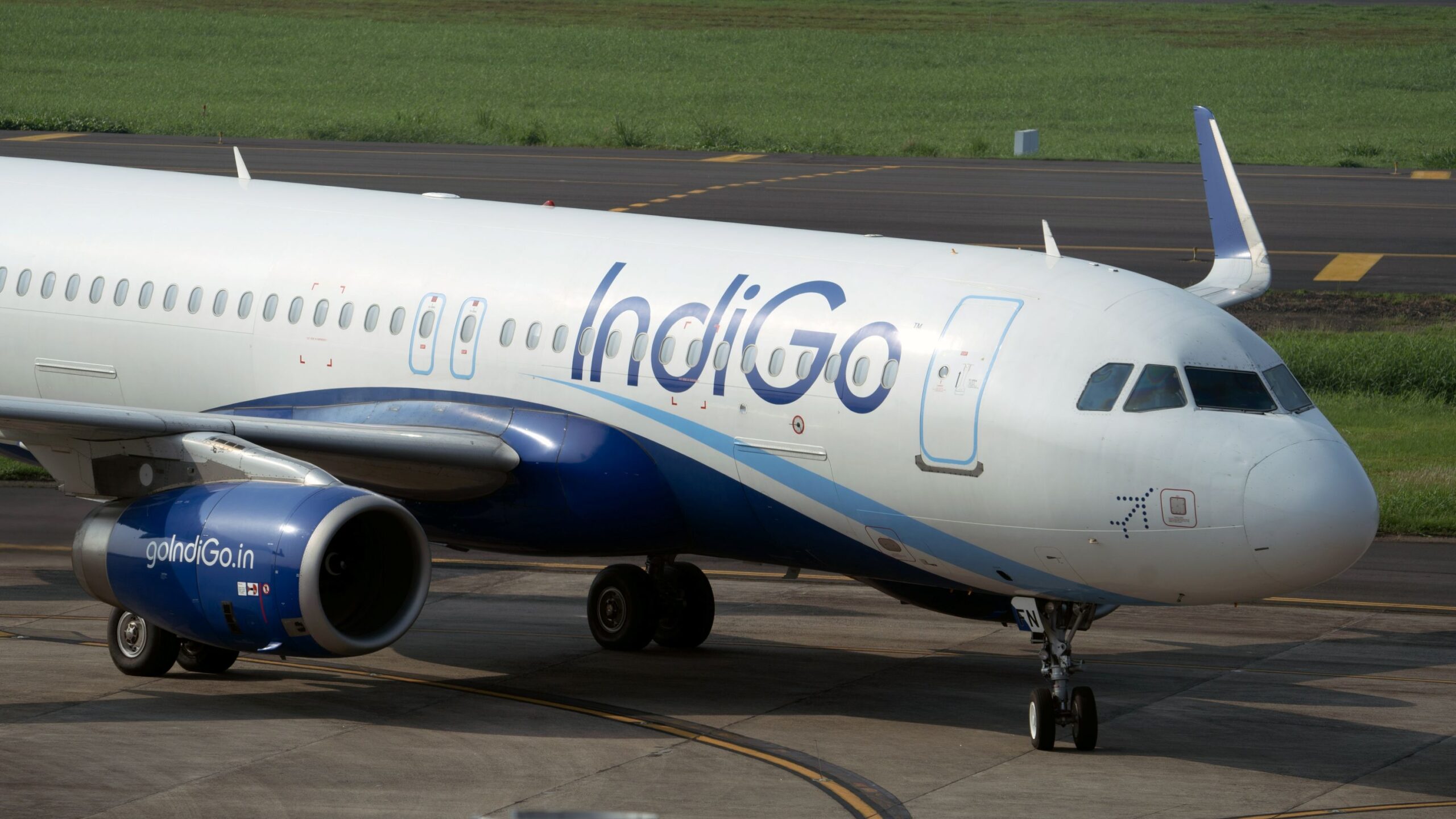
The front half of an IndiGo plane can be seen on airport tarmac. The aircraft is white with light blue and mid-blue branding on the front, engines, and underbelly. The nose is positioned lower centre right. An airport runway surrounded by grass can be seen in the background.
The IndiGo flight utilised an LPV approach, which uses left-right up-down direction © Praveen Thirumurugan

New Tech in Real Time

The new technology operates around fifteen ground stations dotted across India, each of which located at a spot so precisely surveyed that the true position is known to the centimetre. All fifteen of these station monitor GPS signals for their position, and compares the position that the GPS reports with the position it occupies in reality. As the station is unable to move, any difference reported by the GPS must be a signal error, and GAGAN functions by measuring the gap between the real position and the inaccurately reported position.

A control centre will then calculate the correction and beam it up to satellites which then broadcast the information immediately back to the aircraft. The satellites currently available for GAGAN Signal in Space (SIS) are GSAT-8 and GSAT-10 because they both occupy fixed spots that maintain a view of India at all times. The plane’s receiver will apply the correction, and will alert the pilot of the trustworthiness of the signal.

The IndiGo A320 flew using an approach that provides the pilot both left-right and up-down guidance to the runway, much like the ground based Instrument Landing System (ILS) currently operating at most airports. Significantly though, it operated without using any costly ground-based ILS equipment at the airport, which is expensive to fit and maintain. GAGAN performs the same precise guidance using a system that already exists in orbit. This landing was significant because it proved the new system’s effectiveness, within a location where the equatorial ionisation anomaly causes greater challenges.

GAGAN joins the NavIC system, a standalone satellite navigation system that provides accurate real-time positioning like GPS, in India’s increased efforts to reduce reliance on foreign navigation systems and advance their own homegrown technology.

What do you think of the new GAGAN technology? Let us know in the comments. 

You Might Also Like

Air Canada Flight 2259 Makes Emergency Landing at Halifax Stanfield International Airport
Boeing 777X to Make its Debut at Dubai Airshow
Qatar Airways Makes Two Historic Deals
Gulf Air returns to U.S flight market
Can You Gamble on a Plane? Here’s What You Need to Know
Share This Article
Facebook Twitter Email Copy Link
What’s your thoughts?
Love0
Sad0
Happy0
Angry0
ByMelissa Thomas
Editor Intern - A little about me coming soon!
Previous Article Emirates flight EK717 touching down on the runway. Emirates Third Daily Flight Between Dubai and Nairobi Launches
Leave a Comment

Leave a Reply Cancel reply

Your email address will not be published. Required fields are marked *


Stay Connected

FacebookLike
TwitterFollow
InstagramFollow
YoutubeSubscribe

Trending News

Emirates flight EK717 touching down on the runway.
Emirates Third Daily Flight Between Dubai and Nairobi Launches
Airlines Aviation Route Development
Side view of a JetBlue Airways Airbus A320 taxiing on a runway, painted in a white and dark blue livery with “jetBlue” written along the fuselage. The aircraft’s engines are deep blue with “jetblue.com” printed on them, and the tail features a mosaic pattern in shades of blue and green. The landing gear is fully extended as it rolls along the tarmac. In the background, a city skyline of tall hotels and distinctive high‑rise buildings stands against hazy mountains under a clear blue sky, suggesting an airport near an urban, desert landscape.
Mystery over JetBlue drone encounter at JFK
Aircraft Incidents & Accidents Travel Radar
Image shows concept of Bristol Airport's proposed aircraft maintenance hangar with three aircraft parked nearby
Bristol Airport reveals new maintenance hangar plans
Aircraft Airports Aviation Careers Manufacturing Route Development
de view of the Emirates Boeing 777-300ERSF converted freighter displaying Emirates livery
Emirates becomes first airline cargo carrier to deploy Boeing 777-300ERSF converted freighter
Aircraft Aviation
SpiceJet Boeing 737 MAX 8 registered VT-MXB taxiing at Chennai International Airport
SpiceJet reduces fleet capacity
Airline Economics Airlines Aviation

Travel Radar is the leading digital hub for all things aviation and air-travel. Discover our latest aviation news, aviation data, insight and analysis.


Discover

  • Latest News
  • Subscribe
  • Weekly Digest
  • Contact Us
  • Privacy Policy
  • About Us
  • Advertising
  • Media Coverage
  • Press & Events
  • Join Our Team
  • Our Brands

Signup to our Newsletter!

And get the latest aviation news via our weekly news digest!

© Travel Radar Media Ltd. 2015-2026 | ISSN #2635-0696 | Trademark #UK00003579704
adbanner
Welcome to the TR Community!

Sign in to your account

Not a member? Sign Up