By using this site, you agree to the Privacy Policy and Terms of Use.
Accept
Travel Radar - Aviation NewsTravel Radar - Aviation News
  • Breaking News
  • Aviation
    • Aircraft
    • Airlines
    • Airshow & Events
    • Careers
    • Manufacturing
  • Travel
    • Airports
    • Points & Loyalty
    • Technology
    • Trip Reviews
  • Newsletters
  • Aircraft for Sale
Reading: Flying Without Pilots
Share
Sign In
Notification Show More
Font ResizerAa
Font ResizerAa
Travel Radar - Aviation NewsTravel Radar - Aviation News
  • Breaking News
  • Aviation
  • Travel
  • Newsletters
  • Aircraft for Sale
  • Breaking News
  • Aviation
    • Aircraft
    • Airlines
    • Airshow & Events
    • Careers
    • Manufacturing
  • Travel
    • Airports
    • Points & Loyalty
    • Technology
    • Trip Reviews
  • Newsletters
  • Aircraft for Sale
Signin Sign In
Follow US
Copyright © Travel Radar Media Ltd. 2025 | All Rights Reserved
Travel Radar - Aviation News > News > Travel > Did You Know > Flying Without Pilots
AviationDid You KnowManufacturingTechnologyTravel

Flying Without Pilots

Eve Powell
Last updated: 14 April 2026 09:57
By Eve Powell
4 Min Read
Share
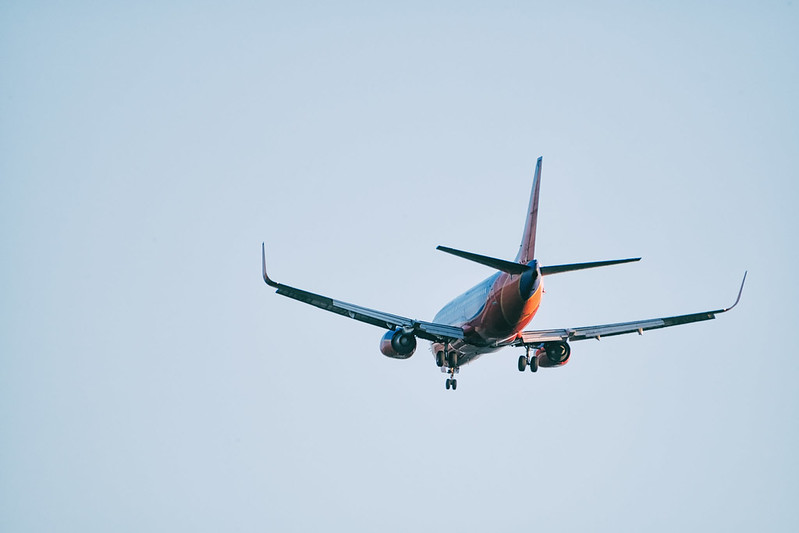
Airplane decending for landing.
Airplane decending for landing © Hugo Reynolds
SHARE

How close are pilotless passenger planes? Closer than you might expect. Aerospace companies like Airbus and Boeing are already testing key building blocks, from autonomous taxi, takeoff, and landing to AI-assisted flight decks, with industry projections pointing to single-pilot operations as early as the 2030s, according to the European Union Aviation Safety Agency (EASA).

Summary
What Full Autonomy Would Look LikeChallenges Autonomous Planes Will FaceOutlook for the Future

Modern jets can already fly, navigate, and land largely on autopilot, according to the World Economic Forum, leaving pilots to supervise systems, so while fully pilotless flights remain further off due to safety and regulation, the shift toward autonomy is no longer theoretical; it is underway.
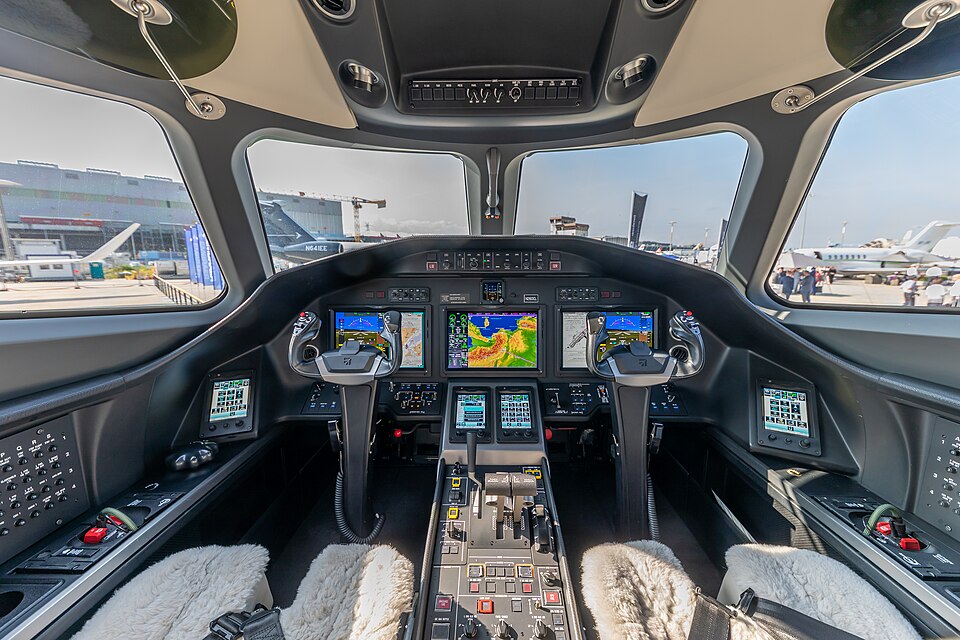
EBACE 2023, Le Grand-Saconnex cockpit.
EBACE 2023 at Palexpo, Le Grand-Saconnex © Matty Blume

What Full Autonomy Would Look Like

Aircraft manufacturers such as Boeing (via Wisk Aero), Airbus, and Embraer, along with startups like Merlin Labs and Reliable Robotics, are working toward fully autonomous aircraft, according to Forbes. Meanwhile, the Federal Aviation Administration (FAA) is preparing by developing an automation framework and advancing Advanced Air Mobility (AAM) integration programmes. Pilot unions such as the Air Line Pilots Association (ALPA) also acknowledge that the shift toward greater automation is approaching.

The hope is that full autonomy could bring safety benefits if successfully realised. By reducing reliance on human input, it has the potential to minimise errors, while AI-driven systems may be able to process vast amounts of data in real time to support faster decision-making in situations such as collision avoidance, adverse weather, and in-flight emergencies (AVI-8).
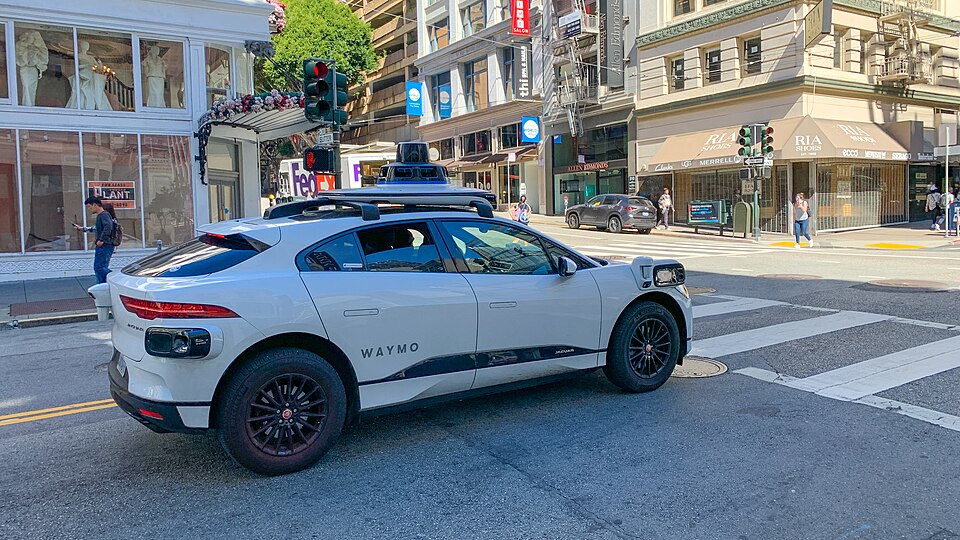
Waymo self driving car.
Waymo self-driving car in San Francisco © Daniel Ramirez

Challenges Autonomous Planes Will Face

Despite significant progress, major challenges mean that fully pilotless passenger flights won’t be available in the near future. One key issue, according to Brookfield Aviation, is safety and decision-making, as AI still struggles to handle rare, high-risk emergencies where human judgment is crucial. Technical reliability is another concern, since aviation is a near-zero-failure industry and systems must perform flawlessly.

There are also cybersecurity risks, as autonomous aircraft depend on networked systems that could be vulnerable to hacking or disruption.

Finally, removing pilots eliminates an important layer of human backup, reducing redundancy when systems fail. Public trust is another factor that must be taken into consideration, as acceptance may be the biggest obstacle, not just technology. According to the International Air Transport Association (IATA), safety, reliability, and public trust remain key barriers to adopting fully autonomous passenger flights.

Complex circuit board under a microscope
Complex circuit board © Igor Omilaev

Outlook for the Future

The most likely future of aviation seems to be hybrid rather than fully pilotless, with a gradual transition toward autonomy. In the near- to medium-term, this is expected to take the form of reduced-crew operations, such as single-pilot flights supported by increasingly sophisticated automation and ground-based assistance. Manufacturers like Airbus and Boeing are already exploring these concepts.

Over time, advances in AI, sensor technology, and air traffic management could enable more autonomous capabilities, particularly in cargo operations or less congested airspace. However, full autonomy, if it is achieved at all, is likely much further away.

Most forecasts suggest that humans will continue to play a role, whether onboard as pilots or remotely as supervisors. As a result, the future of flight is less about removing humans entirely and more about redefining their role alongside increasingly capable machines.

What do you think of pilotless aircraft? Let us know in the comments below.
You Might Also Like

Air India Adds Over 170 Weekly Flights for Q4
South Korea admits Airport Safety Failure Contributed to Jeju Air Crash Fatalities
Near Miss on KLM Flight KL1204: Highlights Aviation Risks
American Airlines Rebuilds Its Biggest Hub
Air Tahiti Nui Announces Service Between Papeete and Sydney
Share This Article
Facebook Twitter Email Copy Link
What’s your thoughts?
Love0
Sad0
Happy0
Angry0
Previous Article 748 air services plane at Eindhoven (EIN / EHEH) Netherlands 748 Air Services to Resume Domestic Flights in May 2026
Next Article Air China Airbus A330-243 landing at Roma Leonardo da Vinci Air China to Restarts Flights to India
Subscribe
Login
Notify of
guest

guest

0 Comments
Oldest
Newest Upvoted
Inline Feedbacks
View all comments

Stay Connected

FacebookLike
TwitterFollow
InstagramFollow
YoutubeSubscribe

Trending News

Crowded Terminal at Cairo Airport.
Why Airports Are More Crowded Than Ever
Airports Aviation Did You Know Travel
Over 200 Lufthansa employees positioned in front of an Airbus A350, arranged to create the number 100
Lufthansa Opens New Visitor Centre to Celebrate 100th Anniversary
Airlines Airshow & Events Aviation Did You Know
Air New Zealand Boeing 787-9 Dreamliner facing the camera with a black and white exterior, on the ground and next to a building.
Air New Zealand Launches New Sleep Pods for Economy
Aircraft Airlines Airports Aviation Travel
Airbus forms Skywise for new digital platform ©Airbus
Airbus merges Navblue with Skywise to expand digital services
Aircraft Airline Economics Aviation
The entrance of Terminal One at Perth Airport, taken in 2022. It is a bright day with blue sky in the background.
Man Charged with Sexual Assault Aboard International Flight
Airports Aviation Incidents & Accidents Travel

Travel Radar is the leading digital hub for all things aviation and air-travel. Discover our latest aviation news, aviation data, insight and analysis.


Discover

  • Latest News
  • Subscribe
  • Weekly Digest
  • Contact Us
  • Privacy Policy
  • About Us
  • Advertising
  • Media Coverage
  • Press & Events
  • Join Our Team
  • Our Brands

Signup to our Newsletter!

And get the latest aviation news via our weekly news digest!

© Travel Radar Media Ltd. 2015-2026 | ISSN #2635-0696 | Trademark #UK00003579704
wpDiscuz
adbanner
Welcome to the TR Community!

Sign in to your account

Not a member? Sign Up