UK aerospace companies are taking skills developed for aircraft into space manufacturing, where they are used to build UK satellites and equipment that supports British contributions to Mars missions. These capabilities are also expanding into in-orbit servicing and manufacture, such as Space Forge’s UK-developed ForgeStar spacecraft, designed to manufacture high-value materials in the microgravity environment of space and return them to Earth. Satellites, in turn, help aircraft navigate, communicate and be tracked.
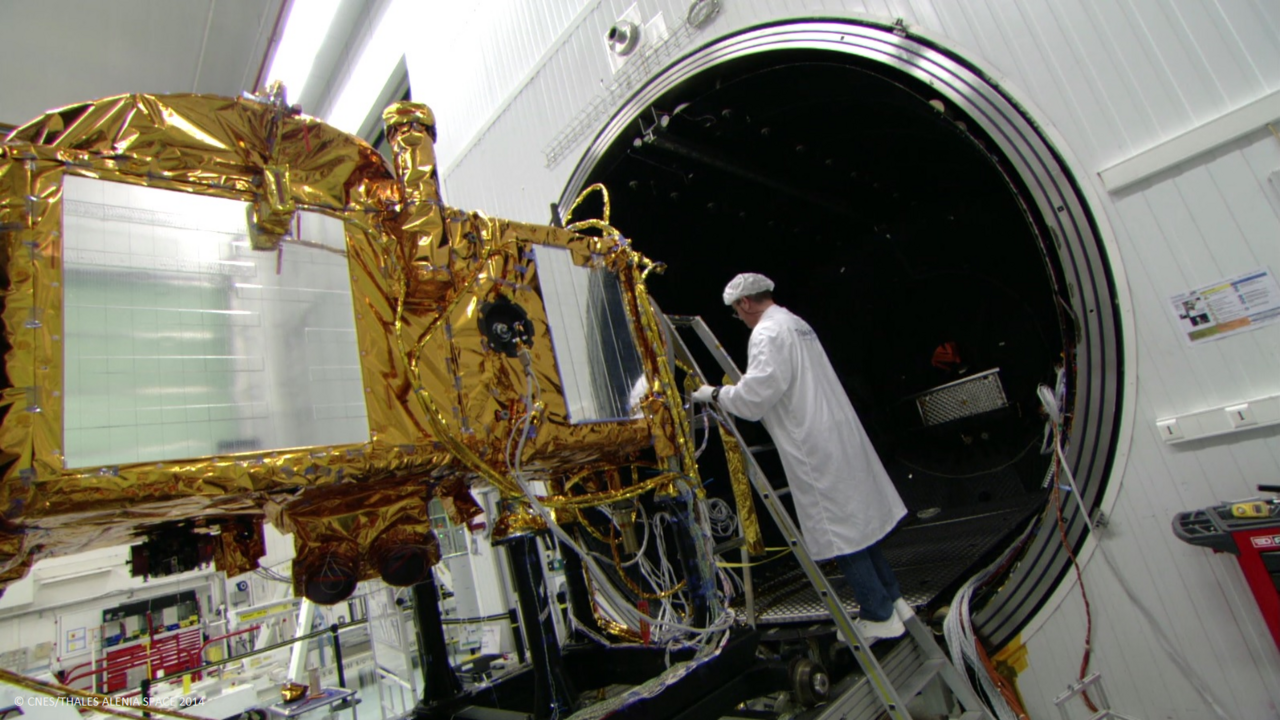
From Aerospace to Spacecraft Manufacturing
The UK space sector comprises around 2,000 organisations, according to the UK Space Agency (UKSA). Together, they employ about 55,000 people and generate around £20 billion in revenue a year. Satellite services support 18% of the UK GDP, worth £454 billion.
Much of the expertise behind space manufacturing is already familiar from aerospace. Engineers integrate and test complex systems, develop propulsion and electronics, write software and work with advanced manufacturing methods. The Space Industrial Plan reports that the industry’s research and development intensity is five times the UK average.
Labour productivity is about 2.5 times the national rate, according to the most recently published figure in Size and Health of the UK Space Industry 2024 (updated in August 2025). The UK ranked first in Europe for private space investment between 2014 and 2024. Every £1 invested through the European Space Agency (ESA) returned £7.49 directly to the economy.
UK Contributions to Mars Missions and Lunar Exploration
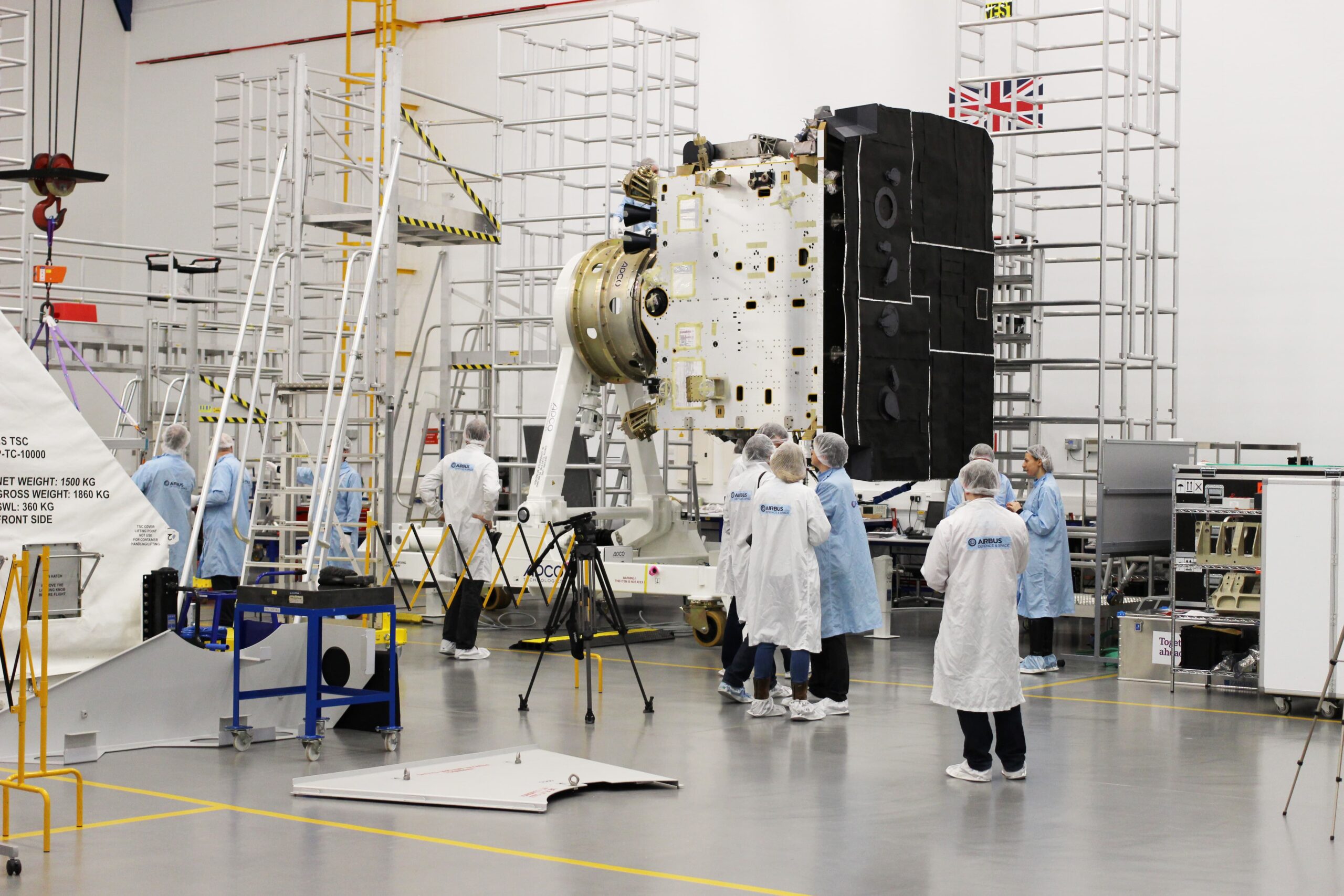
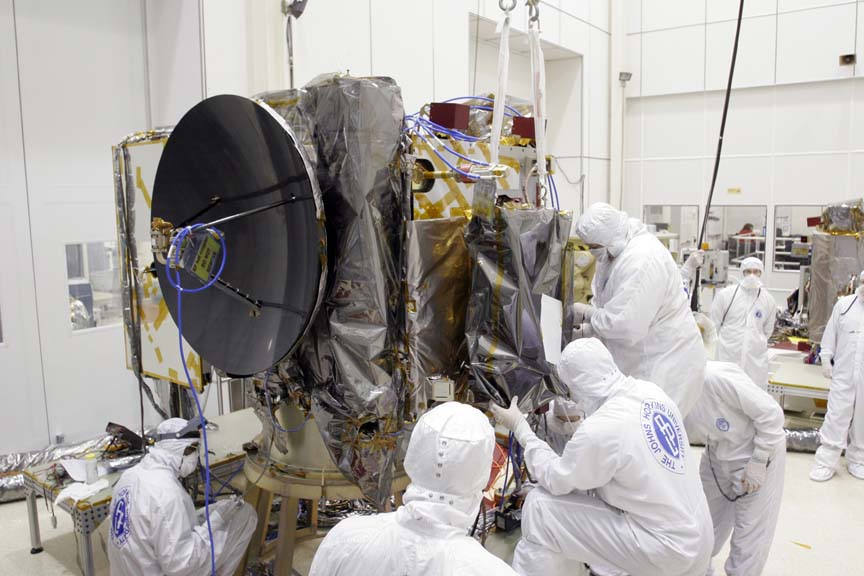
British companies have a hand in both the Rosalind Franklin Mars rover and ESA’s Vigil space weather mission. Airbus is building the rover in the UK, with launch still planned for 2028, as well as designing and building Vigil, with scientific input from University College London and Imperial College London.
A UK-developed engine from Nammo powered Firefly’s first successful commercial lunar landing. British firms are also developing the propulsion system for ESA’s Argonaut lunar lander.
Research continues on radioisotope heating units – devices that use heat from radioactive decay to keep spacecraft systems warm in extreme cold – and long-distance communications, which will be vital for Britain’s contributions to Mars missions and other deep-space programmes.
These programmes do not stop at final assembly. Teams design and test components, write the software and make complex systems work together. The work reaches beyond the main contractors to specialist manufacturers and technical services.

Space Manufacturing: Who Builds UK Satellites
The companies building UK satellites range from major aerospace groups to businesses devoted to smaller technologies. Airbus works on whole satellites and supplies the electronics, power systems and structures used in spacecraft and launchers. Thales’s wider space business covers telecommunications and navigation, along with Earth observation and exploration.
Surrey Satellite Technology Ltd builds small satellites for low Earth orbit and missions farther afield. Its work includes satellite platforms and services for Earth observation, as well as lunar missions. AAC Clyde Space develops small satellite systems and components, then provides the data services linked to them.
Spire Global builds satellites and delivers their data. Their Low Earth Multi-Use Receiver (LEMUR) satellites are used in weather and aviation, as well as by government and space services. Spire is advancing the manufacturing process, ground stations and data platforms. That lets them build systems for a particular purpose and deliver the resulting information through intuitive dashboards and software.
In-Orbit Servicing and Manufacture
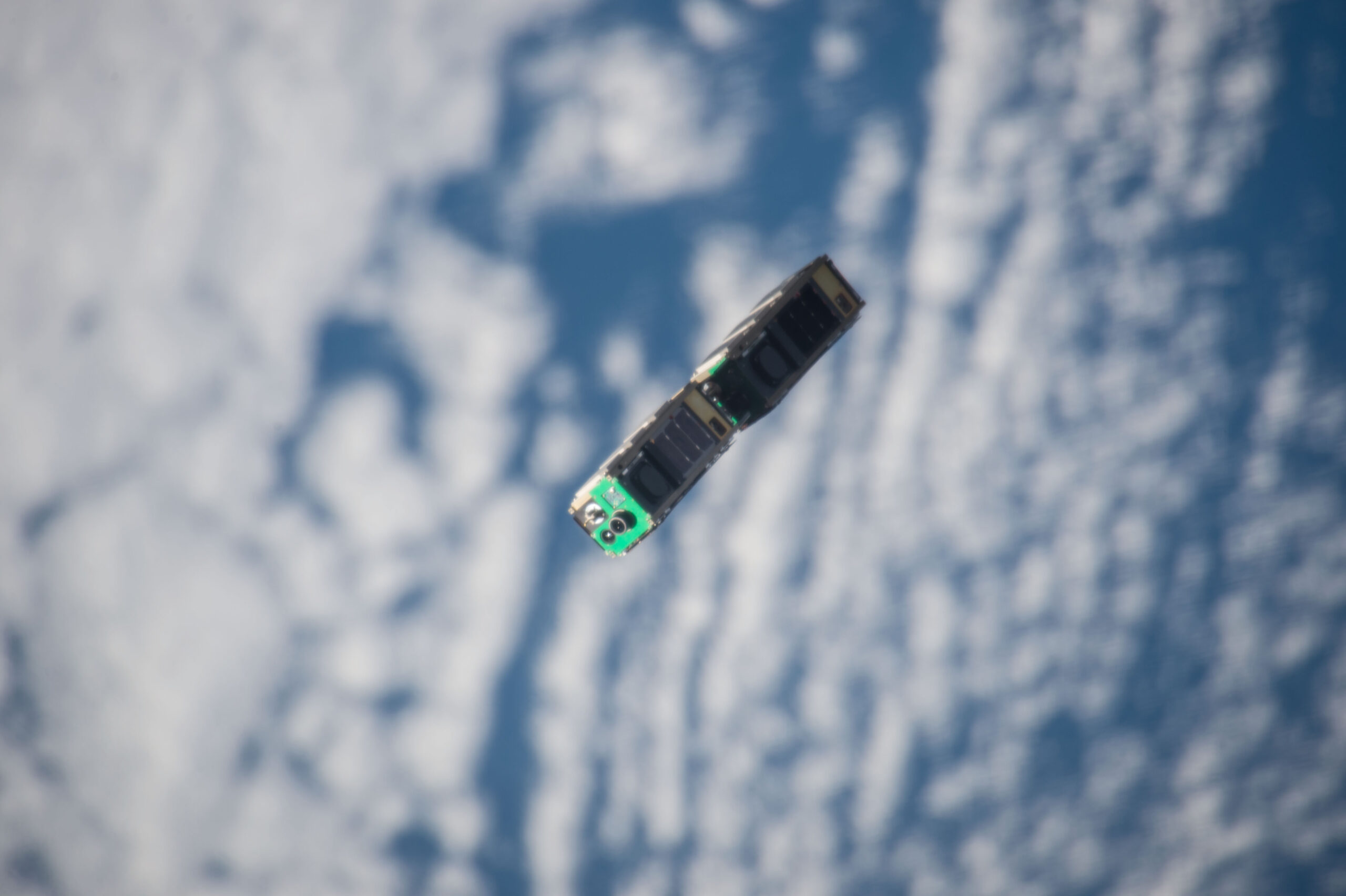
The UK government treats the ability to repair, refuel and assemble spacecraft in orbit as a priority under its Space Industrial Plan. In-orbit servicing would let operators repair or upgrade a satellite, refuel it or assemble it in space. This could keep spacecraft working for longer and reduce the need to replace them outright. The field also covers active debris removal.
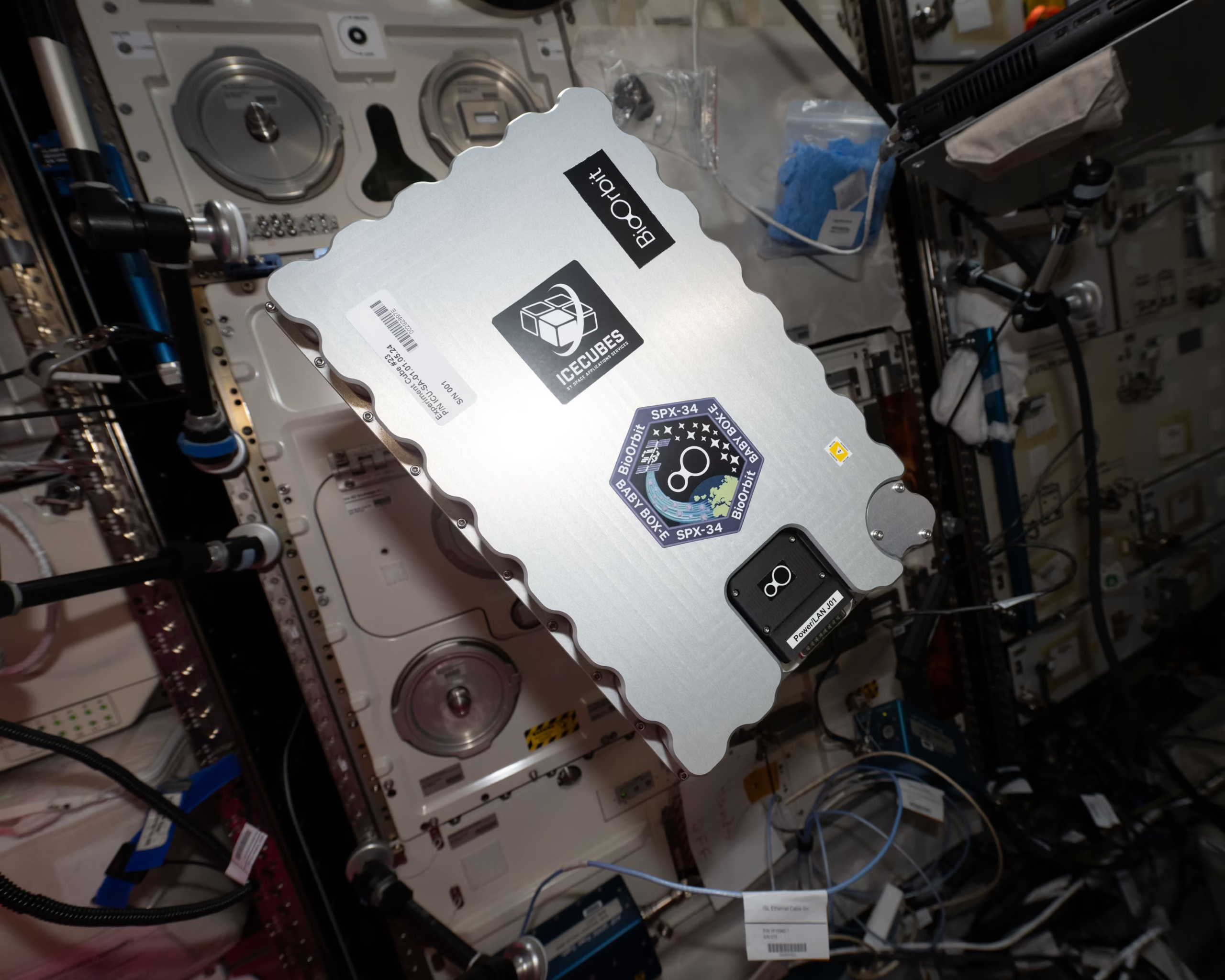
Britain has committed £75.6 million to an active debris removal mission and is developing a 10-year strategy for in-space service and manufacture. Feasibility studies have been awarded to BioOrbit, OrbiSky and Space Forge. Their projects examine whether medicines and advanced materials such as semiconductors can be produced in space.
Regional Space Manufacturing Clusters
Britain’s space manufacturing industry operates through clusters across the country. The network exists across all four home nations, with main bases in the South East, Cornwall and Scotland. In Oxfordshire, Harwell Science and Innovation Campus is home to more than 120 public and private space organisations, as well as research laboratories and testing facilities.
RAL Space, part of the Rutherford Appleton Laboratory, has worked there for more than 60 years and has contributed to more than 200 instruments used on UK satellites and other spacecraft. The new UK Space and Defence Gateway at Harwell is intended to bring companies into closer contact with government, universities and investors.
These contacts are intended to help small firms take the next step, moving from technical trials towards larger-scale production. Other cluster programmes have a similar purpose, offering companies shared facilities while connecting them with expertise from across the region.
How Satellite Systems Support Aviation
Aerospace engineering supplies many of the skills used to build spacecraft. Satellite systems return the favour by serving airlines, airports and travellers.
Spire provides space-based flight tracking through global ADS-B coverage. Its European Independent ATC (Air Traffic Control) Surveillance Operational System (EURIALO) aims to limit the effects of Global Positioning System (GPS) jamming and improve flight efficiency and safety.
For travellers, much of this work stays out of sight. Better tracking gives airlines and airports a clearer picture of where an aircraft is. Reliable navigation helps with route planning, while airports depend on the communications and data behind it.
These applications show how UK satellites and satellite technologies can support aviation on the ground and in the air. Spaceports provide another connection with the travel sector. SaxaVord Spaceport is preparing for a planned first launch in 2026. The programmes described here do not identify passenger space tourism as a near-term priority.

Government Licensing and Oversight
The Civil Aviation Authority (CAA) regulates UK spaceflight under the Space Industry Act 2018 and the Space Industry Regulations 2021. Through its licensing and oversight work, it also has to consider a wide range of concerns. These include public safety, national security, the UK’s international duties and the effects on the environment.
The CAA says its approach should reflect the risk posed by each activity. It works with other public bodies to avoid repeating checks and to make use of evidence that already exists. Before a licence can be issued, the relevant secretary of state must give consent.
A launch does not pose the same risks as running a spaceport or operating in orbit, so each needs a different level of oversight. Companies need to know what is expected of them, and the rules must protect people and property.
Without safe operations, launch and in-orbit servicing will not grow.

Capital, Skills Constraints and Space Manufacturing Growth
For 2025–26, UKSA aimed to generate more than £2.13 billion in investment and revenue. The Space Clusters Infrastructure Fund is expected to draw £700 million in private investment.
The annual report identifies several limits. Many young firms still struggle to grow into globally competitive manufacturers, especially in emerging fields such as in-orbit servicing and manufacture. Uneven access to capital and shortages of skilled workers can hold them back. International competition is increasing.
The Space Industrial Plan states that about 70% of the civil space budget goes through ESA, underpinning Britain’s contributions to Mars missions and other deep-space programmes, and the UK committed £1.7 billion at ESA’s 2025 Council of Ministers.
From April 1, 2026, UKSA and the government’s Space Directorate formed one civil space organisation. The combined body will set civil space strategy and policy, and run the programmes.
Could space manufacturing become as important to the UK economy as aerospace has been? What would need to happen for that to become reality? Let us know your thoughts in the comments below.