
By using this site, you agree to the Privacy Policy and Terms of Use.
Accept
Travel Radar - Aviation NewsTravel Radar - Aviation News
  • Breaking News
  • Aviation
    • Aircraft
    • Airlines
    • Airshow & Events
    • Careers
    • Manufacturing
  • Travel
    • Airports
    • Points & Loyalty
    • Technology
    • Trip Reviews
  • Newsletters
  • Aircraft for Sale
Reading: FAA Tightens Rules for Helicopters Flying Near Airports
Share
Sign In
Notification Show More
Font ResizerAa
Font ResizerAa
Travel Radar - Aviation NewsTravel Radar - Aviation News
  • Breaking News
  • Aviation
  • Travel
  • Newsletters
  • Aircraft for Sale
  • Breaking News
  • Aviation
    • Aircraft
    • Airlines
    • Airshow & Events
    • Careers
    • Manufacturing
  • Travel
    • Airports
    • Points & Loyalty
    • Technology
    • Trip Reviews
  • Newsletters
  • Aircraft for Sale
Signin Sign In
Follow US
Copyright © Travel Radar Media Ltd. 2025 | All Rights Reserved
Travel Radar - Aviation News > News > Aviation > Aircraft > FAA Tightens Rules for Helicopters Flying Near Airports
AircraftAirportsAviationIncidents & Accidents

FAA Tightens Rules for Helicopters Flying Near Airports

The decision follows the Washington, D.C., deadly midair collision and other close calls

Marta Abreu
Last updated: 23 March 2026 08:34
By Marta Abreu
4 Min Read
Share
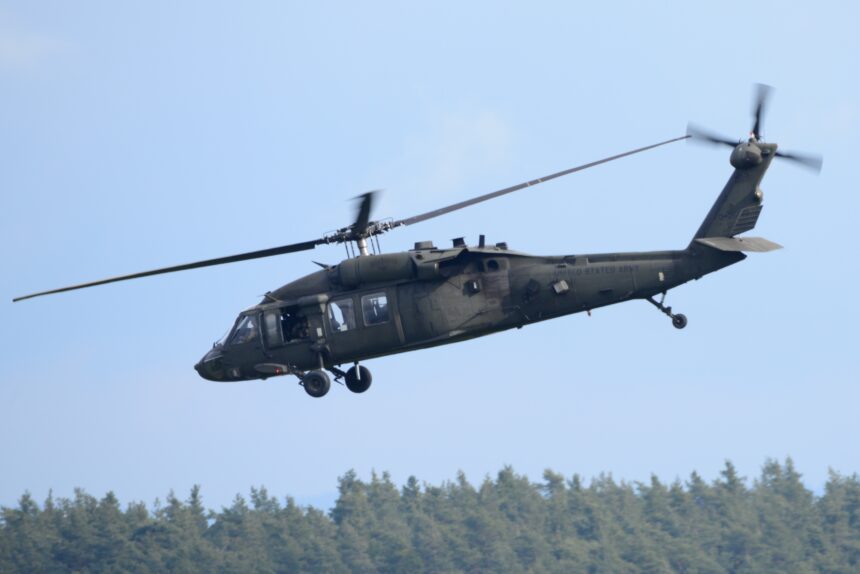
A U.S. Army Black Hawk helicopter was involved in the January 2025 midair collision that killed 67 people © Charles Rosemond, U.S. Army
SHARE

The U.S. Federal Aviation Administration (FAA) announced on Wednesday, March 18, new safety rules for helicopters flying near major airports, which will include suspending the use of visual separation between airplanes and helicopters by air traffic controllers.
Summary
Washington, D.C., Midair CollisionTwo Near MissesNew Rules Learn from “See and Avoid” Mistakes

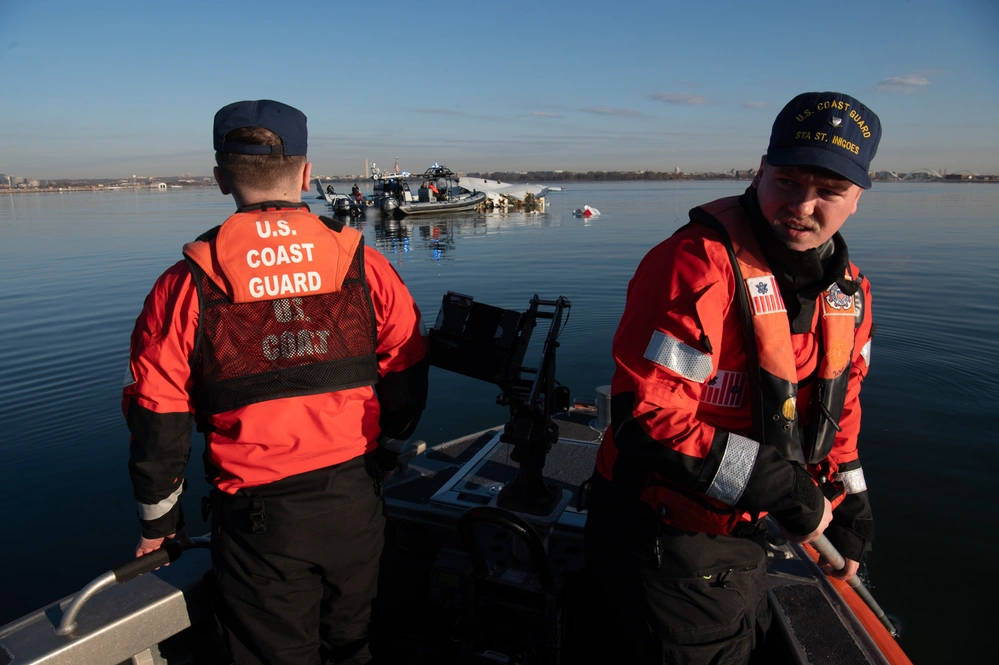
U.S. Coast Guard Petty Officer 2nd Class Lance Ide, left, and Petty Officer 3rd Class Corbin Singleton, boatswain’s mates at Station St. Inigoes, respond to the aircraft collision on the Potomac River, Washington, January 30, 2025. The Coast Guard responded to the incident with local, city, state and federal partners. (U.S. Coast Guard photo by Petty Officer 3rd Class Christopher Bokum)

Washington, D.C., Midair Collision

The decision comes less than two months after the FAA Administrator Bryan Bedford accepted his agency’s responsibility for failures that led to the midair collision of an American Airlines regional jet and an Army Black Hawk helicopter in January 2025.

The accident occurred as the passenger aircraft was approaching Ronald Reagan Washington National Airport (DCA). After the airplane and the Black Hawk collided, the two fell into the Potomac River, killing all 67 people on board both aircraft.

The U.S. National Transportation Safety Board (NTSB) subsequently found that the collision had resulted from the FAA’s decision to allow helicopters to fly close to the airport without proper safeguards.
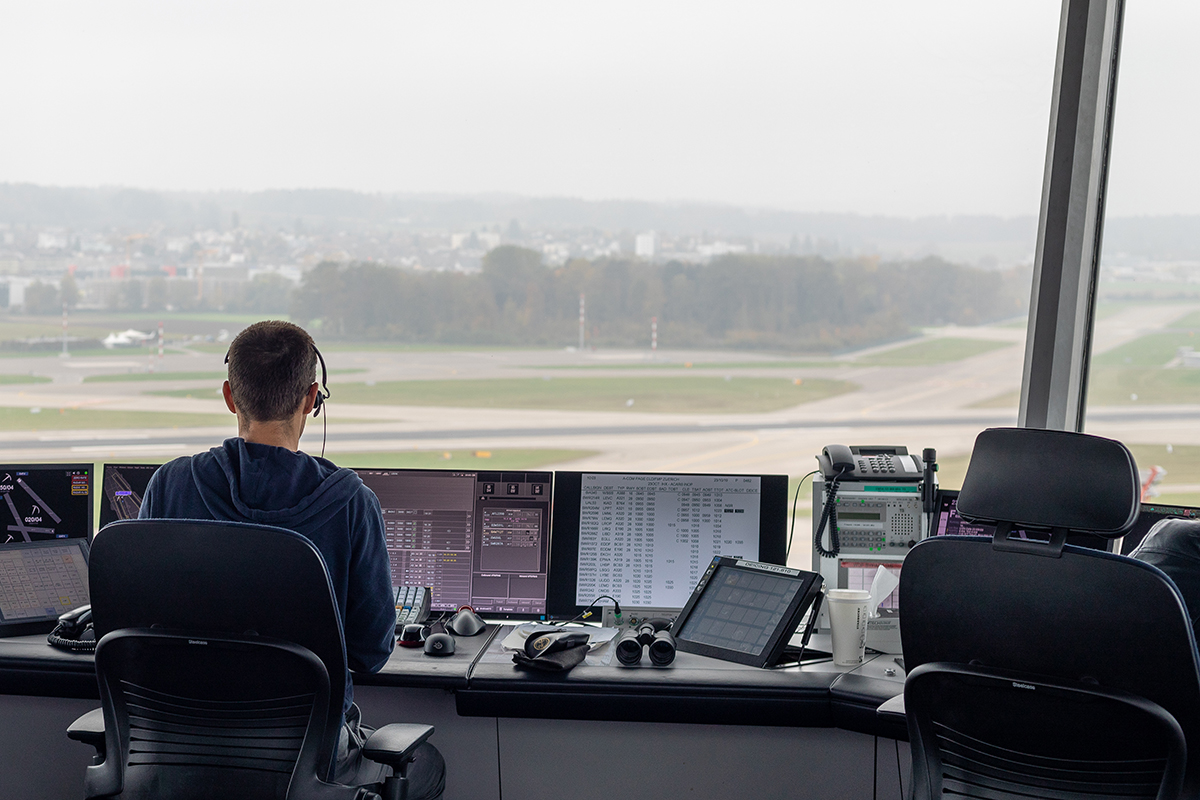
An air traffic controller from Switzerland's Skyguide working in the airport tower of Zurich.
U.S. airports have faced repeated staffing shortages of air traffic controllers © Petar Marjanovic

Two Near Misses

In its general notice announcing the new rules, the FAA also cited two close calls involving airplanes and helicopters.

On Feb. 27, 2026, an American Airlines aircraft and a police helicopter almost collided near the San Antonio International Airport (SAT), according to the FAA. The American Airlines Flight 1657 had been cleared to land when the helicopter was reportedly flying in the airport’s final approach path. The helicopter then made a left turn to avoid the passenger jet.

The other incident took place on March 2, when a Beechcraft 99 was similarly cleared to land at Hollywood Burbank Airport (BUR) while a helicopter was flying through the final approach path. The helicopter turned and avoided the collision.
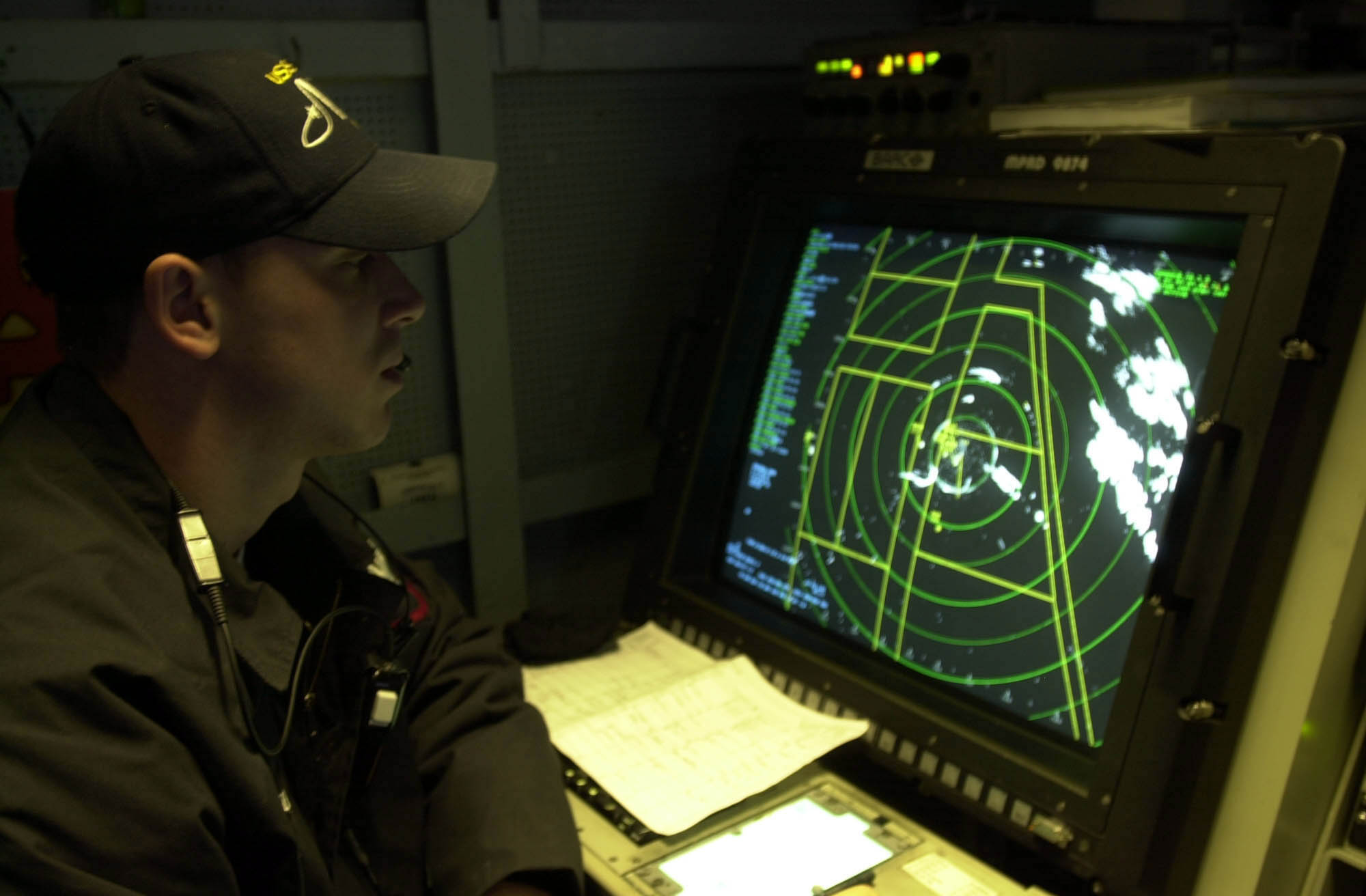
 Air Traffic Controller 3rd Class Sean Russell of San Antonio, Texas, stands as Case One Supervisor in Carrier Air Traffic Control Center (CATCC) during flight operations aboard the aircraft carrier USS Nimitz (CVN 68). The Case One Supervisor is responsible for all personnel handling aircraft in CATCC during low visibility and night flight operations. Nimitz is currently conducting Tailored Ships Training Availability I/II/III and Final Exercise Problem off the coast of southern California.
Air traffic controllers will now be required to use radar to ensure safe distances between helicopters and airplanes © Kristi Holmes, U.S. Navy

New Rules Learn from “See and Avoid” Mistakes

When commenting on the new safety rules, FAA’s Bryan Bedford said in a statement:

“Following the midair collision near Ronald Reagan Washington National Airport (KDCA), we looked at similar operations across the national airspace. We identified an overreliance on pilot ‘see and avoid’ operations that contribute to safety events involving helicopters and airplanes.”

The general notice released on Wednesday consequently suspended the use of visual separation between airplanes and helicopters in Class B and Class C airspace, and Terminal Radar Service Areas (TRSAs). Class B airspace surrounds some of the busiest and largest U.S. airports, while Class C airspace normally surrounds busy but medium-sized airports.

In the press release by the U.S. Department of Transportation (DOT), it was established that:

“Where helicopters cross airport arrival or departure paths, air traffic controllers will use radar to keep the aircraft specific lateral or vertical distances apart.”

The DOT statement also mentioned that the FAA had begun using Artificial Intelligence (AI) tools to evaluate the airports with high volumes of helicopter and airplane traffic.

What do you think of these new safety rules? Share your thoughts in the comments.
You Might Also Like

Wizz Air CEO Claims European Flight Prices Temporarily Falling
Jazeera Airways Restarts Umrah Charters to Saudi Arabia
The Most Scenic Airport Landings in New Zealand
Wizz Air flies Hungarian PM Viktor Orbán and his Delegation to the US on its Airbus A321XLR
Portugal Blocks Ryanair’s Digital Only Boarding Pass Policy
Share This Article
Facebook Twitter Email Copy Link
What’s your thoughts?
Love0
Sad0
Happy0
Angry0
ByMarta Abreu
Follow:
News Editor - A recent master’s graduate in International Journalism with a strong interest in international and investigative reporting, including digital open-source methods. Drawn to humanitarian, environmental and political journalism, finance and institutions, they enjoy uncovering surprising angles and exploring complex stories in depth. Primarily a writer, they also have experience in podcasting and information visualisation, with an academic background in Communication Sciences.
Previous Article An aircraft parked on the tarmac Ryanair invests £40m and extends bay in Prestwick Airport
Next Article An image of a yellow and white aircraft on the ground with the word Guernsey on it and flight attendants standing in front of it. Absence of Pilots Causes Flight Cancellations for Aurigny
Leave a Comment

Leave a Reply Cancel reply

Your email address will not be published. Required fields are marked *


Stay Connected

FacebookLike
TwitterFollow
InstagramFollow
YoutubeSubscribe

Trending News

Air Astana Airbus A321 taking off against a blue sky
Air Astana Expands China Network
Aircraft Aviation Route Development
A close-up view of the side of a white and green Frontier jetliner
Frontier flight diverts after passenger tries to open cabin door
Aviation Incidents & Accidents
An aerial view of the runway meeting the sea at Beirut–Rafic Hariri International Airport
Lebanon Launches Safety Audit of MEA Following Pilots Concerns
Airline Economics Aviation
A close up shot of a Jet2 Holidays plane flying in a cloudy sky
Jet2 issues warning to passengers about potential disruption
Airlines Aviation
European Cargo A340-600
European Cargo Enters Administration Amid Financial Challenges
Aircraft Aviation Breaking News

Travel Radar is the leading digital hub for all things aviation and air-travel. Discover our latest aviation news, aviation data, insight and analysis.


Discover

  • Latest News
  • Subscribe
  • Weekly Digest
  • Contact Us
  • Privacy Policy
  • About Us
  • Advertising
  • Media Coverage
  • Press & Events
  • Join Our Team
  • Our Brands

Signup to our Newsletter!

And get the latest aviation news via our weekly news digest!

© Travel Radar Media Ltd. 2015-2026 | ISSN #2635-0696 | Trademark #UK00003579704
adbanner
Welcome to the TR Community!

Sign in to your account

Not a member? Sign Up