Airlines across the UK have criticised the air traffic control glitch earlier this month. The UK air traffic control outage delayed flights in Scotland, Northern Ireland and northern England. The software error behind the air traffic control failure was a result of a defect that lasted for only a millisecond.
Response To The Air Traffic Control Disruption
The National Air Traffic Services’ (NATS) preliminary report on UK traffic identified a software issue as the cause of the air traffic control disturbances. The air traffic control meltdown earlier this month has affected more than 2,000 flights. Passengers faced long waiting periods at terminals, while airline schedules could not continue running. The defect occurred at 10 a.m. on Sept. 8, but it was not seen as a serious problem for another two and a half hours.
On Sept. 18, Martin Rolfe, the CEO of NATS, said:
“There was a software issue in a specific part of our flight data system that we have traced to a small subsection of coding.”
Rolfe continued:
“We spent so much time making sure they work that anything that does happen of this nature is, by its very nature, going to be incredibly complicated and probably difficult to understand at the time.”
This is the third national air traffic incident in the past three years, following a computer shutdown in 2023 and a NATS outage in 2025. NATS wanted to rule out the possibility of a cyberattack and has now ruled this out completely.
The National Air Traffic Services investigated the incident, determining it was caused by a legacy and previously unknown defect in a software module within the National Airspace System (NAS).
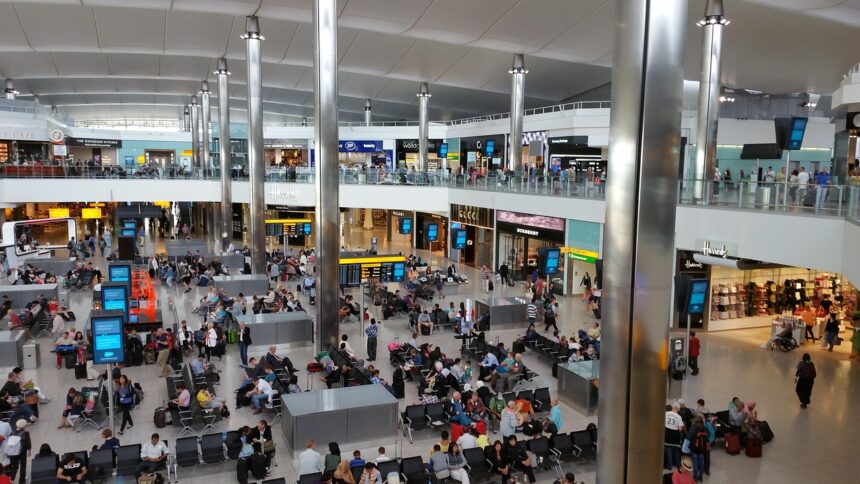
The incident was triggered by a manual request for a squawk code (which enables air traffic control systems to match the altitude, speed, and direction of the plane). As a result, around 2,163 flights were affected at major airports such as Gatwick (LGW), Heathrow (LHR), and Manchester (MAN), where at least 300,000 passengers would have been impacted. Cirium estimated a 30% cancellation rate of flights during this time.
Responding to the software failure, NATS said:
“This manual request was made correctly, and there was nothing abnormal or invalid about the flight plan.”
NAS received a message for a “higher priority activity” to be undertaken. The squawk code allocation was ultimately paused and a software detection meant things did not resume correctly after the squawk allocation request. This affected subsequent flight updates and data operations.
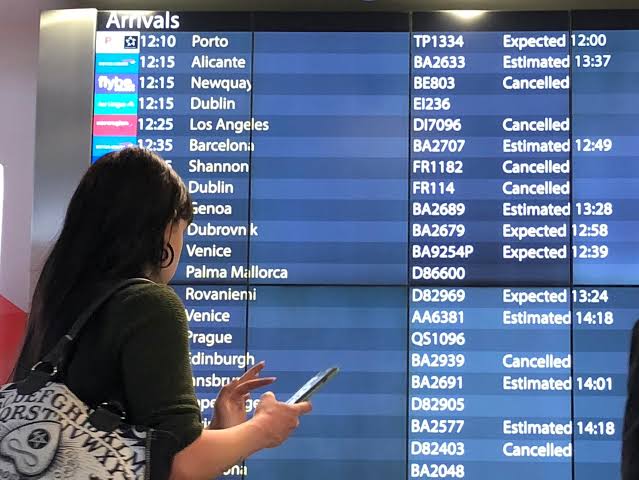
NATS Preliminary Report Responding to the Software Error
The NATS report said:
“With reduced information available to controllers, restrictions were put in place to limit air traffic to maintain safety. While the software issue only affected flights in the London Area Control Centre, which controls higher-level flights operating mainly above 24,500 ft, the restrictions had to be placed across the UK so that the NAS could be restarted and flight data reloaded.”
Over the weekend, the Ministry of Defence denied a report claiming a military aircraft was to blame for the air traffic control system failing. The report found no evidence to suggest the incident was caused by a cyber-related activity either.
What are your thoughts on the reason for this air traffic control glitch? Let us know your thoughts in the comments!