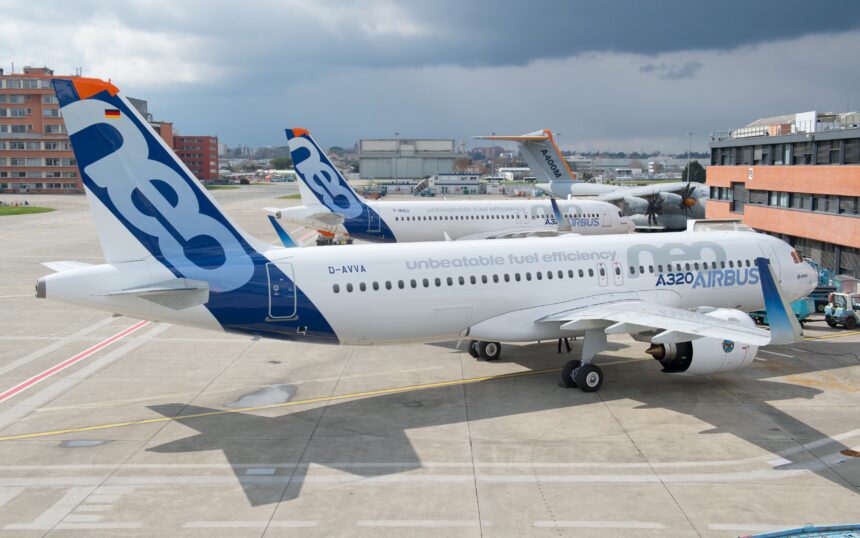
As of December 1st 2025, Airbus has shared that most of the 6,000 recalled A320-family jets have been modified. These unexpected software changes were dealt with swifter than anticipated, and most Airbus fleets are now returning to normal operations.

An Unprecedented Disruption
This was one of the broadest emergency recalls in the European plane maker’s history, prompting huge concerns around travel disruption during the Thanksgiving weekend.
The CEO of Saudi budget carrier Flyadeal, Steven Greenway shared on the matter:
“The thing hit us about 9pm (Jeddah time) and I was back in here about 9:30. I was actually quite surprised how quickly we got through it: there are always complexities.”
Due to this disruption, various airlines were affected, struggling to gauge the impact due to the general alert lacking the affected jets’ serial numbers. Engineers began working on individual jets, and Airbus initially estimated that three hours of work would be required per plane.
Nonetheless, whilst at least one major airline faced delays, many completed the updates without cancelling any flights, such as UK’s easyJet and Wizz Air.

New Updates From Airbus
Currently, there are fewer than 100 jets still requiring work, which involves reverting to an earlier version of software that handles the nose angle. However, it seems some of the older A320 jets require more than a simple software reset, and a new computer entirely will need to be installed.
CEO Guillaume Fuary has publicly apologised on the incident, as industry executives discuss the changes that have been made in the industry’s playbook after the Boeing 737 MAX crisis. During that crisis, the company was heavily criticised in its handling of fatal crashes after a software design error. Now, this sudden recall is the first time that Airbus has dealt with global safety attention on such a scale.
Ronn Torossian, chairman of New York-based 5W Public Relations, spoke on the matter:
“Is Airbus acting with the Boeing MAX crisis in mind? Absolutely – every company in the aviation sector is. Boeing paid the reputational price for hesitation and opacity. Airbus clearly wants to show… a willingness to say, ‘We could have done better’.”
More updates are sure to come, but this incident has undeniably been treated swiftly and openly from airlines, engineers, and Airbus.
What are your thoughts on this rapid response? For more on the A320 recall, read here!