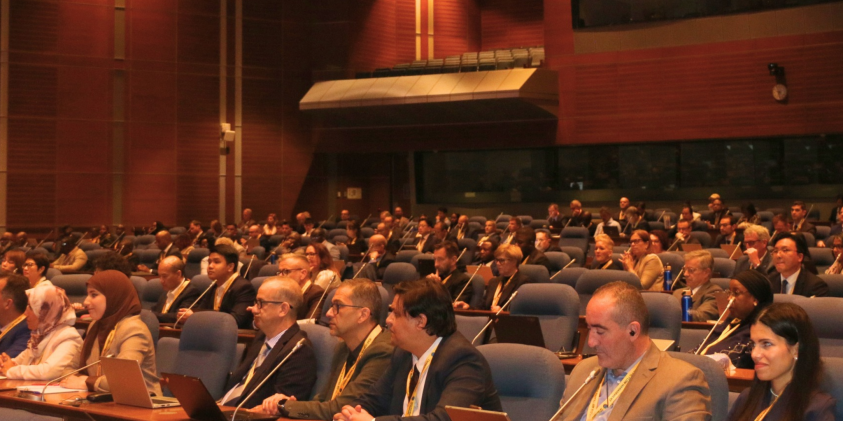
The International Civil Aviation Organisation (ICAO) convened an international meeting from Oct. 5-9 in Montréal and concluded that worldwide adoption of collaborative Air Traffic Flow Management (ATFM) is necessary to meet unprecedented growth in air passenger demand. ATFM aims to support more effective air traffic control management.
Role of ATFM in Air Traffic Management
Air traffic management is necessary to ensure airspace and conditions are safe for flying. Previously, air traffic managers only managed their assigned sectors. ATFM is designed to improve coordination among the various actors responsible for managing air traffic, enabling a broader, network-wide perspective.
Some of the actors involved in air traffic management include air navigation service providers, airports, airlines and meteorological agencies. These actors collaborate to manage the airspace network by sharing data and digital tools which can deliver information across national boundaries.
With the worldwide adoption of ATFM, ICAO hopes to prevent unexpected aircraft delays, reduce fuel consumption, and limit emissions.
ICAO Supporting its Member States
ICAO put this recommendation in place in line with its 2050 goal of air transport for all with zero fatalities and net-zero carbon emissions. It supports the adoption of ATFM by building common standards, providing technical guidance, and helping countries and states implement ATFM.
Additionally, ICAO is set to begin workshops for its 193 member states to support them in developing solutions that are suited to their own aviation system and operational needs.
Do you think ICAO’s push to adopt ATFM will improve the current air traffic management system? Let us know in the comments!