
By using this site, you agree to the Privacy Policy and Terms of Use.
Accept
Travel Radar - Aviation NewsTravel Radar - Aviation News
  • Breaking News
  • Aviation
    • Aircraft
    • Airlines
    • Airshow & Events
    • Careers
    • Manufacturing
  • Travel
    • Airports
    • Points & Loyalty
    • Technology
    • Trip Reviews
  • Newsletters
  • Aircraft for Sale
Reading: FAA sets upgrade deadlines for ‘interference-tolerant’ radio altimeters ahead of Upper C-band 5G expansion
Share
Sign In
Notification Show More
Font ResizerAa
Font ResizerAa
Travel Radar - Aviation NewsTravel Radar - Aviation News
  • Breaking News
  • Aviation
  • Travel
  • Newsletters
  • Aircraft for Sale
  • Breaking News
  • Aviation
    • Aircraft
    • Airlines
    • Airshow & Events
    • Careers
    • Manufacturing
  • Travel
    • Airports
    • Points & Loyalty
    • Technology
    • Trip Reviews
  • Newsletters
  • Aircraft for Sale
Signin Sign In
Follow US
Copyright © Travel Radar Media Ltd. 2025 | All Rights Reserved
Travel Radar - Aviation News > News > Aviation > Aircraft > FAA sets upgrade deadlines for ‘interference-tolerant’ radio altimeters ahead of Upper C-band 5G expansion
AircraftAviationTechnology

FAA sets upgrade deadlines for ‘interference-tolerant’ radio altimeters ahead of Upper C-band 5G expansion

Oluwaferanmi Ogunsemowo
Last updated: 30 July 2026 08:31
By Oluwaferanmi Ogunsemowo
4 Min Read
Share
A detailed interior view of a vintage aircraft cockpit. The complex, dark instrument panel is densely packed with rows of traditional circular analog gauges, switches, and a central radio/navigation stack. Two distinct, white, U-shaped control yokes are positioned in front of pilot and co-pilot seats featuring grey sheepskin covers. The throttle quadrant and various control wheels sit on the center pedestal between the seats, and two dark sun visors are pulled down over the windshield against a dark background outside
FAA issued a rule requiring aircraft radio altimeters to meet minimum requirements © Smithsonian Institution
SHARE

The U.S. Federal Aviation Administration (FAA) has issued a final rule requiring aircraft radio altimeter systems to meet minimum interference-tolerance performance requirements, part of a coordinated effort to avoid erroneous altitude readings as wireless service expands in spectrum adjacent to the altimeter band.
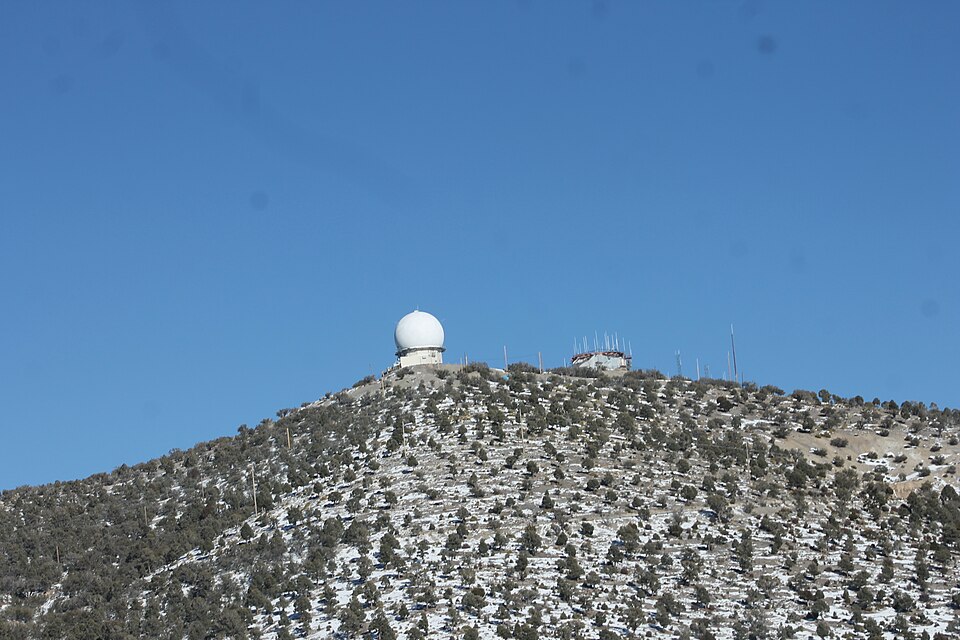
A large white geodesic radome and several communication towers situated on a rugged, snow-dusted mountain peak against a clear blue sky.
It says a 2025 law directed the FCC to run competitive bidding for at least 100 MHz in the 3.98–4.2 GHz “Upper C-band” © Noah Wulf

Where is this coming from?

Radio altimeters (sometimes called radar altimeters) measure an aircraft’s height above the ground and feed that data to pilots and multiple onboard safety systems. The FAA says the upgraded (“next-generation”) altimeters must be able to withstand interference from wireless signals in neighbouring spectrum bands and continue producing accurate readings.

Who must comply, and by when:

  • By Dec. 30, 2030: Aircraft operating under Part 121 (scheduled air carriers) and certain Part 129 aircraft (foreign air carriers) with 30+ passenger seats or a payload capacity of over 7,500 pounds.
  • By Oct. 31, 2034: All other aircraft with radio altimeters that must comply with Part 91 (including aircraft operating under Parts 125, 133, 135, 136, 137, 194, and other Part 129 aircraft not in the first group).

The FAA also notes the rule has been signed and will be submitted for Federal Register publication and that the “signed” document posted online is not the official Federal Register version (which may include edits).

The FAA ties the rule directly to federal spectrum policy. It says a 2025 law directed the FCC to run competitive bidding for at least 100 MHz in the 3.98–4.2 GHz “Upper C-band” and that the FCC’s July 2026 Report and Order makes 160 MHz available for new terrestrial wireless use, requiring aviation to be ready before those services begin.

A white geodesic radar dome and several communication towers on a rugged, snow-dusted mountain peak with scattered trees, set against a clear blue sky.
The FAA emphasises that radio altimeters are critical safety equipment © Pedro Aragão

Why is radio altimeter interference such a big deal?

In the FAA’s signed final rule document, the agency describes the FCC’s plan in more detail: 3980 to 4140 MHz for terrestrial wireless, a 20 MHz guard band from 4140 to 4160 MHz, and 4160 to 4200 MHz repacked for fixed satellite service while aircraft radio altimeters operate in the adjacent 4.2 to 4.4 GHz band.

In its signed final-rule document, the FAA frames the new performance requirements as applicable to aircraft operating in the 48 contiguous States and the District of Columbia, and it discusses why it is not extending the same requirement to areas where the FCC order does not authorise the new upper C-band base-station environment.

The FAA emphasises that radio altimeters are critical safety equipment, especially for low-visibility takeoffs and landings, and that inaccurate readings can ripple into multiple aircraft safety functions. The agency says its new rule is meant to prevent 5G-adjacent interference that could produce inaccurate altitude readings for pilots and integrated systems.

How do you see C-band 5G expansion panning out?

You Might Also Like

PSA Airlines Set to Debut Aircraft 639 in July 2025
Qantas to Launch Aviation Training Academies from 2025
American Airlines unveils expansion at flagship hub
SAS Placed Record-Breaking Embraer Order
London to Cusco: Peruvian Pisco and Panoramic Peaks
Share This Article
Facebook Twitter Email Copy Link
What’s your thoughts?
Love0
Sad0
Happy0
Angry0
Previous Article Computer render of the ePlane Company's e200X eVTOL aircraft in standard livery. India’s ePlane Company Strengthens Supply Chain
Next Article Washington DC Dulles International Airport at night. The airport is covered in glass and the control tower is seen behind it. There are also departure and arrival pick up and drop off spots visible. Trump’s Billionaire Plan to Rebuild Dulles International Airport
Leave a Comment

Leave a Reply Cancel reply

Your email address will not be published. Required fields are marked *


Stay Connected

FacebookLike
TwitterFollow
InstagramFollow
YoutubeSubscribe

Trending News

Air Canada A321XLR aircraft
Air Canada launch new routes and destinations
Airlines Aviation Route Development
A passenger with a shoulder bag and luggage stands in an airport terminal, looking up at a digital check-in information board near stanchion queue lines.
UK Air Traffic Control Failure Disrupts Hundreds of Flights
Airlines Airports Breaking News
The image shows people in a long queue waiting to be seen at the several security desks at the side of the image.
Malaysia to Tighten Airport Security Checks Following Pilot’s Arrest
Airlines Airports Aviation Incidents & Accidents
An Allegiant Air Airbus A320 taking off
Allegiant Adds Two Year-Round Florida Routes From Flint
Airlines Route Development
A Southwest Airlines Boeing 737-700
Southwest Airlines Reveals Its First-Ever Airport Lounge Network
Airports Points & Loyalty Travel

Travel Radar is the leading digital hub for all things aviation and air-travel. Discover our latest aviation news, aviation data, insight and analysis.


Discover

  • Latest News
  • Subscribe
  • Weekly Digest
  • Contact Us
  • Privacy Policy
  • About Us
  • Advertising
  • Media Coverage
  • Press & Events
  • Join Our Team
  • Our Brands

Signup to our Newsletter!

And get the latest aviation news via our weekly news digest!

© Travel Radar Media Ltd. 2015-2026 | ISSN #2635-0696 | Trademark #UK00003579704
adbanner
Welcome to the TR Community!

Sign in to your account

Not a member? Sign Up