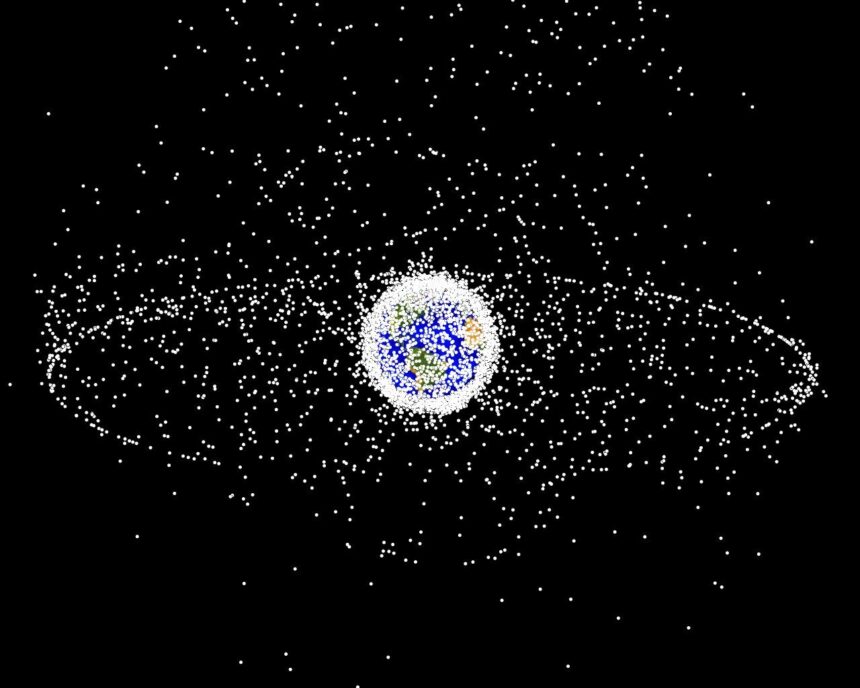
Space may seem vast and empty, but the region around Earth is becoming increasingly crowded. Thousands of defunct satellites and spacecraft fragments now circle our planet in a growing sea of orbital debris, sometimes passing within metres of one another or even colliding. As the number of objects in space rises, preventing satellite collisions in orbit has become critical to protecting spacecraft and essential services on Earth. The UK is emerging as a global leader in space sustainability, developing innovative technologies while helping shape space regulation and standards designed to keep Earth’s orbits safe and usable for generations to come.
Orbital Debris: A Crowded Frontier
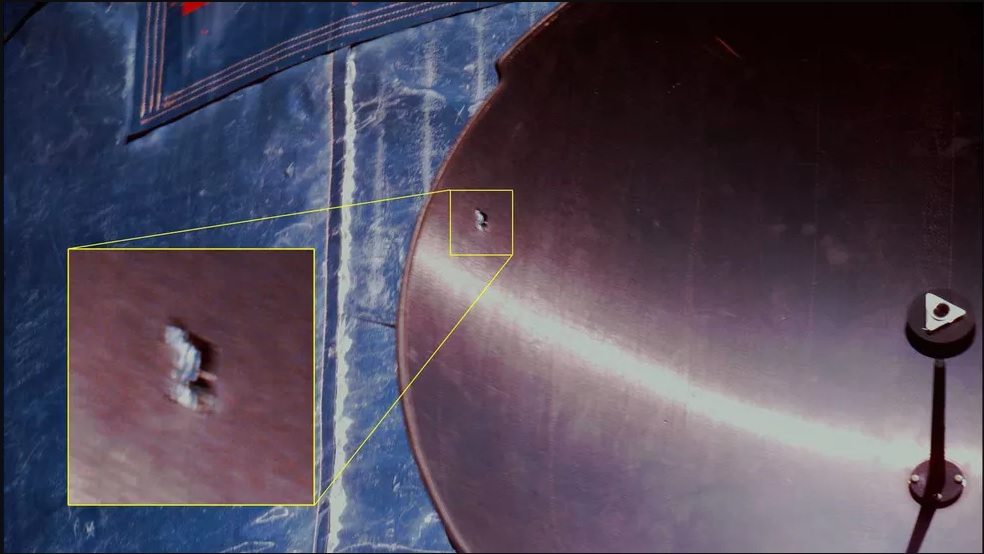
Since Sputnik I launched in 1957, there have been approximately 7,270 successful launches. According to the European Space Agency (ESA)’s Space Environment Statistics, these launches have placed 26,890 satellites into orbit. These vehicles have finite working lives. The harsh vacuum, radiation and extreme temperatures of space often damage them while they are in orbit.
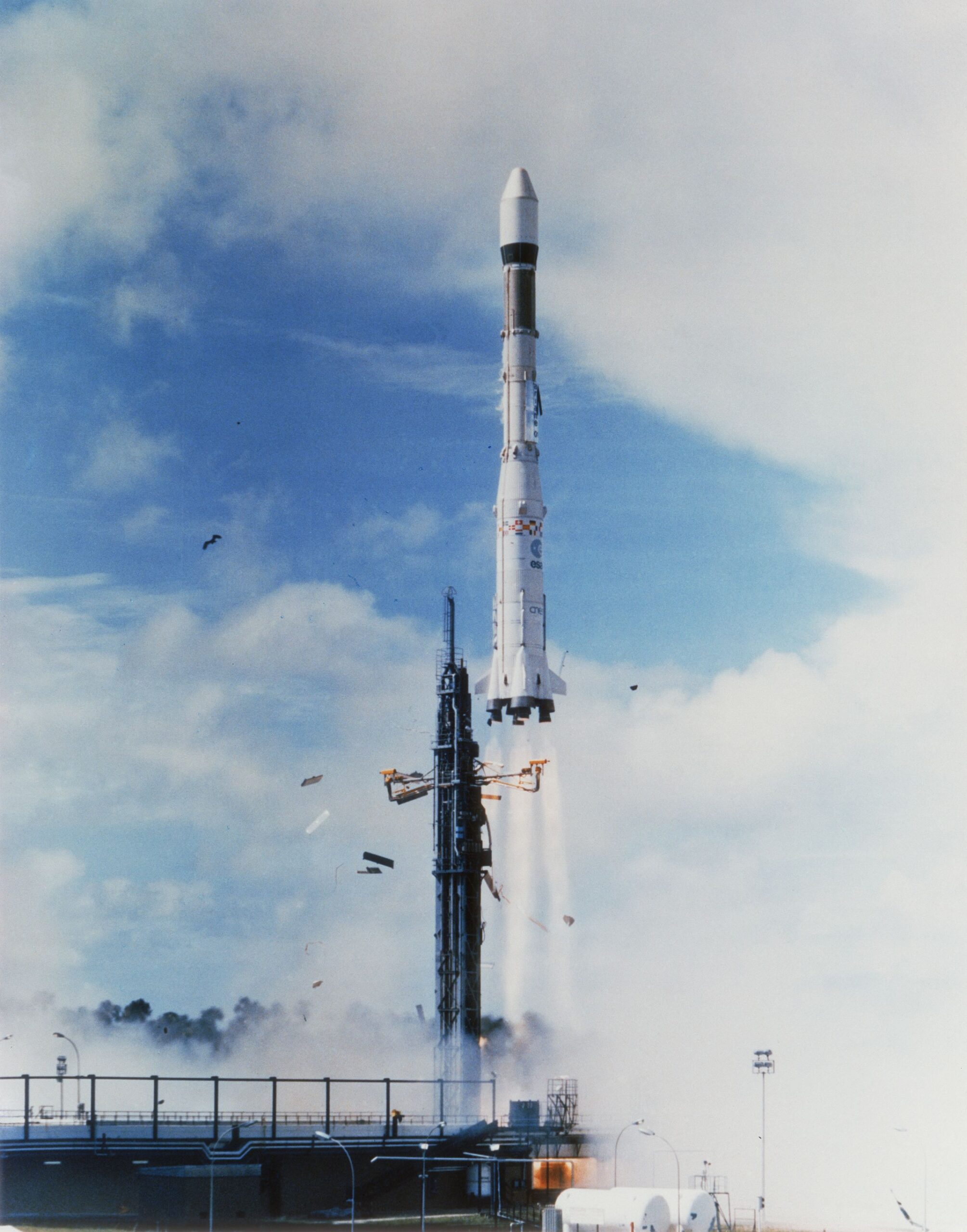
The first recorded accidental collision between two spacecraft occurred on July 24, 1996. Debris from an Ariane 1 launch vehicle struck a French military surveillance satellite. Since then, there have been more than 660 break-ups, collisions and other fragmentation events, contributing to the growing amount of orbital debris around Earth. ESA estimates that Earth orbit contains around 54,000 objects larger than 10 cm. It also contains around 1.2 million objects between 1 and 10 cm, and about 140 million between 1 mm and 1 cm. As of June 2026, 27,036 large objects are tracked in Low Earth Orbit (LEO). These are all below 2,000 km altitude.
Operational satellites have key applications on Earth, most prominently in satellite communication such as internet, phone and television connections. This is useful for the aviation industry as it enables in-flight Wi-Fi, multinational corporation linkups and international regulation. Earth observation from satellite platforms also aids air traffic control and assists in weather forecasting, including space weather to predict events such as solar flares which could damage aircraft instruments with their ionising radiation. If these satellites were to be incapacitated, the resulting loss of functionality would have consequences for communication and safety systems across the world.
How Space Debris Threatens Space Sustainability
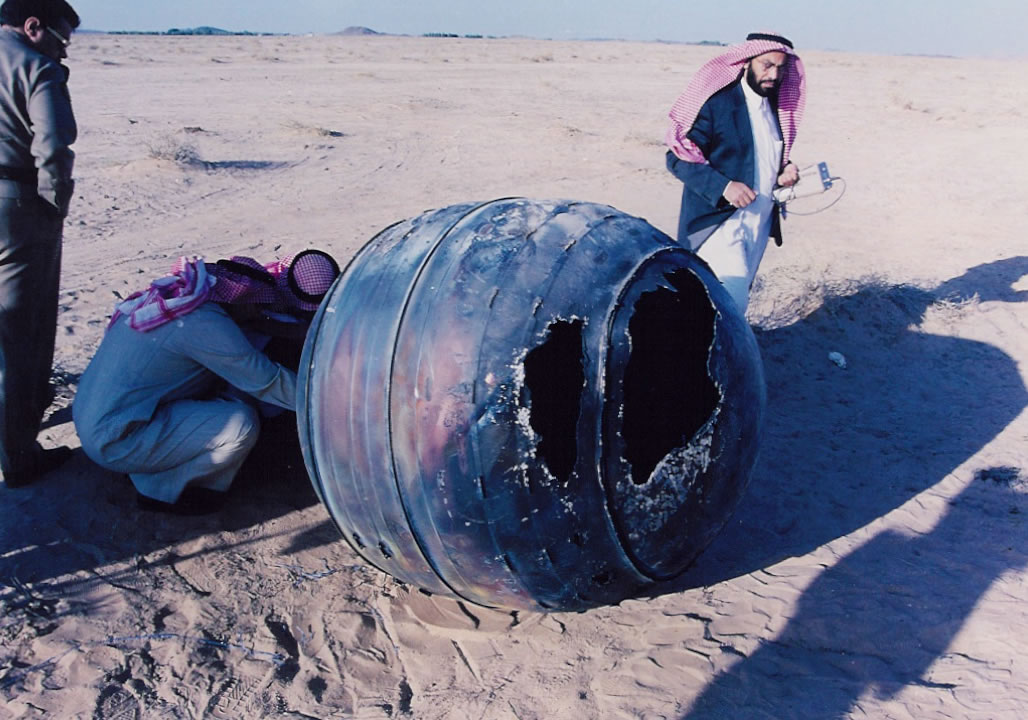
Objects launched into space have become smaller while increasing in number. Satellite constellations – groups of satellites working together – have expanded with the growth of commercial spaceflight since 2015. More frequent launches and rideshare missions have increased traffic in orbit. Around 1,200 large objects re-entered Earth’s atmosphere in 2025. This increases the risk to people and infrastructure.
The United Nations Office for Outer Space Affairs (UNOOSA) considers Earth’s orbital environment to be a finite resource. Therefore, space activities should be planned sustainably to allow for its long-term use. Scientists track sustainability using a numerical risk index, which estimates how likely each object is to create space debris or cause collisions. They then express the index as a ratio of an estimated sustainability threshold. A ratio of 1 indicates a sustainable level of risk, and above 1 suggests an untenably dangerous space debris environment. Current ESA projections indicate ratios of 3 or higher. This represents an unsustainable level of risk. Agencies and industrial partners around the world are working to assess and reduce their impact on the orbital ecosystem. The UK is playing a leading role.
The UK’s Vision for Sustainable Space
King Charles III unveiled the Astra Carta in June 2023. It sets out how private companies can develop space technology and investment more sustainably “to care for the infinite wonders of the Universe”. 120 UK companies signed on to a Memorandum of Principles to commit to environmental preservation. The Earth and Space Sustainability Initiative is funded by the UK Space Agency (UKSA). It promotes clear and effective regulation and standards for corporate responsibility.
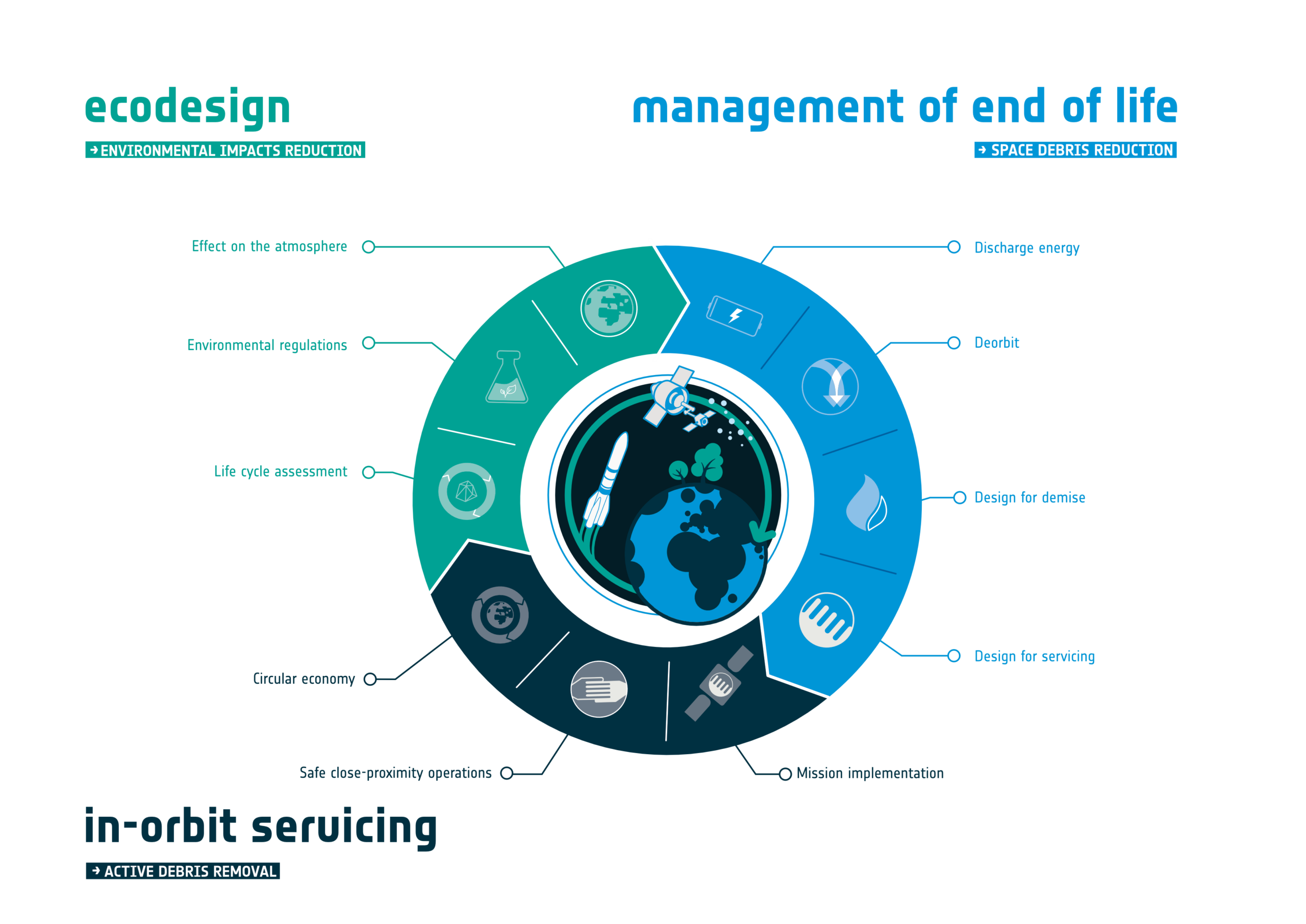
ESA has challenged European space agencies and companies to remove more debris than they create by 2030. Its long-term goal is a “Zero Debris” policy, supported by stronger regulation and standards for sustainable space activities. The UK is a leading partner in ESA’s Clean Space initiative, which began in 2009. The project complies with legislation such as the European Commission’s “Registration, Evaluation, Authorisation and Restriction of Chemicals” (REACH), and “Restriction of Hazardous Substances” (RoHS). It has three branches which focus on mission ecodesign, technologies for managing end-of-life disposal, and in-orbit servicing and spacecraft removal. Together, they help prevent future space debris.
Setting the Standards for Orbital Debris
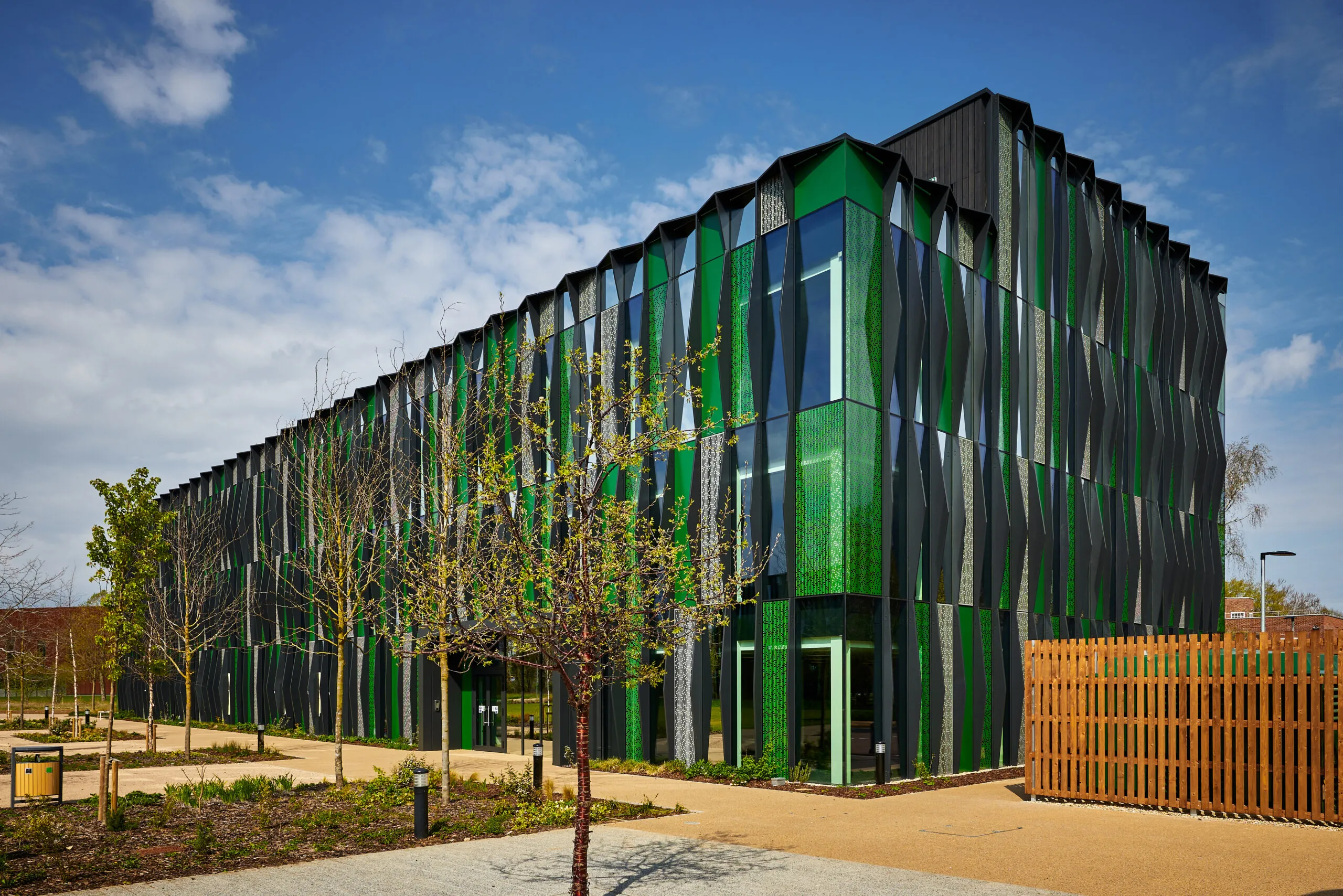
UKSA and the Space Directorate within the Department for Science, Innovation and Technology (DSIT) have several space sustainability priorities, including enhancing regulation and standards across the sector. These include regulation, research, monitoring, and technology development for Active Debris Removal (ADR) and In-orbit Servicing And Manufacture (ISAM). UKSA has sponsored the British Standards Institution (BSI) to develop two Space Sustainability standards. “BSI Flex 1969” helps organisations assess environmental impact across a mission’s lifetime. “BSI Flex 1971” helps launch providers reduce their environmental impact.
Leading International Cooperation
In May 2026, the UK completed a year as Secretariat of the Inter-Agency Space Debris Coordination Committee (IADC), consisting of 13 national space agencies and three associate members. The committee provides guidance on spacecraft design and operations, contributing to international regulation and standards aimed at reducing the creation of orbital debris. It also promotes engagement across the wider space community. Research conducted by the IADC with the UK in the lead role includes assessing spacecraft vulnerability, and mapping the amount of debris at different heights above Earth’s surface. The committee established working groups aiming to establish new ways of measuring the space environment and to protect spacecraft from debris.
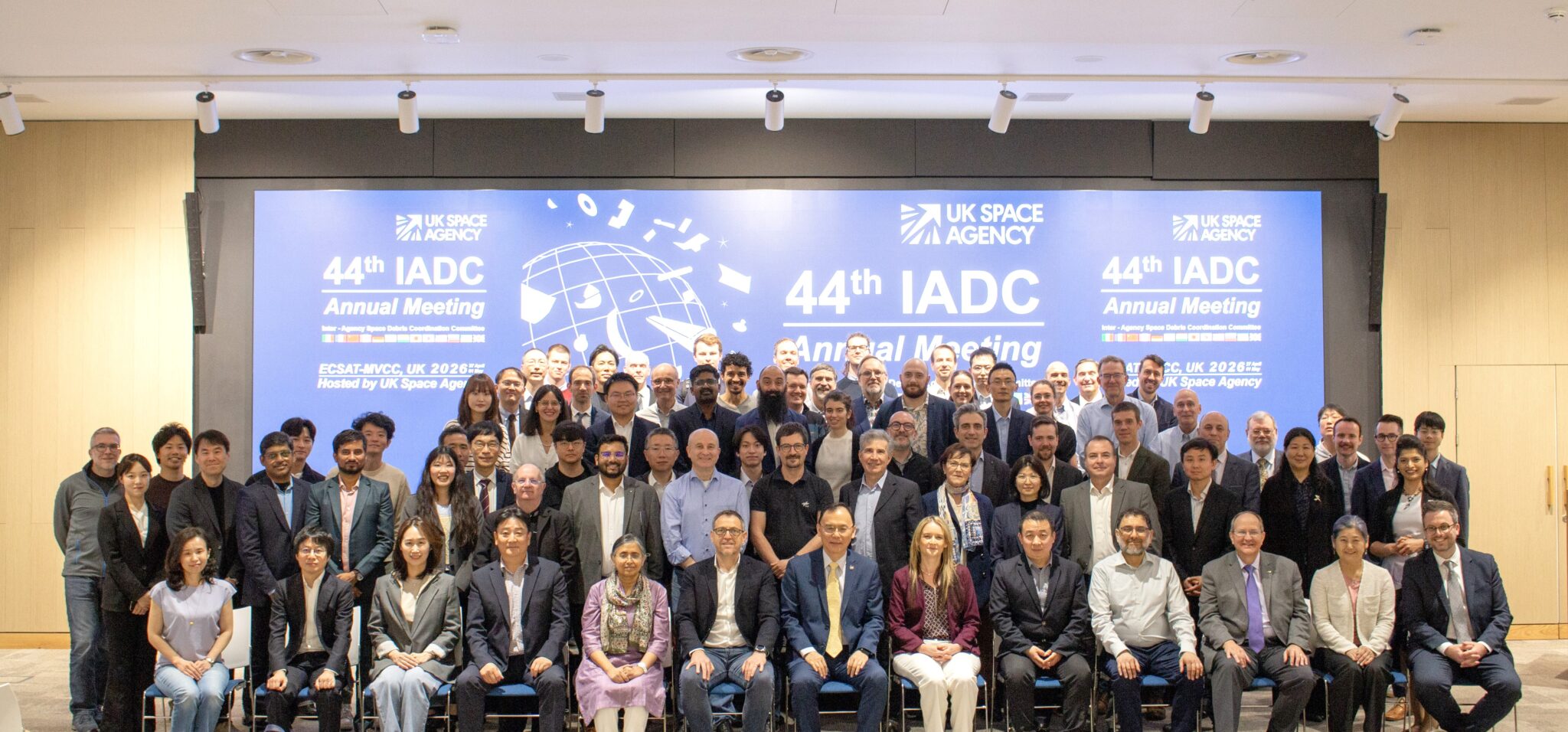
The previous year, with Germany in the lead role, the IADC published new space debris mitigation guidelines. They covered debris from routine operations, break-up risks, post-mission disposal and collision prevention. Another achievement of the committee under UK control was awarding more than £380,000 to 10 technical studies supporting international research into orbital debris. Recipients of the funding include the Universities of Birmingham and Strathclyde, as well as industry partners, in the areas of space debris monitoring, post-mission disposal and lunar debris mitigation. Over the next year, the China National Space Administration (CNSA) will lead the IADC. The committee is developing additional metrics to measure the sustainability of space activities.
Removing Debris from Orbit
In 2025, UKSA launched a £75.6 million tender for a new UK mission to remove non-functioning satellites from orbit. The new spacecraft will autonomously reach, capture and deorbit two defunct UK satellites, causing them to burn up on entering Earth’s atmosphere. Chris Bryant, then minister for space, commented,
“By tackling the growing threat of space debris head-on, we are protecting the infrastructure that supports everything from national security to everyday connectivity”.
The tender follows the launch of the Modern Industrial Strategy 2025 – a 10-year plan to establish the UK as a leader in global innovation. The contract will run for five years, with launch planned by the end of 2028. It follows £11 million invested in feasibility studies and design work since 2021.

Innovation from British Science and Industry
Science clusters around the UK have contributed to the national sustainability goals. Surrey Space Centre led the RemoveDEBRIS programme funded by the European Commission. As part of a 2018 technology demonstration mission, the spacecraft was launched to the International Space Station (ISS). It was then deployed into orbit to test space-net and harpoon devices developed by industrial partners.
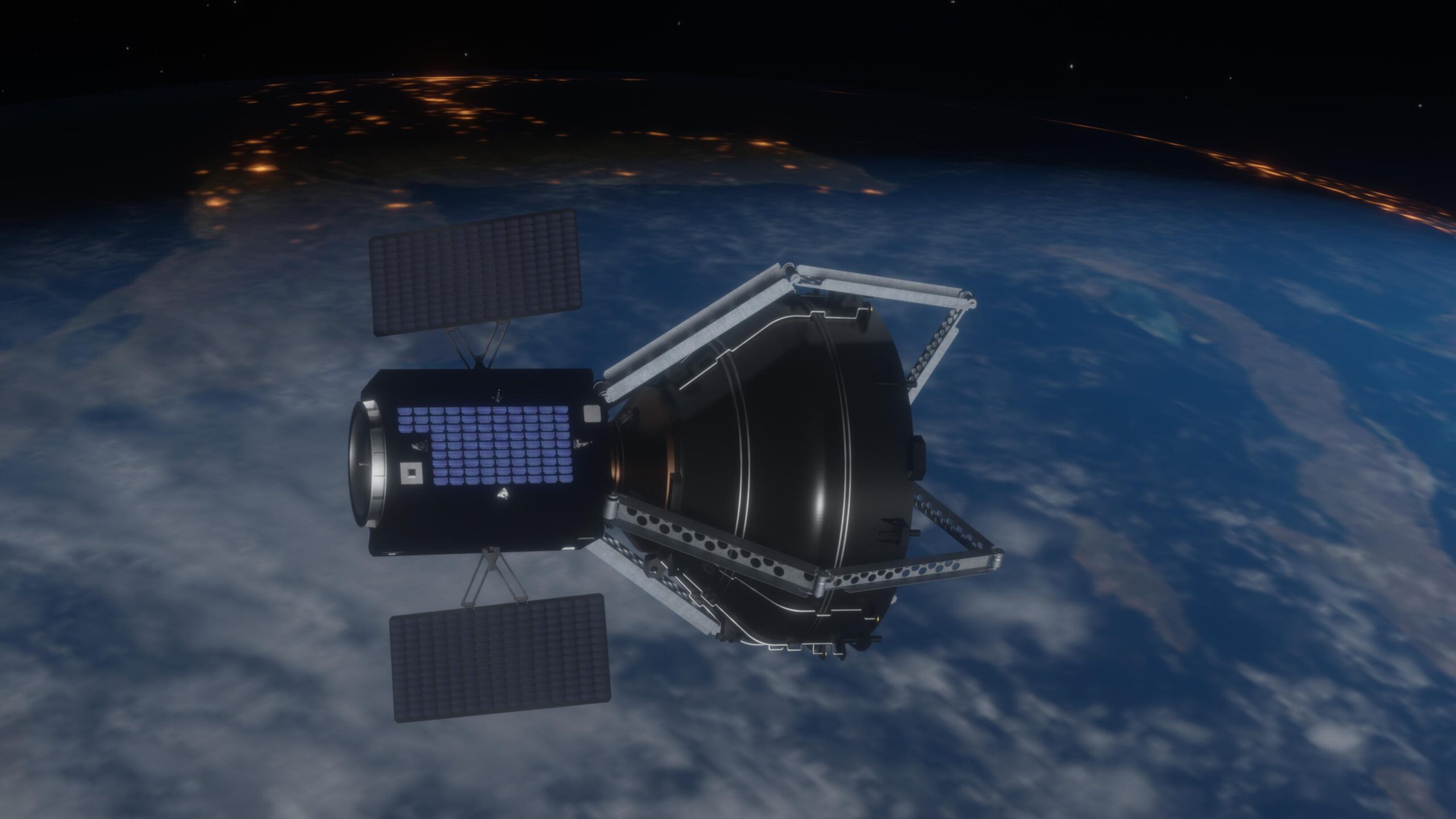
Several big engineering firms with offices in the UK are contracted to enable better management of orbital debris in the near future. In November 2020, ESA signed an €86 million contract with a group of industrial partners led by the Swiss company ClearSpace to develop the ClearSpace-1 mission. This will aim to remove the PROBA-1 satellite, ESA’s longest-running Earth observation satellite, from orbit. Its design includes four robotic arms that can embrace the target. Reverse-facing thrusters then slow the spacecraft and guide it towards atmospheric re-entry. Another big name is Astroscale, a Japanese company with offices in Oxford. They are developing the Cleaning Outer Space Mission through Innovative Capture (COSMIC) to deorbit two defunct British satellites, although a launch date has yet to be announced. They also pioneered the ELSA series of missions, with ELSA-D demonstrating magnetic capture in orbit in 2021 and ELSA-M scheduled to showcase the commercial viability of rendezvous and capture with third-party satellites in 2028.
Protecting the Future of Space from Orbital Debris
As humanity’s presence in space continues to expand, sustainability is in the minds of agencies, companies and the public more than ever. By pioneering regulation and standards, developing orbital debris removal technologies and driving international collaboration, the UK is helping to shape a future where Earth’s orbital environment remains safe, accessible and productive for generations to come. The next space age will not be defined solely by how far we explore, but by how responsibly we protect the space we increasingly depend upon.
Should countries be responsible for removing the debris they leave behind? Share your thoughts in the comments below.