By using this site, you agree to the Privacy Policy and Terms of Use.
Accept
Travel Radar - Aviation NewsTravel Radar - Aviation News
  • Breaking News
  • Aviation
    • Aircraft
    • Airlines
    • Airshow & Events
    • Careers
    • Manufacturing
  • Travel
    • Airports
    • Points & Loyalty
    • Technology
    • Trip Reviews
  • Newsletters
  • Aircraft for Sale
Reading: Starlink vs. Amazon: Airlines race to upgrade in-flight Wi-Fi, as new ‘connectivity arms race’ takes shape
Share
Sign In
Notification Show More
Font ResizerAa
Font ResizerAa
Travel Radar - Aviation NewsTravel Radar - Aviation News
  • Breaking News
  • Aviation
  • Travel
  • Newsletters
  • Aircraft for Sale
  • Breaking News
  • Aviation
    • Aircraft
    • Airlines
    • Airshow & Events
    • Careers
    • Manufacturing
  • Travel
    • Airports
    • Points & Loyalty
    • Technology
    • Trip Reviews
  • Newsletters
  • Aircraft for Sale
Signin Sign In
Follow US
Copyright © Travel Radar Media Ltd. 2025 | All Rights Reserved
Travel Radar - Aviation News > News > Aviation > Airline Economics > Starlink vs. Amazon: Airlines race to upgrade in-flight Wi-Fi, as new ‘connectivity arms race’ takes shape
Airline EconomicsAviationTechnology

Starlink vs. Amazon: Airlines race to upgrade in-flight Wi-Fi, as new ‘connectivity arms race’ takes shape

Oluwaferanmi Ogunsemowo
Last updated: 15 June 2026 10:29
By Oluwaferanmi Ogunsemowo
5 Min Read
Share
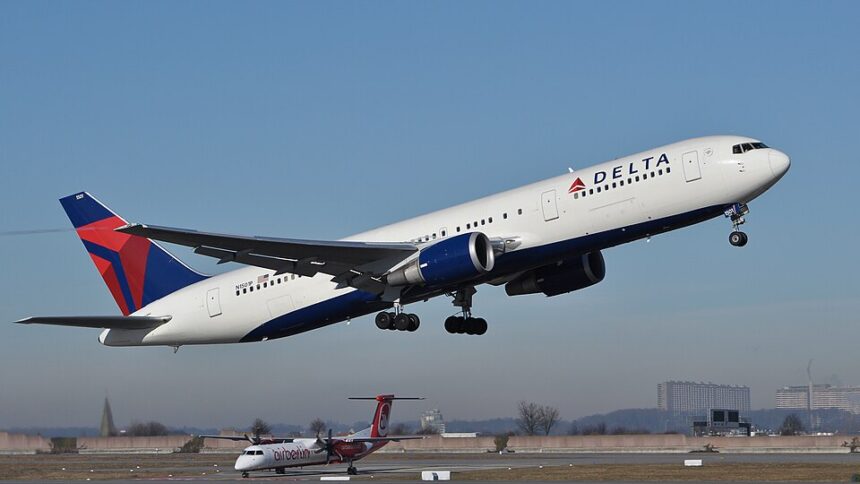
Delta Air Lines Boeing 767-3P6/ER (reg. N1501P, cn 24983/334) taking off at Stuttgart Airport (STR/EDDS) taken on 7 February 2011, 11:06:32
Delta Airlines © Julian Herzog
SHARE

Airlines are moving quickly to upgrade in-flight internet, turning what used to be a frustrating, often-paid extra into a core part of the passenger experience and a new competitive battleground between SpaceX’s Starlink and Amazon’s low earth orbit (LEO) satellite network, branded Amazon Leo.

Summary
Why is in-flight Wi-Fi suddenly a top-tier feature?Starlink’s head start: rapid airline signingsAmazon Leo’s strategyHow impactful is this in modern-day aviation?
A photo of an Amadeus display at a travel technology event, showing the company branding and signage used to illustrate airline systems that support premium in-flight connectivity upgrades.
Amadeus live © Sikander Iqbal

Why is in-flight Wi-Fi suddenly a top-tier feature?

The shift is being driven by a broader airline strategy: protect margins by improving “premium” and high-value parts of the travel experience. In Reuters reporting published June 9, Amadeus travel president Decius Valmorbida described fast Wi-Fi as a “game changer” and effectively a must-have that airlines will rush to replicate.

A big reason the conversation has changed is the technology behind it. LEO systems use large constellations of satellites much closer to Earth than traditional geostationary (GEO) satellites, which can reduce latency and improve performance. The outlet cited broadband analytics firm Ookla, saying Starlink’s approach can be multiple times faster than legacy systems.
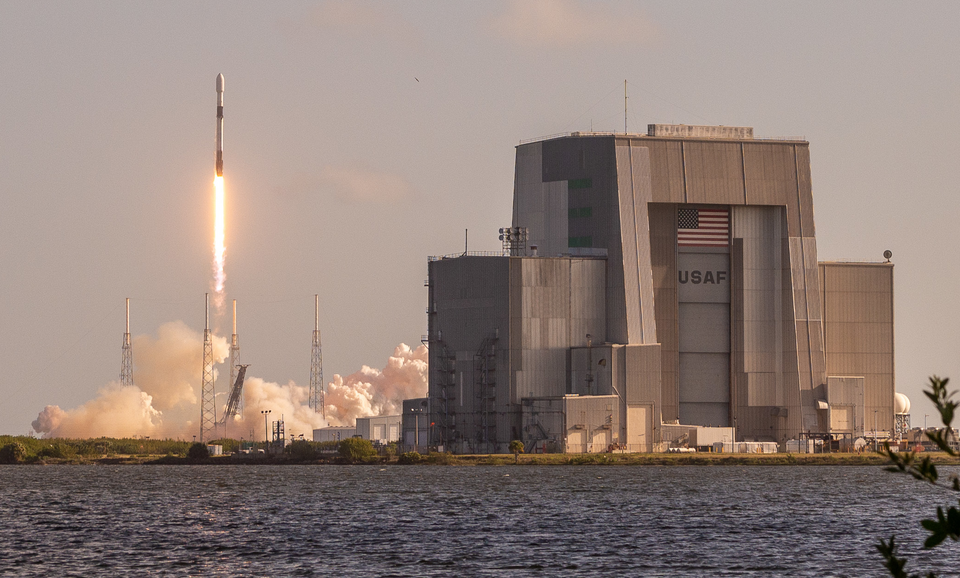
The Solid Motor Assembly Building (SMAB) as taken from its southern side. In the background is Space Launch Complex 40 (SLC-40), launching a Falcon 9 carrying Starlink 4-10.
Starlink © Joshua Conti, U.S. Space Force

Starlink’s head start: rapid airline signings

Starlink currently has momentum in commercial aviation. Reuters, citing aviation intelligence firm Valour Consultancy, reports Starlink has signed 11 new airline customers so far in 2026, after 22 in 2025 and eight in 2024.

That early lead matters because switching connectivity providers is not easy. Industry analyst Lluc Palerm (Analysys Mason) told Reuters the market is shaping up as a “battleground” and noted that swapping systems later is expensive because aircraft must be taken out of service, equipment is provider-specific, and contracts typically run for years.

Valour’s Daniel Welch told Reuters that SpaceX holds Starlink contracts covering more than 7,000 aircraft, reinforcing what Reuters called an “undeniable” lead.

The money involved is significant. Reuters cited Jefferies estimates that America’s Starlink rollout could cost $150 million to $250 million for equipment and installation, plus annual service fees potentially exceeding $60 million.

Starlink is emphasising speed and installation simplicity, while Amazon is pitching a broader technology bundle, cloud computing, entertainment, and retail links beyond just connectivity.

An exterior view of Amazon’s Hyderabad campus buildings and signage, used to represent Amazon’s broader technology ecosystem as it prepares Project Kuiper connectivity services for airlines.
Amazon Hyderabad Campus © Kavali Chandrakanth

Amazon Leo’s strategy

Amazon is earlier in the airline deployment cycle, but it has landed high-profile wins, particularly with carriers that already run a lot of their digital infrastructure on Amazon.

Amazon says Delta Air Lines will begin rolling out Amazon Leo in 2028, starting with an initial installation on 500 aircraft under a multiyear agreement. Amazon also says JetBlue will be the first airline to implement Project Kuiper satellite technology to enhance its Fly-Fi service, with upgrades starting in 2027.

Even with the momentum, there are vocal sceptics. It was reported that Ryanair CEO Michael O’Leary has ruled out Starlink, citing cost and fuel burn/drag associated with antennas sparking a public back-and-forth with Elon Musk.

Despite the LEO headlines, today’s in-flight connectivity market is still a patchwork. Established providers such as Viasat, Intelsat, Panasonic Avionics and Hughes remain widely embedded across large fleets, and multi-orbit/backup approaches and regulatory hurdles in certain markets mean LEO won’t instantly replace everything.
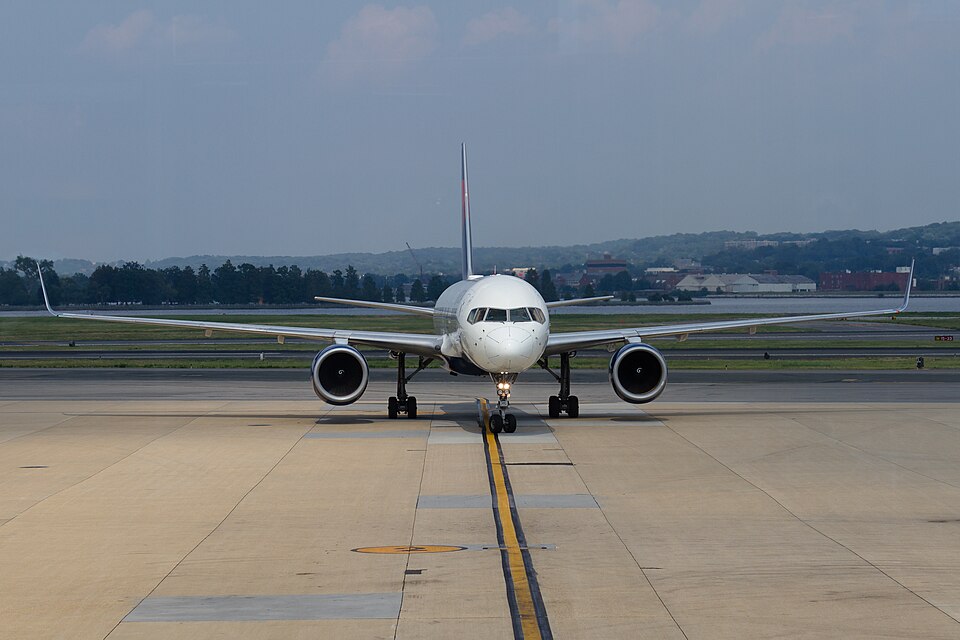
A Delta Airlines Boeing 757 (N649DL) at last turn during taxi in at Ronald Reagan Washington National Airport (DCA) on 16 July 2012
Amazon says Delta Air Lines will begin rolling out Amazon Leo in 2028 © PierreSelim

How impactful is this in modern-day aviation?

Airlines increasingly view fast Wi-Fi as a lever for customer retention and ancillary revenue pulling travellers into loyalty programmes and marketing upgrades, flights and co-branded credit cards after the trip.

The airline Wi-Fi surge comes as increasing investor attention on Starlink grows beyond consumer broadband. One reason: Starlink has become a major financial engine inside SpaceX. SpaceX’s IPO filing shows the “Connectivity” segment (driven by Starlink) generated about $11.4 billion of $18.67 billion in 2025 revenue.

What do you think of the tussle between Amazon and Starlinks? Do you think it will affect the aviation space positively or negatively? Let us know in the comments!
You Might Also Like

Heathrow Airport Shutdown: Airlines and Flight Updates
Inside the Luxury Arms Race Happening Above 35,000 Feet
TAP Air Portugal launches A321neo with optimised cabin space
The Smart Traveller’s Strategy: Booking Accommodation Based on Flight Reliability Data
Lufthansa to be the first airline to receive Boeing 777X
Share This Article
Facebook Twitter Email Copy Link
What’s your thoughts?
Love0
Sad0
Happy0
Angry0
Previous Article A Malaysia airlines Airbus A330 jet taking off from an airport runway in front of a field of grass. Far Eastern Travel from the UK Grows Rapidly
Next Article A Boeing B-52 Stratofortress on runway before take off US Air Force B-52 bomber crashes shortly after take-off from California base
Leave a Comment

Leave a Reply Cancel reply

Your email address will not be published. Required fields are marked *


Stay Connected

FacebookLike
TwitterFollow
InstagramFollow
YoutubeSubscribe

Trending News

A Boeing B-52 Stratofortress on runway before take off
US Air Force B-52 bomber crashes shortly after take-off from California base
Aircraft Breaking News Incidents & Accidents
A Malaysia airlines Airbus A330 jet taking off from an airport runway in front of a field of grass.
Far Eastern Travel from the UK Grows Rapidly
Aviation Route Development Travel
An aerial shot of Frankfurt International Airport. Surrounding trees and greenery can be seen either side of the runway and buildings.
Frankfurt Added to Kuehne+Nagel Transatlantic Rotation
Airline Economics Airlines Route Development
Air Canada flight 843 (Boeing 787-9, C-FRSI) to Toronto-Pearson takes off from Frankfurt International Airport seen from Aussichtspunkt Ost, taken on Feb. 17, 2025 17:26:20.
Air Canada’s first Airbus A321XLR enters scheduled service
Aircraft Airlines Aviation
A swam of bees on a Boeing 737-900 wing.
Swarm of Bees Causes Delay to United Airlines Flight
Aircraft Airlines Airports Incidents & Accidents

Travel Radar is the leading digital hub for all things aviation and air-travel. Discover our latest aviation news, aviation data, insight and analysis.


Discover

  • Latest News
  • Subscribe
  • Weekly Digest
  • Contact Us
  • Privacy Policy
  • About Us
  • Advertising
  • Media Coverage
  • Press & Events
  • Join Our Team
  • Our Brands

Signup to our Newsletter!

And get the latest aviation news via our weekly news digest!

© Travel Radar Media Ltd. 2015-2026 | ISSN #2635-0696 | Trademark #UK00003579704
adbanner
Welcome to the TR Community!

Sign in to your account

Not a member? Sign Up