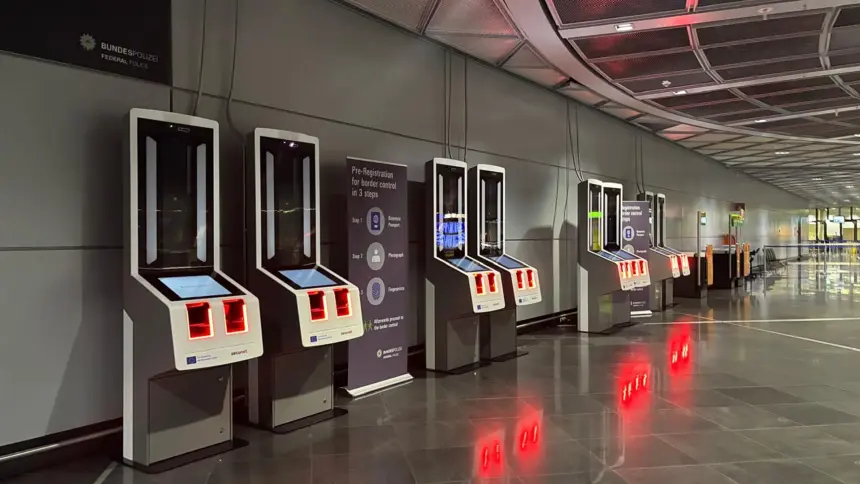
The EU’s new biometric border system – the Entry-Exit System (EES) – is causing wait times of up to two hours at major airports. The system is struggling to cope with the large number of non-EU passengers passing through.
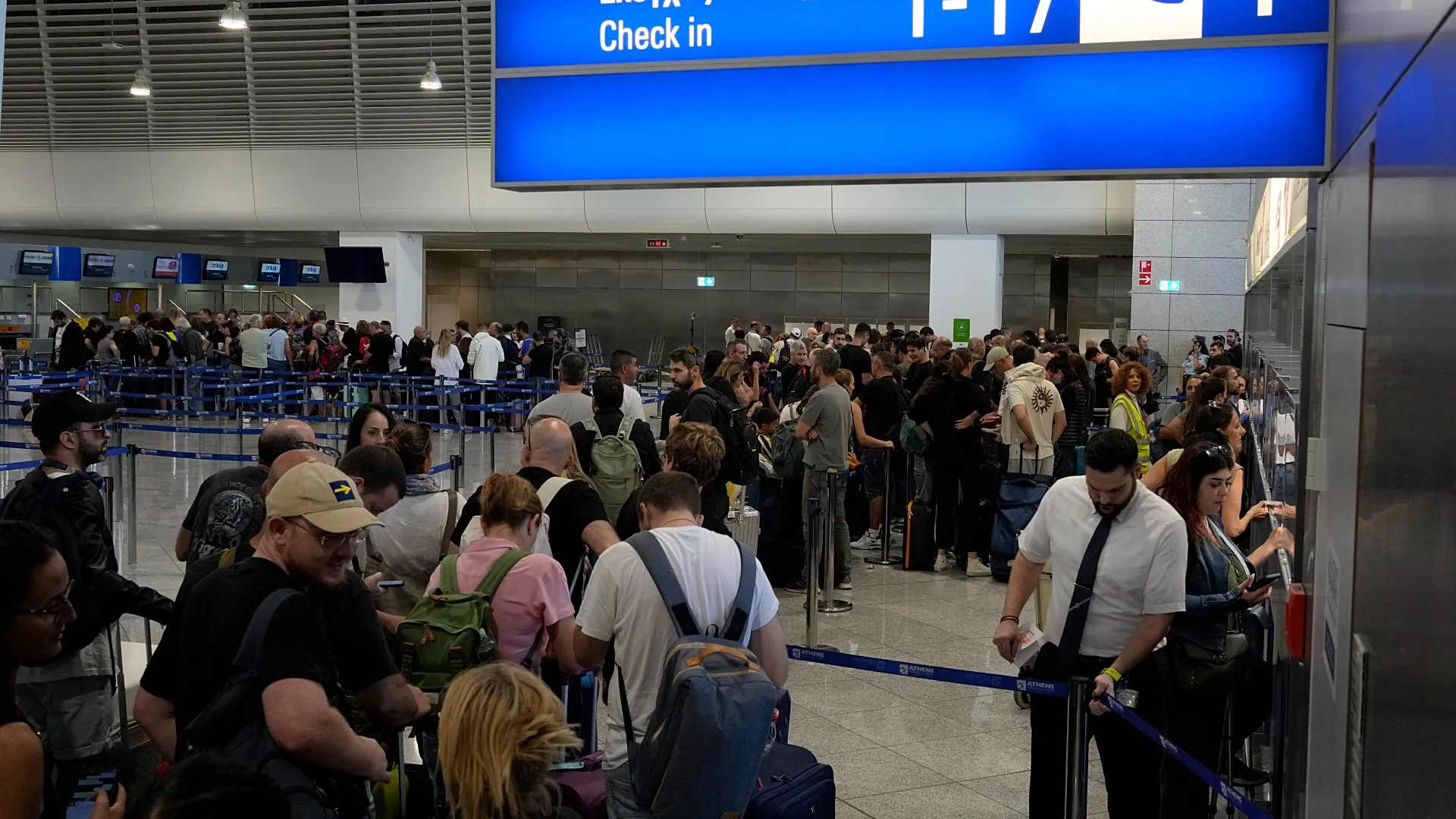
EES queue chaos
Major airports in the region, like Frankfurt Airport, Amsterdam Airport Schiphol and Munich Airport, are facing wait times that have doubled.
New data shows that the EES, which requires non-EU travellers to register their biometric data (fingerprints and facial scans), has seen queue sizes skyrocket and has led to passengers missing flights.
The study by the Financial Times and travel analytics group Qsensor showed that, at Frankfurt Airport, the average wait time reached 120 minutes in July, up from 60 minutes the same month last year. At Munich Airport, wait times reached 60 minutes, up from 31 minutes last year. Amsterdam Airport Schiphol’s wait times reached 120 minutes, up from 80 minutes.
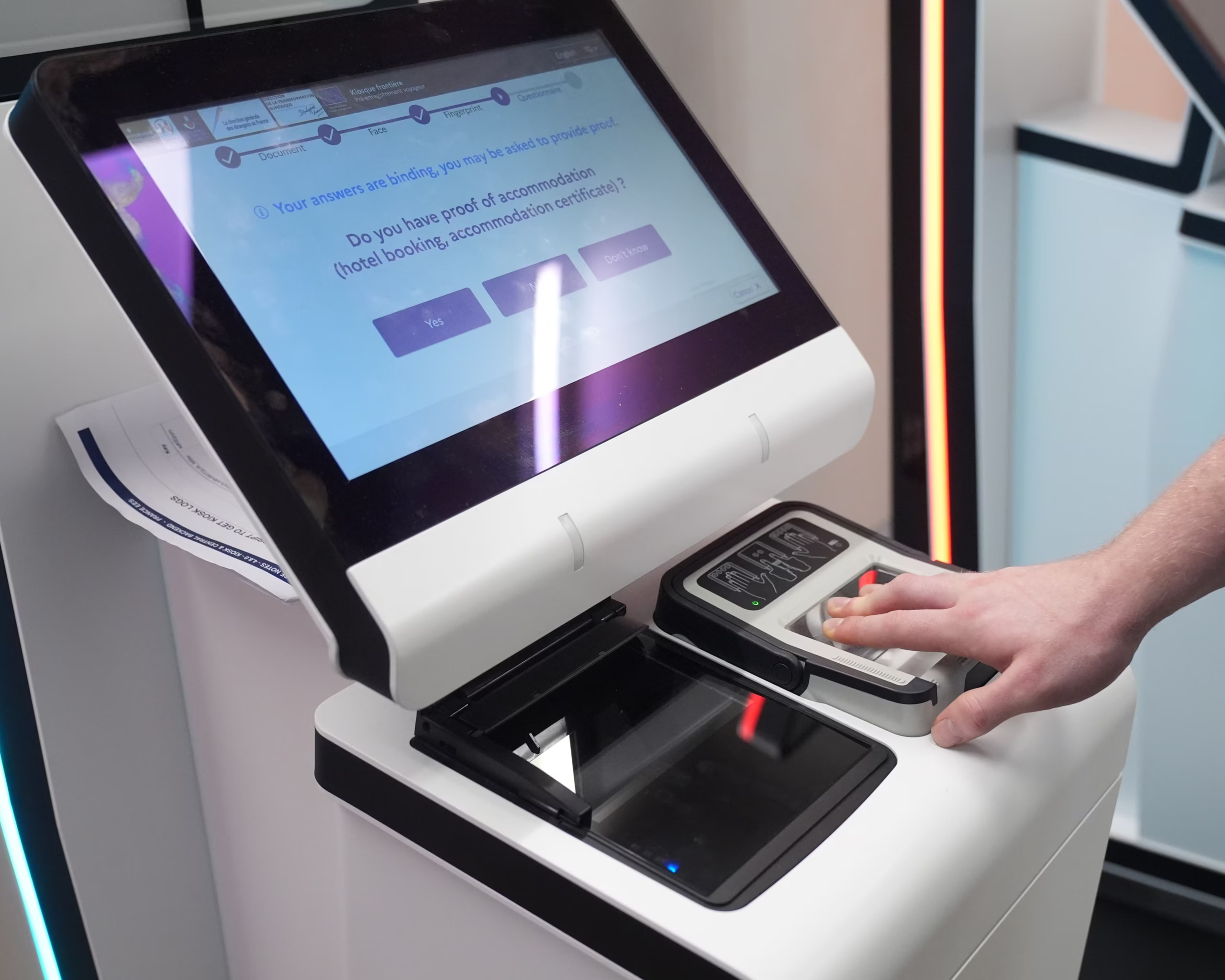
In theory, non-EU passengers are required to scan their passport and do a facial scan, then register their fingerprints on the first use. In practice, passengers have had to give fingerprints on multiple trips due to glitches in the system, leading to longer queues and wait times.
Criticism from the travel industry
Some airports have decided to temporarily turn off parts of the EES checks – including not collecting fingerprints during peak hours – to ease the stress on passengers and workers.
According to a letter sent to the European Commission, the chaos has “reached a critical point”.
Airlines for Europe, ACI Europe, and the International Air Transport Association requested an “immediate intervention” and asked for temporary flexibility to suspend EES checks in July and August, “whenever passenger volumes exceed the operational capacity of border control facilities.”
The flexibility is set to end in September, but eight EU countries and Switzerland have asked the European Commission to extend the arrangement.
In a statement, the Commission said they are considering the extension of the flexibility:
“When it comes to the time after the summer, we are in close and constructive contact with those few member states where there are challenges at certain border crossing points.”
The spokesperson added that the EES hasn’t been disastrous everywhere, that registration takes around 70 seconds on average, and that the impact on non-EU travellers has been limited “in most cases”.
What are your thoughts on the EES? Do you think its suspension should be extended? Let us know in the comments!