Boeing stated second-quarter 2026 revenue rose to $24.6 billion, driven “primarily” by 171 commercial aircraft deliveries during the quarter, according to the company’s July 28, 2026, earnings release.
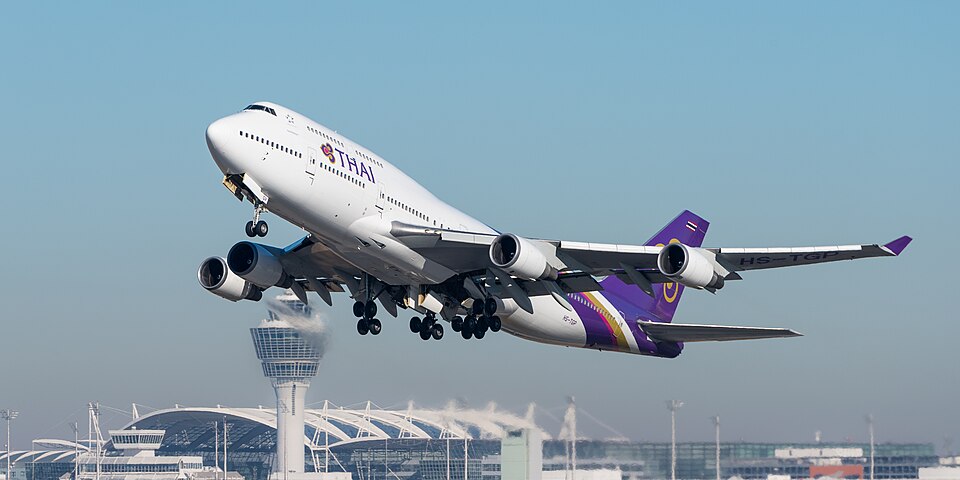
Commercial Airplanes: deliveries up, losses narrower, 737 rate move and MAX 7/MAX 10 progress
For the second quarter 2026, Boeing reported a GAAP loss per share of ($0.67), a core (non-GAAP) loss per share of ($0.76), operating cash flow of $1.4 billion, and free cash flow (non-GAAP) of $0.6 billion.
Boeing’s net loss was $428 million in the quarter, improved from a $612 million net loss a year earlier. Operating results turned positive at the company level ($156 million earnings from operations) versus an operating loss in second quarter 2025, while core operating earnings were essentially break-even ($1 million).
Boeing Commercial Aeroplanes posted $11.8 billion in second-quarter revenue with an operating margin of (2.7%), reflecting higher deliveries and improved performance, Boeing said. Deliveries were 171 in the quarter (up from 150 a year earlier).
Operationally, Boeing said the 737 programme began transitioning production to a 47-per-month rate during the quarter and activated low-rate initial production on the 737 North Line in July. It also said certification flight testing has been completed on both the 737-7 and 737-10, with Boeing still expecting certification in 2026 and first deliveries in 2027 for both variants.
Revenue up in several segments, and its ramifications
On the widebody side, Boeing said the 777X programme received Federal Aviation Administration (FAA) approval to begin certification flight testing under Type Inspection Authorisation (TIA) 4B, and it continues to anticipate first delivery in 2027. Boeing also said the total company backlog grew to a record $715 billion, including over 6,200 commercial aeroplanes.
Boeing Defence, Space & Security reported $7.5 billion in Q2 revenue but an operating margin of 0.2%. Boeing said results included $280 million of losses on the VC-25B programme, primarily due to added production and certification resources; Boeing continues to anticipate first delivery in 2028.
Boeing Global Services posted $5.3 billion in second-quarter revenue and an 18.1% operating margin. Boeing attributed margin impacts to factors including the Digital Aviation Solutions divestiture, higher costs, and mix. The services backlog ended the quarter at $33 billion.
Boeing ended the quarter with $20.0 billion in cash and marketable securities (down from $20.9 billion at the start of the quarter) and $45.9 billion in consolidated debt (down from $47.2 billion). Boeing also said it had access to $10.0 billion in undrawn credit facilities.
Where do you see Boeing going from here? Do you see them generating more revenue in the next quarter? Share in the comments.