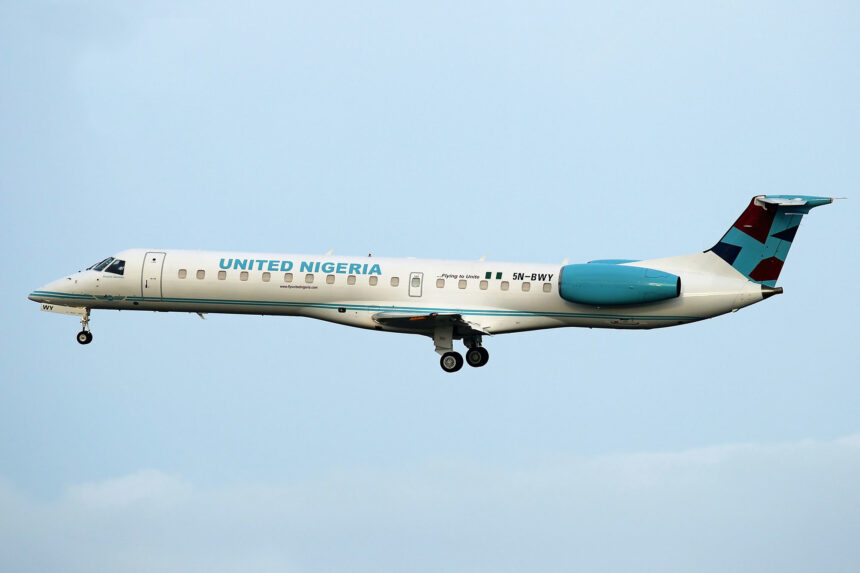
A United Nigeria Airlines Embraer E145 has made aviation history, touching down as the first scheduled commercial flight at the new Ado-Ekiti Agro-Allied International Cargo Airport. The landmark service, which commenced on December 10, 2025, marks the culmination of a multi-billion Naira project and opens a vital new air corridor in southwestern Nigeria.
Summary

Touchdown After Years of Investment
The inaugural flight from Abuja was met with celebration, carrying dignitaries including former state governors. This moment was the result of a ₦49.77 billion investment by the Ekiti State government, supported by significant philanthropic contributions. Notably, legal icon Aare Afe Babalola donated ₦2.34 billion ($1.6 million) in crucial navigational equipment. Governor Biodun Oyebanji hailed the airport as a cornerstone for economic transformation. It is specifically designed to connect local farmers to broader markets and reduce agricultural waste.

A Gateway From Farm to Freight
The airport is strategically designated as an agro-allied cargo facility. Its primary mission is to serve as an export gateway for Ekiti’s agricultural produce. Therefore, it aims to streamline supply chains, attract agri-business investment, and boost the state’s GDP. By integrating air freight capabilities, the project seeks to turn geographical challenges into tangible economic opportunities. Consequently, this position Ekiti as a more competitive player in Nigeria’s economy.

Pinning Ekiti on the Intercity Map
United Nigeria Airlines is the pioneering carrier. It has established an initial network of three weekly flights to Abuja and Lagos, filling a critical connectivity gap. Furthermore, it provides residents, businesses, and students with faster and more reliable travel. The airline stated the service aligns with its strategy to develop emerging markets and stimulate socio-economic growth in underserved regions. The Nigerian Civil Aviation Authority’s operational approval, granted in October 2025, supports this development.
The launch of commercial flights at Ado-Ekiti Airport is a transformative step, turning a landlocked state into a connected hub for trade and tourism. This new infrastructure promises to unlock the region’s economic potential and catalyse long-term development.
Will improved regional air links drive the next wave of economic growth in Nigeria? Let us know what you think in the comments.