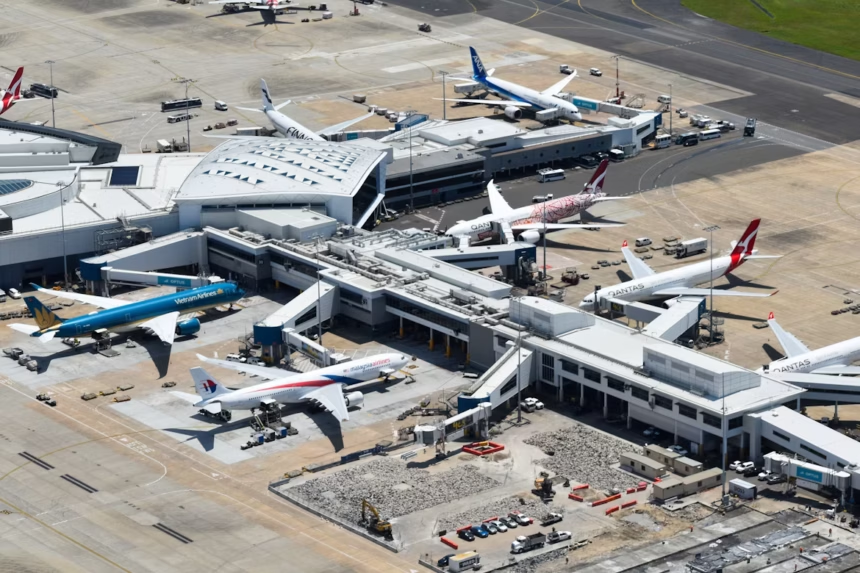
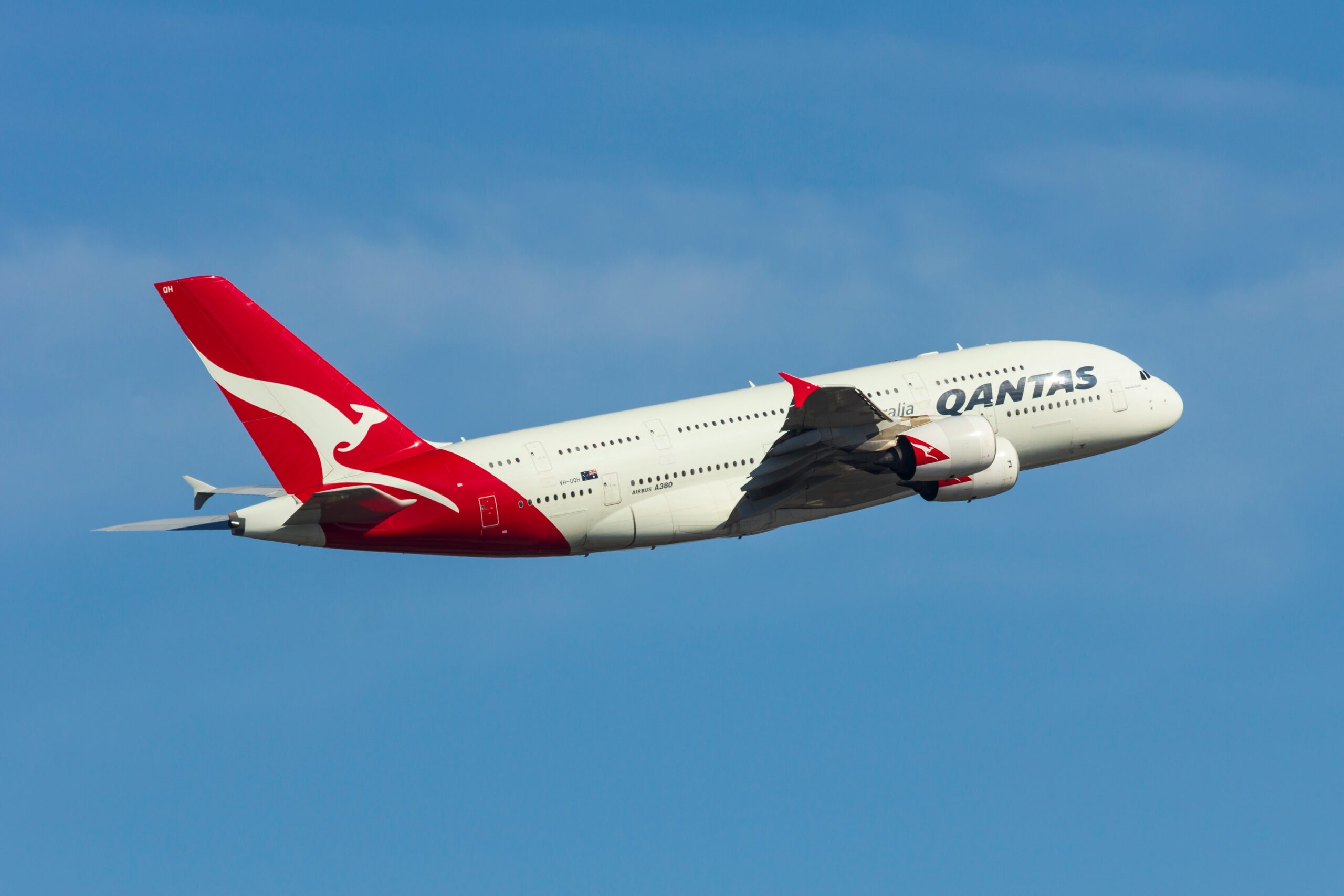
Yet another near-collision at Sydney Airport has sparked concerns over safety at the Australian airport. The latest incident involved two Qantas planes being cleared to use the airport’s runway simultaneously by Air Traffic Control (ATC). This marks the airport’s fourth safety incident in as many weeks, causing major concern over the increased frequency of these incidents’ at the airport. Further questions have been raised over whether the shortage of air traffic controllers and larger safety protocols at Australia’s busiest airport are related to the frequency of safety incidents at Sydney Airport.
The Fourth Near-Miss at Sydney Airport in Four Weeks
Questions are being asked over the management at Sydney Kingsford Smith Airport (SYD) following a fourth near-collision at the Australian airport. The airport is Australia’s busiest aviation hub and the main base of the country’s flag carrier airline, Qantas, but has recently come under fire following multiple safety incidents following conflicting air traffic control instructions.
According to ABC News, an incident on July 27 was the first near-miss at SYD in recent weeks. A QantasLink flight travelling from Canberra and a Qantas aircraft from New Zealand almost collided on the tarmac after one plane was given clearance to enter the runway that the other was landing on.
Two further incidents of a similar nature occurred on Aug. 9, raising additional concerns over ATC instructions; the first involved a Jetstar Airbus A320 and a Qatar Airways Boeing 777. The Qatar Airways aircraft was being towed across the apron by a tug when the Jetstar A320, which had also been given clearance, was forced to brake abruptly to avoid it.
Some reports have alleged a cabin crew member onboard the Jetstar flight suffered minor injuries due to the abrupt stop. The incident also resulted in serious delays for a significant number of flights.
Later the same day, a Virgin Australia plane that was due to fly to Perth was midway through preparations to takeoff when a Qantas flight bound for Ayers Rock suddenly entered the runway. The Virgin flight had been given clearance for take-off but had to halt its preparations after crew realised the Qantas aircraft had also been given permission to cross the runway.
The latest incident occurred on Aug. 18 when two Qantas planes were cleared to use the same taxiway at SYD simultaneously. The first aircraft was travelling to Melbourne and given clearance by ATC to make its way onto the taxiway in order to depart. The crew were forced to abandon their take-off preparations, however, when a Boeing 737 that had just touched down from the Gold Coast was sighted. The B737 was travelling down the same taxiway that the Melbourne-bound plane had just been given clearance for.
The Australian Transport Safety Bureau (ATSB) have stated this most recent incident posed no immediate risk of collision, so would be classed as a “safety incident”, rather than a “serious incident”. Nonetheless, the organisation confirmed it had elected to conduct a”transport safety investigation” to understand the conflicting instructions given to flight crews and clarify facts of the incident.
Air Traffic Controller Shortage Comes to Light
The sheer number of incidents and near-collisions in such a short period of time has raised serious concerns over how air traffic control at Sydney Airport is being run. In particular, the number of air traffic controllers employed at SYD has also come into question.
Rob Sharp, head of Airservices Australia, the body in charge of traffic controllers, previously told reporters that whilst there was a shortage of controllers, this posed no issues to public safety. In light of this latest incident, some critics have disputed this statement and queried whether the number of near-collisions to have occurred at the Australian airport are related to this shortage.
Scott Nugent, head of the air traffic controllers’ union Civil Air, told the Sydney Morning Herald there were “just not enough air traffic controllers at Sydney Airport.” The union head also expressed his concern over the expectations held by the airport of controllers that were employed, stating the airport relied on overtime, including, “some of them doing 10 shifts on, and then one day off, over and over, in order to keep the tower running properly”.
The shortage of air traffic controllers has been a longstanding concern in Australia, as highlighted by Tony Stanton, head of the firm Strategic Air and aviation expert who was interviewed by the Straits Times. He noted that the frequency of safety incidents at Sydney Airport was “unusual” and needed urgent investigation.
He also emphasised that if Airservices Australia was found to be lacking an adequate number of staff to keep its airspace safe then appropriate action had to be taken.
Airservices Australia was also criticised by Angus Mitchell, the ATSB’s chief commissioner. Mitchell remarked that he was concerned by the failure of Airservices Australia to report safety incidents in a timely manner. He alleged that one of the incidents which occurred around 10 a.m. on Aug. 9 was not reported until Aug. 13.
Airservices Australia stated it submits multiple reports to the ATSB on a daily basis:
“As with all reported occurrences, we will provide the ATSB with all relevant information and act on any findings arising from its investigation. The recent ground traffic incidents currently under investigation by the ATSB involve a range of circumstances, and each incident is being investigated on its individual facts.”
Airservices Australia has not made any further comments about the most recent incident at Sydney Airport, or mounting public concerns about the controller shortage at the 29 control towers that it operates and is responsible for staffing.
ATSB have stated their investigation into these recent incidents will evaluate whether there are any “contributing factors common across the other Sydney Airport incidents” that they are also currently looking into. This will involve collecting evidence from all crew and air traffic controllers involved in the incident, looking into recorded data, and collecting any other relevant background or circumstantial information.
The ATSB has confirmed it expects to publish a preliminary report outlining key facts of the incident within the next six to eight weeks, with the exception of its finding of any critical safety concerns which the airport and relevant authorities would be informed of immediately.
Do you think these incidents represent a need for a review of ATC staffing needs and funding in Australia? Let us know your thoughts.