By using this site, you agree to the Privacy Policy and Terms of Use.
Accept
Travel Radar - Aviation NewsTravel Radar - Aviation News
  • Breaking News
  • Aviation
    • Aircraft
    • Airlines
    • Airshow & Events
    • Careers
    • Manufacturing
  • Travel
    • Airports
    • Points & Loyalty
    • Technology
    • Trip Reviews
  • Newsletters
  • Aircraft for Sale
Reading: The One and Only—Concorde! Part One
Share
Sign In
Notification Show More
Font ResizerAa
Font ResizerAa
Travel Radar - Aviation NewsTravel Radar - Aviation News
  • Breaking News
  • Aviation
  • Travel
  • Newsletters
  • Aircraft for Sale
  • Breaking News
  • Aviation
    • Aircraft
    • Airlines
    • Airshow & Events
    • Careers
    • Manufacturing
  • Travel
    • Airports
    • Points & Loyalty
    • Technology
    • Trip Reviews
  • Newsletters
  • Aircraft for Sale
Signin Sign In
Follow US
Copyright © Travel Radar Media Ltd. 2025 | All Rights Reserved
Travel Radar - Aviation News > News > The One and Only—Concorde! Part One

The One and Only—Concorde! Part One

Travel Radar Staff
Last updated: 25 February 2020 14:46
By Travel Radar Staff
4 Min Read
Share
© flickr commons
SHARE

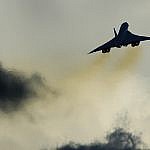
On 2nd March 1969—nearly 51 years ago, the Anglo-French Aérospatiale-BAC Concorde took its first flight from Toulouse in France, captained by Andre Turcat.

No other commercial aircraft–before or since–flew as fast, flew as high, with so much panache, was so expensive, so complicated, was so beautiful, had so much glamour and was so noisy as the incomparable Concorde.

Here’s some facts and figures…

  • A cruising speed of Mach 2.02, or 2 154 km/h, with a maximum of Mach 2.23 (2 370 km/h)
  • The top speed was limited by aerodynamic heating of the material used in construction, an aluminium alloy.
  • A maximum cruising altitude of 60 000 ft, with a practical ceiling of 68 000 ft.
  • Passenger capacity of up to 128
  • The only passenger aircraft whose engines had afterburners (or ‘reheat’)
  • London to New York in half the time of conventional passenger aircraft, with famously the record of 2 hours and 52 minutes.

Design & Development
© Flickr commons

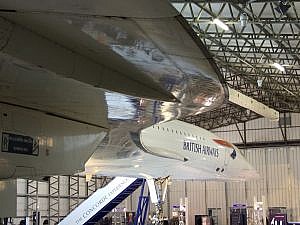
Interest in supersonic commercial transport began in the early 1950s in the UK. At that time it was understood that the best wing design would be a very short span, very thin wings like the Lockheed F-104 Starfighter (an aircraft plagued by accidents) or like those on missiles—but this would result in very little lift and extremely high landing and take-off speeds. The idea of a Supersonic Transport (SST) was shelved but research continued in supersonic aerodynamics.

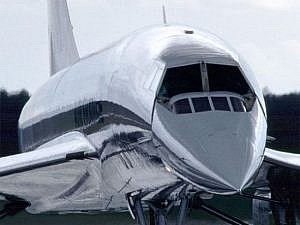
Shortly afterwards, the research showed that a short-span, delta wing could provide much more lift at high angles of attack but keep the advantages of low drag. Suddenly the SST idea was feasible. These high angles of attack required resulted in the unique nose of the Concorde, able to drop by 13° for improved visibility on take-off and landing.

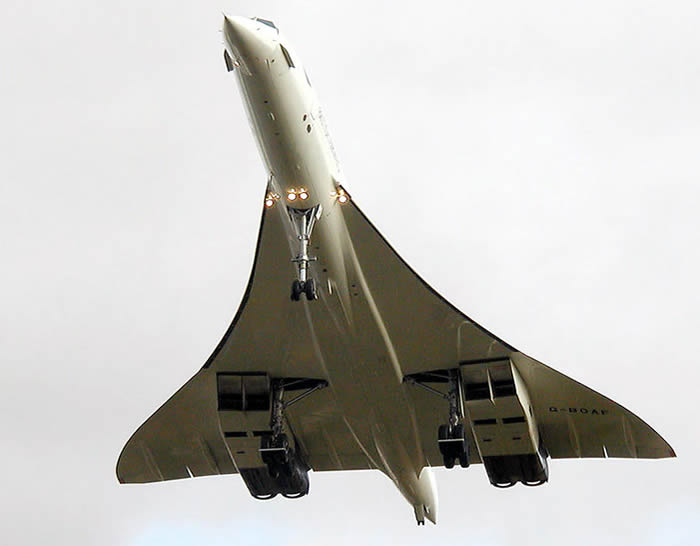
In 1959, the British companies Hawker Siddeley and Bristol began studies. The final wing design was the characteristic ‘ogival’ wing, based on a twin curve. (see the main image) In 1960, the new British Aircraft Corporation approached Boeing, General Dynamics, and Douglas of the US and with Sud Aviation of France. The French were working on a parallel project and had much in common with the British. The American companies were less enthusiastic, believing that the US government would sponsor their own programme. Finally, the SST project with France was negotiated as an international treaty—the British at the time trying to enter the European Common Market- (now the European Union) rather than a commercial agreement.
© Flickr commons

The engine choice was less difficult despite the immense power needed. Two versions of the aircraft were considered, the British looking for a design capable of carrying 150 passengers across the Atlantic and the French a shorter range. The similarities in design were relatively small, and it was decided the Olympus 593 turbojet engine, producing 37 000 pounds of thrust or 157 kN each was suitable, the engines available having been originally designed for the Avro Vulcan strategic bomber aircraft.

Part two tomorrow…

You Might Also Like

Fast Movers; Hornet F/A-18
How Safe is it to Board a Flight amid a Pandemic?
Boeing Increases Boeing 737 Production Schedule
Delays Expected at Paris-Orly Airport Following Technical Issue
Boeing Rolls off the last Boeing 787 from its Everett plant
Share This Article
Facebook Twitter Email Copy Link
What’s your thoughts?
Love0
Sad0
Happy0
Angry0
ByTravel Radar Staff
Follow:
Articles from guest contributors wishing to remain anonymous are credited to this account. Want to contribute to Travel Radar either in-name, or anonymously? Get in touch: [email protected]
Previous Article News Roundup: Week #8 of 2020
Next Article The One and Only Concorde; Part Two
1 Comment

Leave a Reply Cancel reply

Your email address will not be published. Required fields are marked *


Stay Connected

FacebookLike
TwitterFollow
InstagramFollow
YoutubeSubscribe

Trending News

This image shows a Britten-Norman BN-2 Islander aircraft operated by Loganair (sporting a British Airways Express livery) sitting on the snow-covered Fair Isle airstrip in Shetland, Scotland.
Loganair calls for support from the PSO as demand continues
Aircraft Airlines Aviation
A United Airlines Airbus A321neo is pictured climbing through a cloudy blue sky after take-off.
United Airlines first A321-200NY(XLR) and iMTOW B787-9
Aircraft Airlines Aviation
A Nigeria Airways Boeing 747-200 is seen on the apron at an international airport during the airline’s operational years. The iconic jumbo jet was a key part of the flag carrier’s long-haul fleet before the airline ceased operations in 2003.
Nigeria to set up aircraft leasing for carriers
Aircraft Airline Economics Aviation
An Air Corsica Jet
French Government Cuts Tax on Certain Flights
Airline Economics Airlines Airports Aviation Travel
A Lufthansa Boeing 787-9 Dreamliner resting on its nose at Frankfurt Airport after a landing gear collapse with the aircraft positioned in front of a terminal building
Lufthansa Crew Injured following 787-9 Nose Gear Collapse
Aircraft Airlines Aviation Incidents & Accidents

Travel Radar is the leading digital hub for all things aviation and air-travel. Discover our latest aviation news, aviation data, insight and analysis.


Discover

  • Latest News
  • Subscribe
  • Weekly Digest
  • Contact Us
  • Privacy Policy
  • About Us
  • Advertising
  • Media Coverage
  • Press & Events
  • Join Our Team
  • Our Brands

Signup to our Newsletter!

And get the latest aviation news via our weekly news digest!

© Travel Radar Media Ltd. 2015-2026 | ISSN #2635-0696 | Trademark #UK00003579704
adbanner
Welcome to the TR Community!

Sign in to your account

Not a member? Sign Up