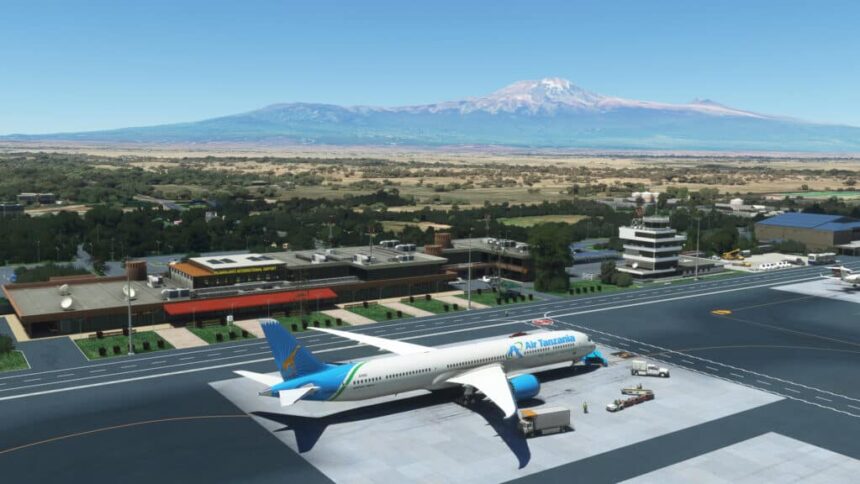
Tanzania has completed a major expansion of its aircraft maintenance infrastructure at Kilimanjaro International Airport (KIA), marking another step in the country’s efforts to strengthen its aviation sector and reduce dependence on overseas maintenance services.
The project, delivered by Air Tanzania Company Limited (ATCL), was completed at a cost of approximately TZS 2 billion and increases the airport’s maintenance capacity to accommodate up to five aircraft simultaneously.

Expanded facilities strengthen local maintenance capability
The upgraded facility is expected to support Air Tanzania’s growing fleet while also providing maintenance services for other aircraft operating across the country. It includes improvements to the aircraft hangar, lighting systems, engineers’ workspaces, and new training equipment for aircraft maintenance engineers.
According to Tanzania’s Deputy Minister for Transport, David Kihenzile, the expanded infrastructure will enable all 16 aircraft in the Air Tanzania fleet, alongside aircraft from other operators, to receive maintenance within the country. This is expected to reduce the need to send aircraft abroad for servicing, lowering foreign currency expenditure while improving operational efficiency.
Lucas Tendela, Maintenance Manager at Kilimanjaro International Airport, said the hangar now has the capacity to service five aircraft at once. During the 2024/25 financial year, between five and six aircraft underwent maintenance at the facility.
Alongside the infrastructure upgrades, ATCL continues investing in workforce development through modern training equipment and expanded learning facilities designed to strengthen the skills of Tanzania’s aircraft maintenance engineers.

Aviation investment extends beyond maintenance
The government is also investing in employee accommodation at Kilimanjaro International Airport, renovating 38 staff houses originally built during the 1990s.
The project, valued at approximately TZS 5 billion, aims to provide housing for Air Tanzania employees who have experienced accommodation shortages near the airport. Officials say the development will help reduce housing costs while improving security and staff welfare.
Construction contractor Humphrey Soka said the wider improvement programme is now around 77% complete, with the remaining work focused on finishing the residential buildings. The project is expected to be completed during the next financial year.
The investments form part of Tanzania’s wider strategy to modernise its aviation infrastructure, strengthen local technical expertise, and improve operational efficiency as demand for air travel continues to grow.
What are your thoughts on Tanzania’s investment in local aircraft maintenance capabilities? Let us know in the comments below.