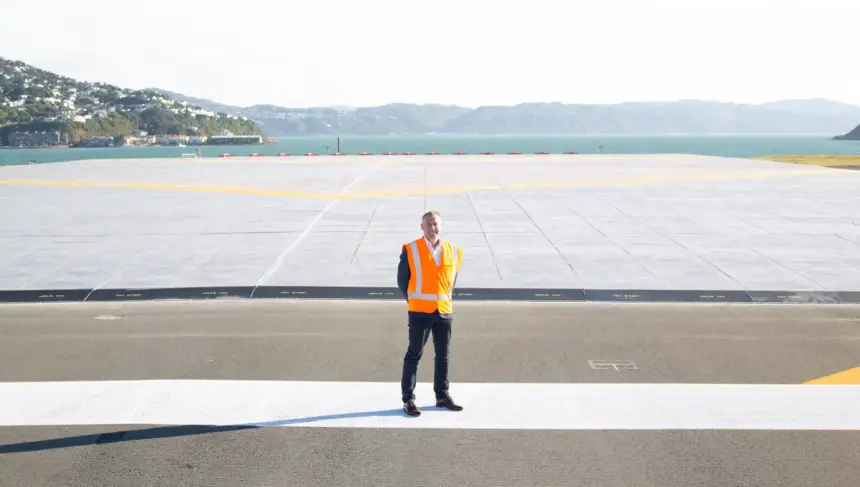
Wellington International Airport, located in the capital city of New Zealand, has upgraded its runway with a new safety feature installation to provide additional protection in the unlikely event of an aircraft overrun.

The New Runway Safety Feature
The purpose of the new feature, the engineered materials arresting system (EMAS), is to ensure maximum protection is in place in the event of an accident, with the use of innovative energy-absorbing blocks on each end of the runway. Each EMAS bed consists of over 3000 blocks, spanning across a 55 by 90 meter area.
“Most of this work had to be done between 1am and 6am to avoid impacting flight operations, and the final changeover last night was the most complicated part of the whole project with around 80 people involved,” said Matt Clarke, the chief executive of Wellington Airport.
Not only is the EMAS a concrete feature that increases safety on the runway, it also facilitated the increase of the length and dimensions of the runway, by optimising the space between the energy absorbing blocks on each end. This has increased the length of the landing area by 143 meters, and has increased the length of the take-off area by 37 meters, giving aircraft more leeway in the most crucial moments of a flight.
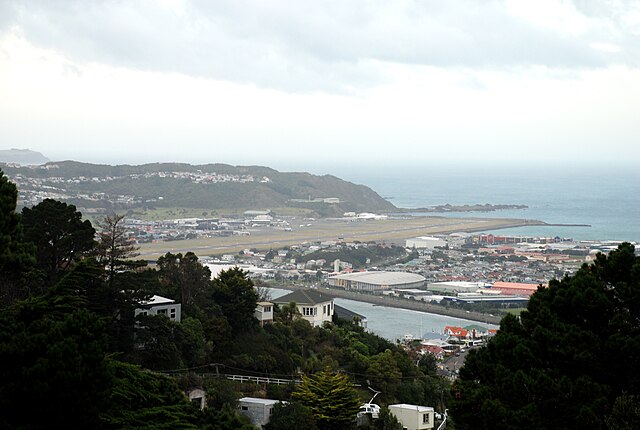
The Future of Wellington Airport
The planning process of adding EMAS beds to the runway commenced in April 2025. The upgrade has been completed early with one week to spare, and it did not exceed its $35 million budget.
“We’re not announcing new services at this stage, but the Wellington region is the largest market in Australasia, without a direct connection to Asia. The turbulence currently felt by the travel industry will settle in time and we can all look forward to celebrating the arrival of long-haul flights to the capital when the time is right,” Clarke said.
With the added length of the runway that the EMAS has enabled, the airport is now large enough to be able to handle larger, wide-body aircraft on its runways. This will allow for Wellington to be directly connected to major cities in Asia and North America. It provides the potential for non-stop routes to destinations that were previously inaccessible from Wellington, which adds convenience for passengers, and increases New Zealand’s connectivity to the rest of the world.
Which long-haul services would you like to see operating from Wellington? Let us know your thoughts in the comments below.