By using this site, you agree to the Privacy Policy and Terms of Use.
Accept
Travel Radar - Aviation NewsTravel Radar - Aviation News
  • Breaking News
  • Aviation
    • Aircraft
    • Airlines
    • Airshow & Events
    • Careers
    • Manufacturing
  • Travel
    • Airports
    • Points & Loyalty
    • Technology
    • Trip Reviews
  • Newsletters
  • Aircraft for Sale
Reading: MMF: The Future Of Airlines?
Share
Sign In
Notification Show More
Font ResizerAa
Font ResizerAa
Travel Radar - Aviation NewsTravel Radar - Aviation News
  • Breaking News
  • Aviation
  • Travel
  • Newsletters
  • Aircraft for Sale
  • Breaking News
  • Aviation
    • Aircraft
    • Airlines
    • Airshow & Events
    • Careers
    • Manufacturing
  • Travel
    • Airports
    • Points & Loyalty
    • Technology
    • Trip Reviews
  • Newsletters
  • Aircraft for Sale
Signin Sign In
Follow US
Copyright © Travel Radar Media Ltd. 2025 | All Rights Reserved
Travel Radar - Aviation News > News > MMF: The Future Of Airlines?

MMF: The Future Of Airlines?

Leo Cheung
Last updated: 25 October 2021 18:06
By Leo Cheung
5 Min Read
Share
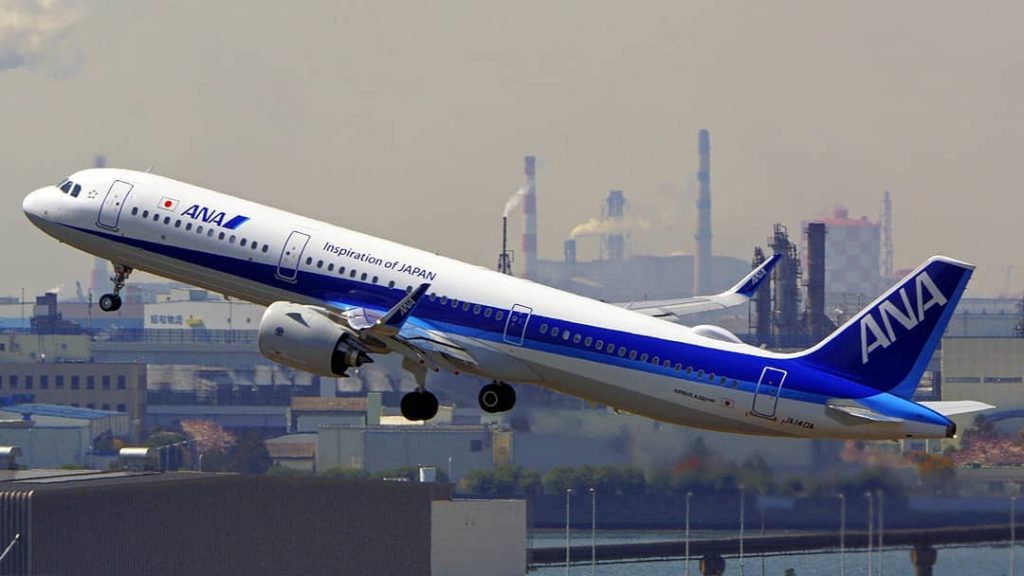
ANA Airbus A321 ©AirlinesFleet.com
SHARE

All Nippon Airways (ANA) will pilot Mixed Fleet Flying (MFF) between their Airbus320 and Airbus380, as approved by Japan’s Civil Aviation Bureau (JCAB) last week. The airline will be the pioneer to operate between one of the smallest and the largest commercial Airbus aircraft in the world. Airbus states that MFF is unique to Airbus aircraft, and their plan to introduce MFF in commercial operations can date back to the initial development of the A320. Let us take a closer look into MFF and how it will impact the industry.

Summary
Why the MFF?For pilotsFor Airlines

Introduced by Airbus, MFF was first based the Airbus’s design principle to introduce flight operation commonality in the design of the Airbus A320. Four years since the launch of the A320, the Airbus A340 made its debut and inherited the fly-by-wire and the EFIS (Electronic Flight Instrument System) features. Since then, the aforementioned systems became the backbone of the pilot-aircraft interface for all subsequent aircraft designed by Airbus, including the new A350XWB and Airbus A380. Prior to the definition introduced by Airbus, MFF was referred to as, “flight operational commonality”, and it has been seen between some aircraft families like the Boeing 737.

Why the MFF?

The press release of ANA and Airbus suggests some of the benefits of MFF: increased flexibility of scheduling of flight crew and improved cost-efficiency, presumably from the increased revenue hours, hence improved productivity of flight crew. There are, however, more reasons to develop MFF into commercial operations.

For pilots

Prior to MFF, in order to be qualified to fly a “type” of aircraft, the pilot must complete a Type Rating course on that specific aircraft type. Take the A320 family as an example, pilots who are type rated on the A320 can operate the whole series (318, 319, 320, and 321), due to all the A320 family aircrafts sharing a Same Type Rating (SFR). In order for pilots to fly an aircraft that shares operational commonality with a different Type Rating from the previous aircraft, they will need to go through a shortened Type Rating course, called Cross Crew Qualification (CCQ). Another extension of aircraft commonality is the transition from A330 to A350. Due to the system similarity between the two aircraft, a pilot certified on the A330 can simply go through 4 days of computer-based training and 4 sessions in a non-moving flight simulator, before getting certified to fly on the A350. This is called Common Type Rating (CTR). These certifications with operational commonality will significantly reduce training time and costs for both pilots and airlines.  To ensure pilot proficiency, pilots are required to have done takeoffs and landings, as well as proficiency checks within a set period of time. These recency requirements can be achieved across aircraft types with STR or CTR, to reduce scheduling difficulties and reduce manpower for simulator checks. Operational commonality further extends its benefits to pilots who are progressing to a larger aircraft type, or changing employer as it will reduce significantly the time and cost to get online.
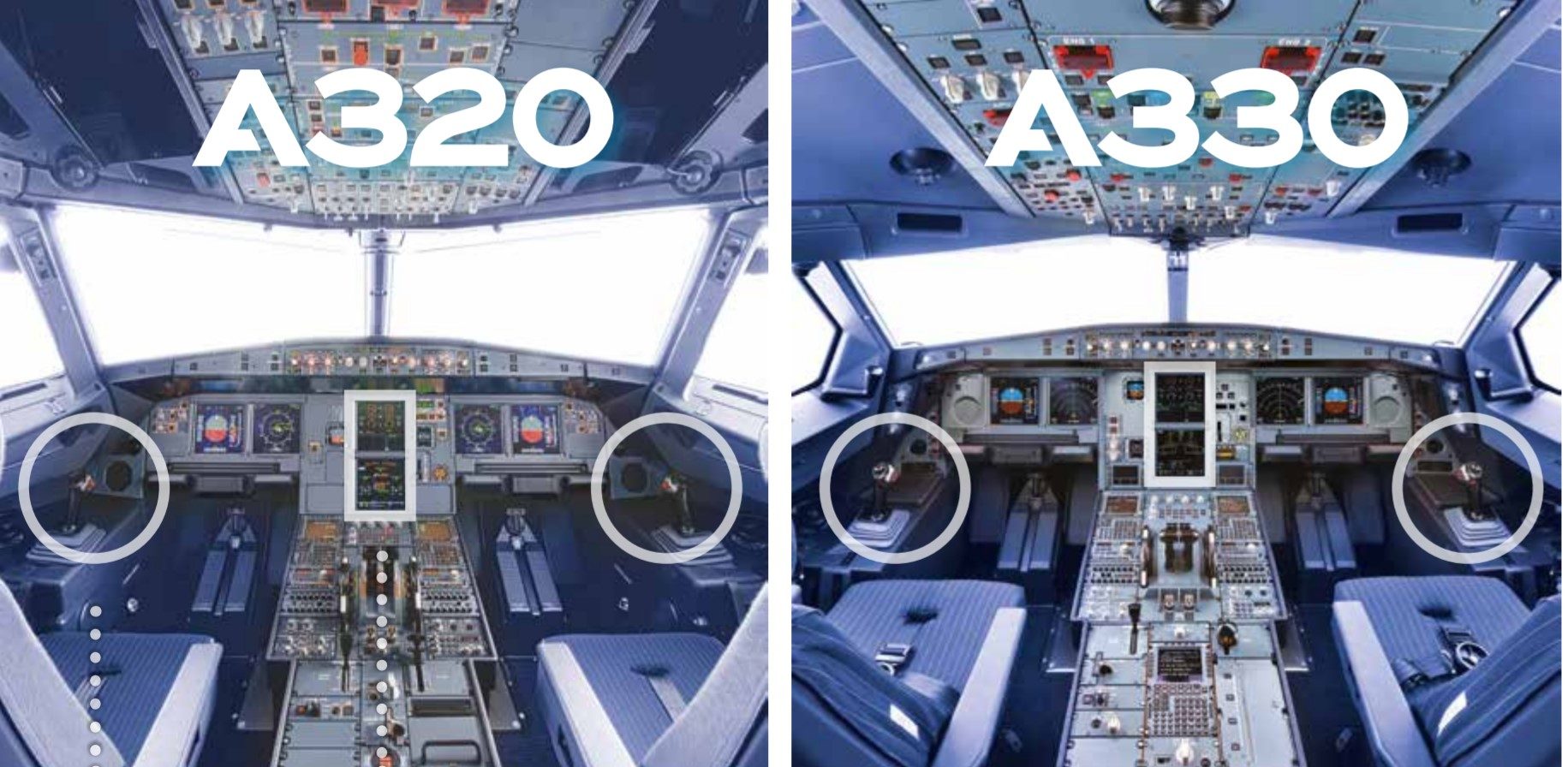
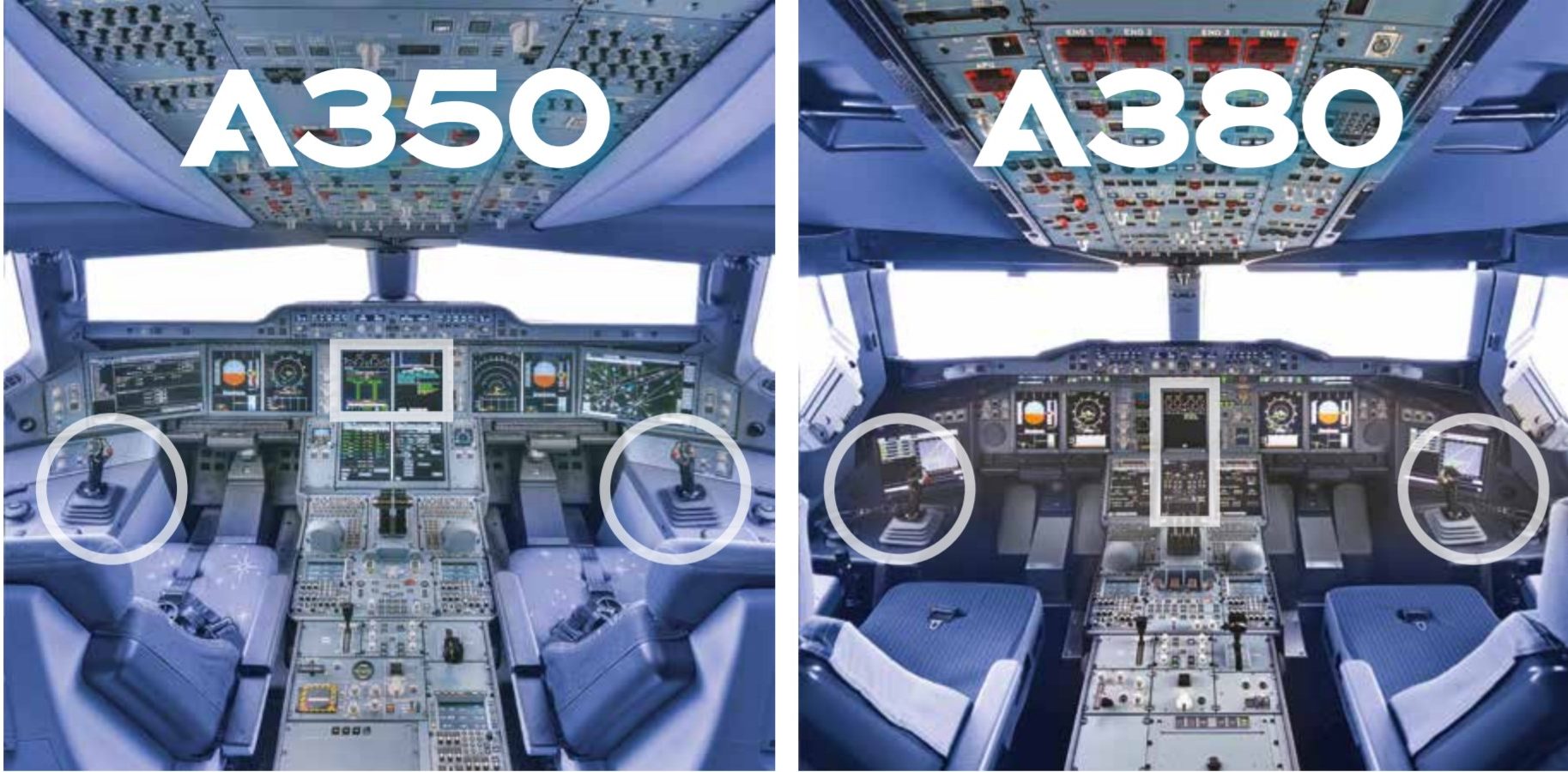
shows layout layout similarity
Pilots jumping from the Airbus 320 to 330 requires only a 6 days training ©airbus.com
shows layout similarity
Modern Airbus Cockpits are designed with commonality features ©airbus.com

For Airlines

As mentioned above, the shortened training time and cost were deemed significant, with airlines currently taking advantage of the commonality feature. Gulf Air, whom has been implementing MFF and CCQ for a couple of years, suggests the programs,

…turned out to be effective and successful. We took full advantage of the strong functional commonality established by Operational Differences Requirement table and operational evaluation board reports.

The commonality in aircraft systems has also been reported to reduce maintenance costs and training for ground staff.

So far we have covered the benefits of flight operation commonality and more specifically MFF. With more airlines implementing MFF into their crew composition, we will also need to weigh in some of the difficulties experienced by operators. In the next article, we will discuss more on latent problems that may arise in crew operating MFF. For more analysis from our writers: Click Here

What are your thoughts? Leave your comments below!

You Might Also Like

Air Malta Leasing an A320 to Cope with Summer Demand
US Government Seeks More Information on Proposed Qantas and American Airlines Alliance.
How to Get to London Stansted Airport from the City Centre
Alaska Airlines to Discontinue Flights Between New York JFK and Los Angeles
Why Does My Airplane Ticket Cost So Much Money?
Share This Article
Facebook Twitter Email Copy Link
What’s your thoughts?
Love0
Sad0
Happy0
Angry0
ByLeo Cheung
Follow:
Aviation Reporter - Born and raised in Hong Kong, Leo has decided to pursue a career in aviation under the influence of the old Kai Tak Airport back in the days. With a degree in aviation, he has joint Travel Radar as an aviation reporter to diversify his views and apply professional knowledge to anyone who is interested in commercial aviation. He regularly contributes articles with 'inside the cockpit' knowledge.
Previous Article British Airways Codeshare Kenya Airways Africa British Airways Codeshare Gives Customers More Access To Africa
Next Article Air Crew Aviation Workforce Shortages On Both Sides Of The Pond
Leave a Comment

Leave a Reply Cancel reply

Your email address will not be published. Required fields are marked *


Stay Connected

FacebookLike
TwitterFollow
InstagramFollow
YoutubeSubscribe

Trending News

San Francisco International Airport seen from above at night. The runways and the terminals are lit.
San Francisco Airport with Longer Delays
Airports Aviation
A white plain with some red detailing on the tail in picture from directly below, at quite some distance. It is pictured between trees and bright green leaves and foliage against a bright blue sky backdrop.
UK Government Invest £219 Million to Boost Green Aviation
Aviation Did You Know Travel
The Bucher G1B flying against clouds
Airbus adds Bucher to A320 supplier list with new galley and stowage solutions
Aircraft Aviation
A line of Cessna Citation and Beechcraft aircraft parked on an airport apron as volunteer pilots prepare for the Special Olympics Airlift mission
Textron calls on aircraft owners for 2026 Special Olympics Airlift
Aircraft Airshow & Events Aviation Did You Know
Austrian Airlines airbus A320neo flying over the clouds
Austrian Airlines appoints Dieter Vranckx as Supervisory Board Chairman
Airlines Careers Did You Know

Travel Radar is the leading digital hub for all things aviation and air-travel. Discover our latest aviation news, aviation data, insight and analysis.


Discover

  • Latest News
  • Subscribe
  • Weekly Digest
  • Contact Us
  • Privacy Policy
  • About Us
  • Advertising
  • Media Coverage
  • Press & Events
  • Join Our Team
  • Our Brands

Signup to our Newsletter!

And get the latest aviation news via our weekly news digest!

© Travel Radar Media Ltd. 2015-2026 | ISSN #2635-0696 | Trademark #UK00003579704
adbanner
Welcome to the TR Community!

Sign in to your account

Not a member? Sign Up