
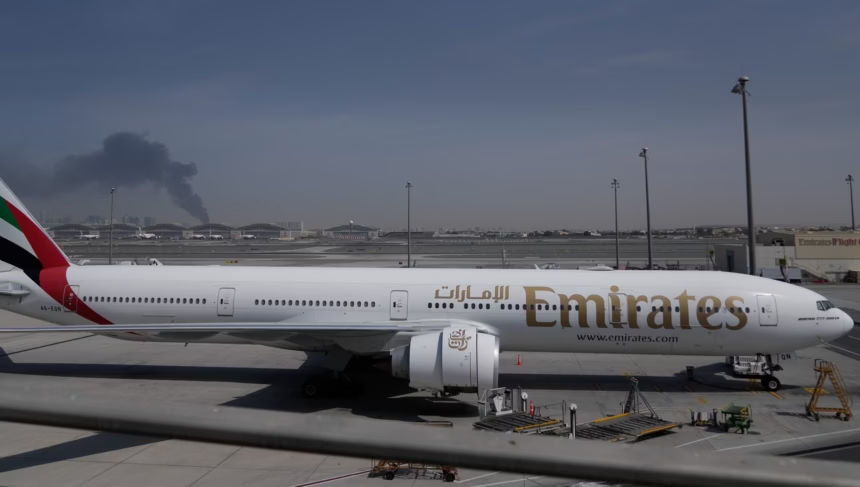
Iran’s supreme leader was killed on Sunday, March 1. after the US and Israel launched strikes the day before on Saturday, Feb. 28. This escalation has led to widespread airspace closures and major disruption to international aviation.
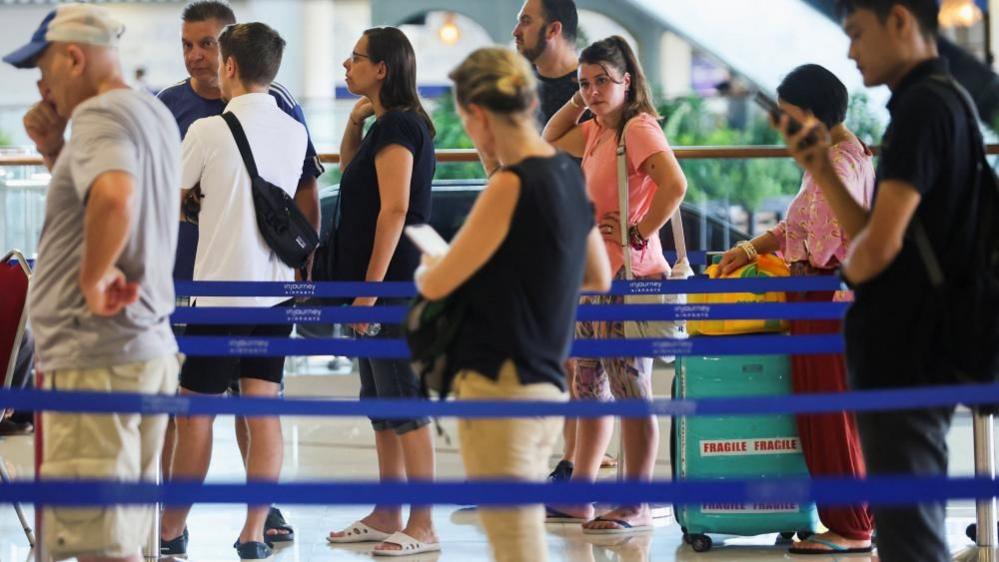
Middle East Disruption Deepens Amid Iran Conflict
A limited number of flights have been able to leave the United Arab Emirates as departures across the Middle East continue to be disrupted following coordinated Israeli and US strikes on Iran.
More than 4,000 flights a day have been cancelled across the region, according to aviation tracking service Airnav Systems, with hundreds of thousands of passengers affected.
Director of communications Ian Petchenik warned that:
“The disruption will only increase the longer the crisis continues and will have enormous repercussions for the industry.”
The airline turmoil comes as more than 100,000 Britons have registered their presence in the Middle East with the UK government, amid escalating strikes.
According to aviation analytics firm Cirium, 79% of global flights to Qatar and 71% of flights to the UAE were cancelled on Monday morning. The figures were even higher elsewhere, with 81% of services to Israel and 92% of flights to Bahrain grounded.
Despite widespread cancellations, some ad-hoc services have departed from Zayed International Airport and Dubai International Airport.
The UAE’s national carrier, Etihad Airways, suspended regular scheduled services until 14:00 local time (10:00 GMT) on Wednesday Mar, 4. However, select flights have operated, including EY67 to London Heathrow Airport, alongside departures to Moscow, Paris, Cairo, Delhi and Karachi.
Etihad confirmed that only repositioning, cargo and repatriation flights may operate in coordination with UAE authorities and subject to strict safety approvals. All routine commercial services remain cancelled, and passengers have been told not to travel to the airport unless contacted directly.
Meanwhile, Dubai Airports announced a “limited resumption of operations” beginning Monday Mar, 2. evening across Dubai World Central and Dubai International. Dubai-based carrier Emirates said it would prioritise customers whose earlier bookings were cancelled, contacting rebooked passengers directly and urging others not to head to the airport without confirmation.

Wider Regional Shutdown
Elsewhere, disruption remains severe. No flights are currently operating to or from Doha, with Qatari airspace closed. National carrier Qatar Airways said operations remain temporarily suspended and will only resume once the Qatar Civil Aviation Authority declares the airspace safe.
From the UK, flights to many Middle Eastern destinations have also been cancelled, including all services to Israel and Bahrain, around three-quarters of scheduled departures to the UAE, and more than two-thirds of flights to Qatar.
The UK’s Foreign, Commonwealth and Development Office has advised travellers to check its latest travel guidance before flying. It warned that travelling against official advice may invalidate travel insurance. Countries currently affected include Egypt, Israel, Bahrain, Lebanon and Kuwait, among others.
Although some aircraft have departed the UAE, thousands remain stranded across the region. Airlines are advising passengers to monitor flight statuses online, ensure their contact details are up to date and prepare for further cancellations as the crisis continues to unfold.
Airlines are focused on repatriation and essential movements rather than restoring full schedules. Travellers are being urged to remain flexible, closely monitor airline communications and follow guidance from the Foreign, Commonwealth and Development Office.
Have you been affected by the conflict? Let us know in the comments below.