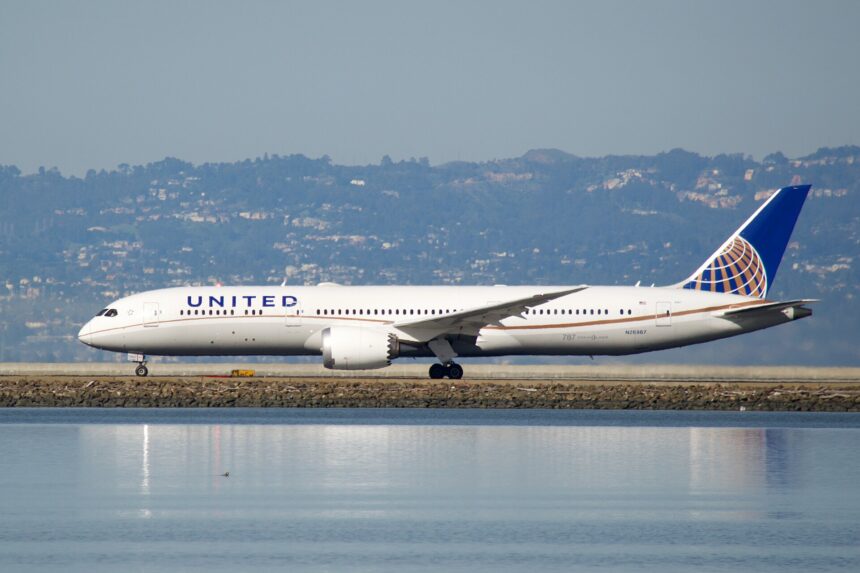
A United Airlines new Boeing 787-9 Dreamliner was grounded due to an electrical odour onboard. The pilots issued a Squawk 7700 emergency code and made a U-turn over the South China Sea.
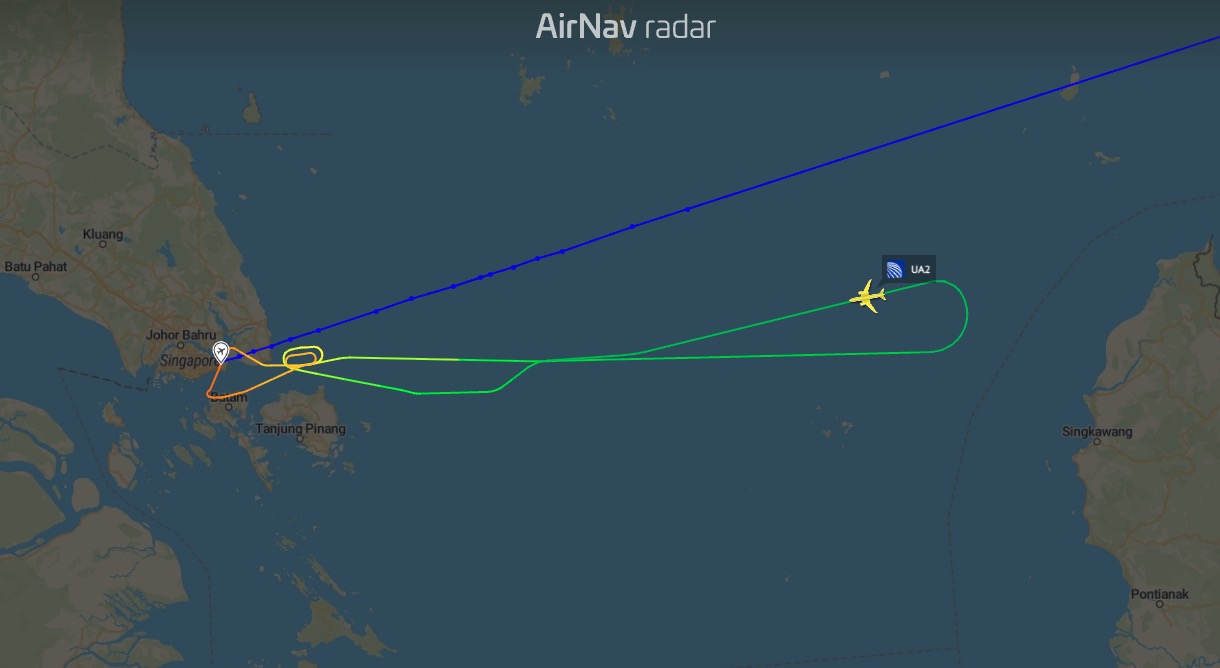
The Incident
The Boeing 787-9, registered as N61101, departed from Singapore Changi Airport (SIN) on Friday, April 24, 2026, at 9:33 a.m. SGT and was flying to San Francisco International Airport is (SFO) when the flight was cut short.
The aircraft was carrying 227 and cruising at 31,000 feet in the air when the incident occurred.
Approximately 30 minutes into the flight, the crew transmitted a Squawk 7700 emergency code as there was an electrical odour onboard. The pilots made a U-turn and while being vectored by Air Traffic Control the crew spent approximately 10 minutes circling over the water to dump fuel to reduce weight for a safe landing.
The Boeing touched down safely on Runway 02C at approximately 11:03 a.m. SGT, roughly one hour and 30 minutes after its initial departure from the airport.
A source on board stated:
“There was a strong, acrid odor throughout the cabin,” adding, “It smelled distinctly electrical in nature.”
The aircraft was only delivered to the airport a few months prior to this incident, completing its first long-haul flight from San Francisco two days prior on April 22. The aircraft is now out of service to address a maintenance issue. United Airlines has not yet specified the exact cause of the electrical fault or provided a timeline for passenger re-accommodation.
Other Boeing Issues
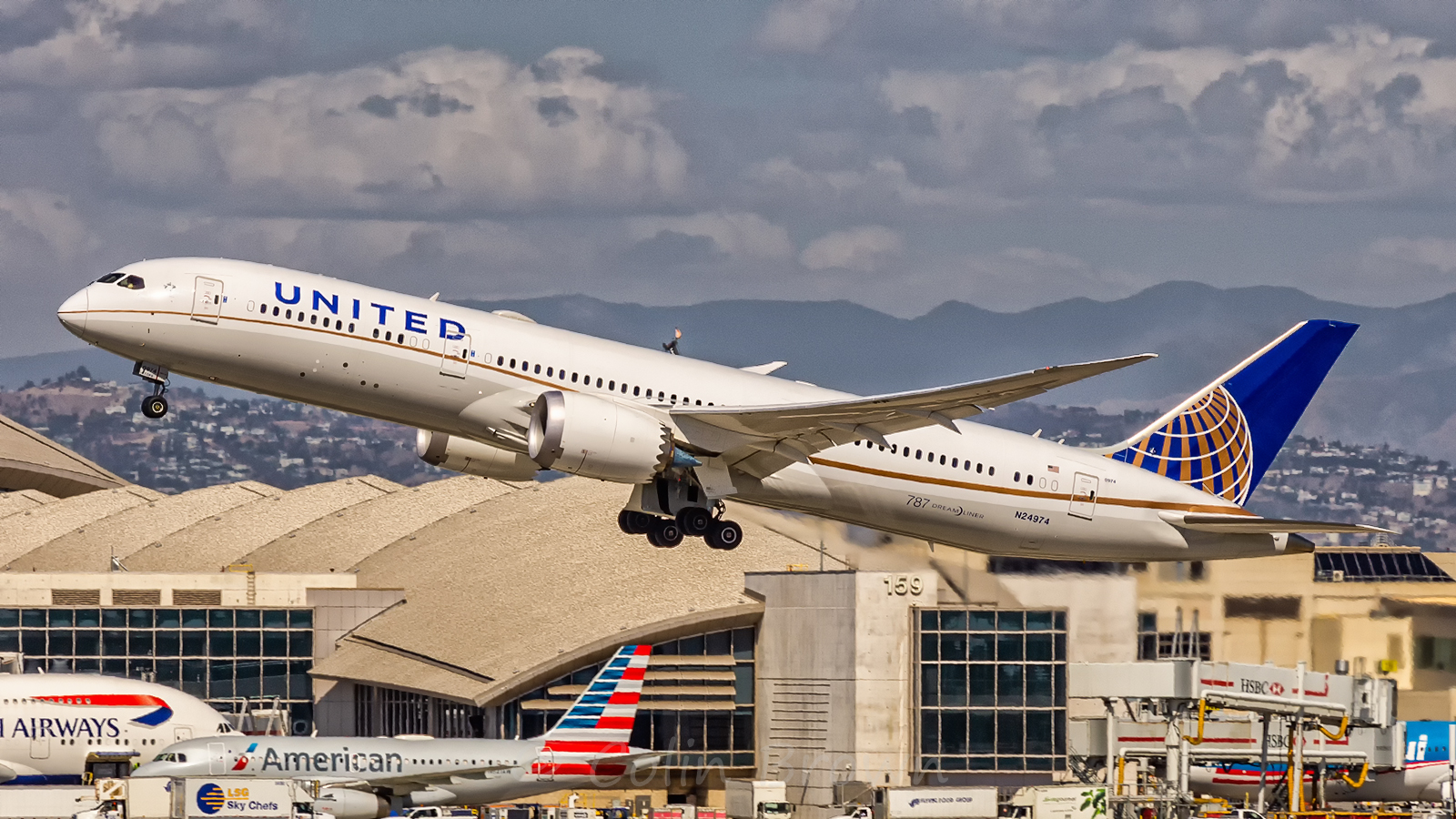
This is not Boeing’s first disrupted flight due to an odd smell on a flight. A Delta Airlines aircraft had to take a diversion due to a smell onboard, it was only after further investigations it was cleared to fly again.
The Federal Aviation Administration (FAA) reports show that Boeing received a civil penalty fine totalling $3,139 million as there were Boeing aircraft that were deemed un-airworthy between September 2023 and February 2024.
Despite these incidents, Boeing is improving airworthiness through a comprehensive, FAA-monitored safety plan. This focuses on stricter manufacturing quality controls and enhanced worker training, while addressing odour issues via upgraded filters and proactive maintenance.
Have you been onboard a flight that made a U-turn? Tell us about your experience in the comments.