By using this site, you agree to the Privacy Policy and Terms of Use.
Accept
Travel Radar - Aviation NewsTravel Radar - Aviation News
  • Breaking News
  • Aviation
    • Aircraft
    • Airlines
    • Airshow & Events
    • Careers
    • Manufacturing
  • Travel
    • Airports
    • Points & Loyalty
    • Technology
    • Trip Reviews
  • Newsletters
Reading: Fast Movers; English Electric Lightning
Share
Sign In
Notification Show More
Font ResizerAa
Font ResizerAa
Travel Radar - Aviation NewsTravel Radar - Aviation News
  • Breaking News
  • Aviation
    • Aircraft
    • Airlines
    • Airshow & Events
    • Careers
    • Manufacturing
  • Travel
    • Airports
    • Points & Loyalty
    • Technology
    • Trip Reviews
  • Newsletters
Signin Sign In
Follow US
Copyright © Travel Radar Media Ltd. 2025 | All Rights Reserved
Travel Radar - Aviation News > News > Fast Movers; English Electric Lightning

Fast Movers; English Electric Lightning

Travel Radar
Last updated: 21 April 2020 05:45
By Travel Radar Staff
3 Min Read
Share
Lightning
SHARE

The English Electric Lightning was the United Kingdom’s premier interceptor that guarded its skies during the cold war. Best known for its blazing speed and incredible climb rate, it remains a favourite among pilots who often describe flying it as ‘steering a rocket’.

Summary
BackstoryLightning FastLegacy of the ‘Rocket’

Backstory

WEW ‘Teddy’ Petter and Freddie Page are regarded as the pioneers of the plane’s initial concept. They implemented some very unorthodox features in the design like the vertically stacked engines, high wing sweep angle, and notched delta wing; receiving scepticism from many. Nevertheless, English Electric continued its development and rendered several changes to the Lightning’s design between 1947 and 1954. The UK manufacturer finally settled on the P1 design and soon its prototype -the WG760- became airborne on 4 August 1954. 
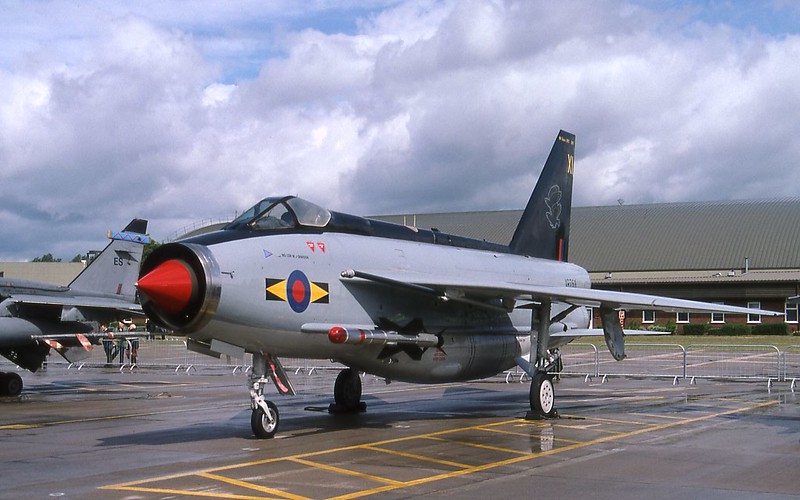
English Electric Lightning (BAC)
English Electric Lightning (BAC) | ©D. Miller

Lightning Fast

Have you ever imagined sitting on a rocket that is shooting for the heavens? Well, many pilots described flying the Lightning as precisely that and thoroughly enjoyed the adventure. One Lightning pilot, Dave Stock (later killed in the fighter) commented:

The only reason the Lightning was given wings was to separate the port and starboard lights – by Neil Pietersen

English Electric Art
English Electric Art | © Roy Cross

The two powerful Rolls-Roys Avon turbojet engines gave it the ability to climb at an extraordinary rate of 20 000 ft per minute. While its ceiling is speculated to have been more than 60 000 ft. At full bearing load, the lightning topped at a speed of Mach 1.7. Later versions, however, could reach Mach 2 at full operational load (missiles equipped). The only downsides of the Lightning were its limited range and low payload capacity. As such lightning pilots regarded the fuel tank indicator as the most important instrument in the cockpit.

Legacy of the ‘Rocket’
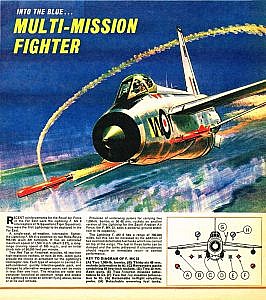
Look and learn mag
Look and learn mag | © Wilf Hardy

Having served the Royal Air Force for more than 30 years, the ‘rocket’ was finally retired in 1988 and replaced by the Panavia Tornado interceptors and Lockheed Phantoms. It also served internationally with the Kuwait Air force and the Royal Saudi Air force.  

The legendary English Electric Lightning remains to this day the only British manufactured combat plane to exceed Mach 2. It was a feared rival and an undisputed defender of the skies. 

What do you remember about the English Electric Lightning?

You Might Also Like

Norse Atlantic appoints Kristin Berthelsen as Deputy Chief Executive Officer
Cathay Pacific Posts Record-Breaking Loss for 2020
Pallas Aviation Announced As Launch Operator For Lockheed Martin LM-100J Commercial Freighter
Air New Zealand to Launch Fresh New York Route
Singapore Airlines Gets More Planes On The Move
Share This Article
Facebook Twitter Email Copy Link
What’s your thoughts?
Love0
Sad0
Happy0
Angry0
Travel Radar
ByTravel Radar Staff
Follow:
Articles from guest contributors wishing to remain anonymous are credited to this account. Want to contribute to Travel Radar either in-name, or anonymously? Get in touch: [email protected]
Previous Article South African Airways; Pan, Pan, Pan.
Next Article Virgin Australia in Administration
Subscribe
Login
Notify of
guest

guest

0 Comments
Oldest
Newest Upvoted
Inline Feedbacks
View all comments

Stay Connected

FacebookLike
TwitterFollow
InstagramFollow
YoutubeSubscribe

Trending News

An Air India jetliner flies in the blue sky.
Air India Partners With Scoot To Expand Connectivity Across Asia And Australasia
Airlines Route Development Travel
A Royal Air Maroc Boeing 787-9 Dreamliner is rolling for takeoff at John F. Kennedy International Airport, with blue sky.
Royal Air Maroc Announces Nonstop Service Between Los Angeles and Casablanca
Airlines Route Development Travel
Glasgow Prestwick Airport
Glasgow Prestwick Airport Named Air Freight Business of the Year
Airlines Airports Aviation Travel Travel Radar
Heathrow Airport Terminal
London Heathrow (LHR) Europe’s Busiest Airport – But Why?
Airports Aviation Did You Know Travel Travel Radar
Car and truck parked in drop-off area at Gatwick airport.
Gatwick Leads a Wave of Higher Airport Drop-off Fees across London
Airports Did You Know Travel
//

Travel Radar is the leading digital hub for all things aviation and air-travel. Discover our latest aviation news, aviation data, insight and analysis.

Discover

  • Latest News
  • Subscribe
  • Weekly Digest
  • Contact Us
  • Privacy Policy
  • About Us
  • Advertising
  • Media Coverage
  • Press & Events
  • Join Our Team
  • Our Brands

Signup to our Newsletter!

And get the latest aviation news via our weekly news digest!

© Travel Radar Media Ltd. 2015-2025 | ISSN #2635-0696 | Trademark #UK00003579704
wpDiscuz
adbanner
Welcome to the TR Community!

Sign in to your account

Not a member? Sign Up