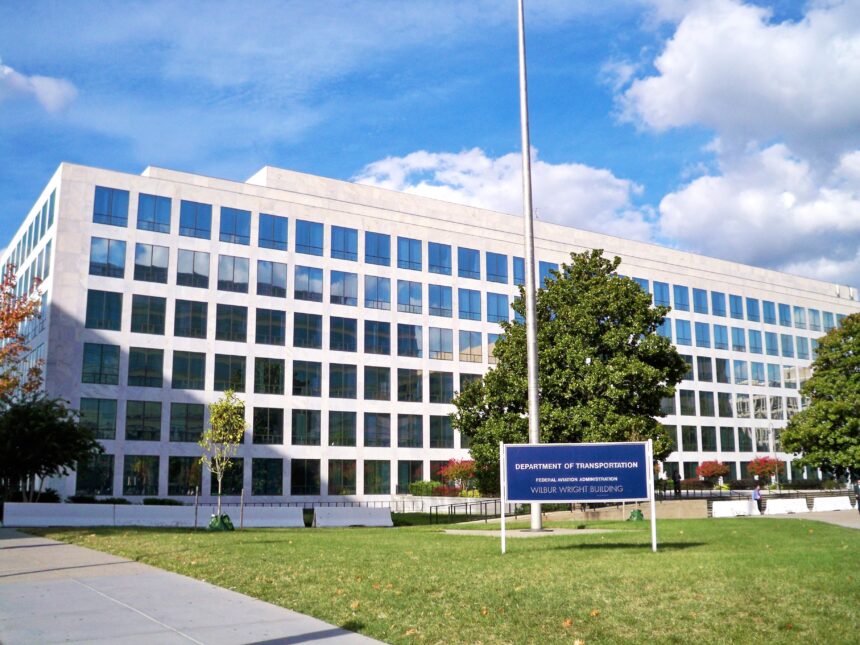
The U.S. Federal Aviation Administration (FAA) issued a notice of proposed rulemaking (NPRM) that would extend an existing medical-certificate exception (already available to certain U.S. military pilots) to military pilot trainees who already meet U.S. military pilot medical examination requirements, making it unnecessary for them also to obtain an FAA third-class medical certificate for certain civil flying.
What the proposal would do
Under current FAA rules, people pursuing FAA pilot certificates/ratings (including trainees in Part 141 flight schools) typically need at least a third-class medical for key training milestones like solo flight and practical tests.
The FAA says U.S. military pilot medical examinations meet or exceed the safety level established by FAA third-class standards, so requiring a military pilot trainee to meet both standards is redundant. The agency frames the proposal as a way to streamline military use of civilian flight schools, reducing administrative burden and cost while maintaining safety.

Who would qualify (and what limits the FAA is building in)
A key feature of the proposal is that it’s not a blanket exemption for anyone with “some military physical”. The FAA is trying to narrowly target cases where the safety equivalency is strongest.
The FAA says the proposal would apply across the U.S. military services (and related components), including the Air Force, Army, Marine Corps, Navy, Space Force, Coast Guard, and National Guard/Reserve units, and it would also cover foreign military pilot trainees sponsored by the U.S. Armed Forces, as long as they meet the U.S. military pilot medical exam requirement.
The FAA explicitly proposes that a person would qualify only while they still meet the definition of a military pilot trainee (i.e., they are actively in the U.S.-sponsored training pipeline). If they separate from the programme, they will no longer qualify even if their military medical exam hasn’t yet expired.
The NPRM explains that military pilot medical exams can involve waivers for conditions that might otherwise be disqualifying, with the safety case relying in part on ongoing oversight by military flight surgeons who can monitor and ground a pilot if needed. The FAA says someone no longer in training may not have that same oversight, potentially increasing risk in the National Airspace System.
The FAA says the proposed definition would clarify that the exception does not apply to military medical examinations that only authorise remote piloting flight status, noting the 2009 rule didn’t contemplate remote pilot use, and the FAA hasn’t evaluated equivalency for that case. The FAA is specifically asking for public comment on whether it should address remote pilots or other groups.

What this would mean in practice (if finalised)
If adopted as proposed, the rule would reduce a common friction point in military-sponsored civilian training: the need to schedule and obtain an FAA third-class medical (and deal with administrative delays) even when the trainee already meets military pilot medical standards the FAA considers equivalent or stronger.
It would also likely make civilian training pipelines more predictable, especially where timing matters (arrival in the U.S., training start dates, and solo/checkride readiness) and where exemption coverage is currently limited in scope or time.
Do you think the reform affects the intake of military pilot trainees? Let us know in the comments.