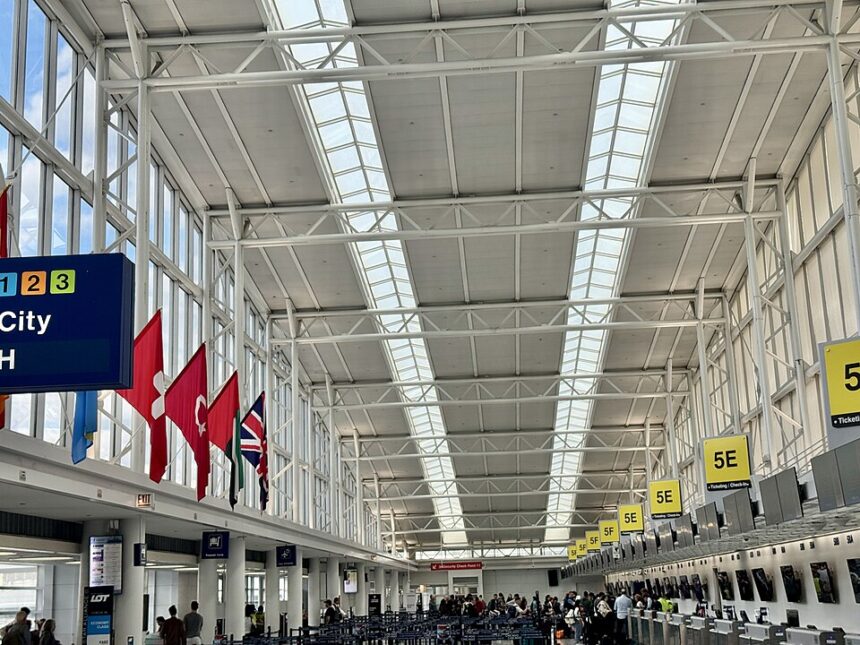
U.S. Transportation Secretary Sean P. Duffy and the Federal Aviation Administration (FAA) announced a new action to prevent widespread flight delays this summer at Chicago O’Hare International Airport (ORD), where less than 60% of arrivals and departures were on time last summer.
What the FAA announced
The Chicago-based airport, O’Hare International Airport, described by the FAA, is “the busiest airport by flight volume” and accumulated over 3,080 intended flights on busy days for the summer of 2026, which can be depicted in the 14.9% busy day increment over the previous summer.
The FAA and the Sean P. Duffy announced a “plan of action” to undermine the ubiquitous summer flight delays at ORD, mandating carriers to file schedules that align with what the airport and air traffic can reasonably expect to deal with.
The FAA highlighted that the “scheduling reduction” operation is aimed at reduction to at least 2,708 operations, including arrivals and departures, and to avoid an increase from last year’s busy summer schedule.
Why did the FAA step in?
The FAA stated and emphasised that 60% of arrivals and departures were on time at O’Hare International Airport last summer and pointed out extra restrictions going into the summer of 2026, including “constrained gate capacity” and “ongoing taxiway closures” as a result of redevelopment which hampers the system’s ability to recover when weather or disruptions hit.
The authority also highlighted the proposed summer flight of 3,080 flights on a daily basis was 400 more operations compared to last year, stating congestion pressure.

What does this mean for travellers?
The Federal Aviation Administration is seeking to trade fewer schedule options for much more dependable options. In the new horizon, passengers could see carriers adjust schedules, limit frequency on some city pairs or upgrade aircraft when needed. In the longer term, if the threshold works as planned, it should limit “gridlock days” where delays propagate across the network.
For context, local reporting labelled the move as demanding cuts of roughly “300 flights on a daily basis” on the busiest days, after airlines filed peak schedules the Federal Aviation Administration viewed as unstainable.
How do you see this changing the trajectory of the administration at O’Hare International Airport?