
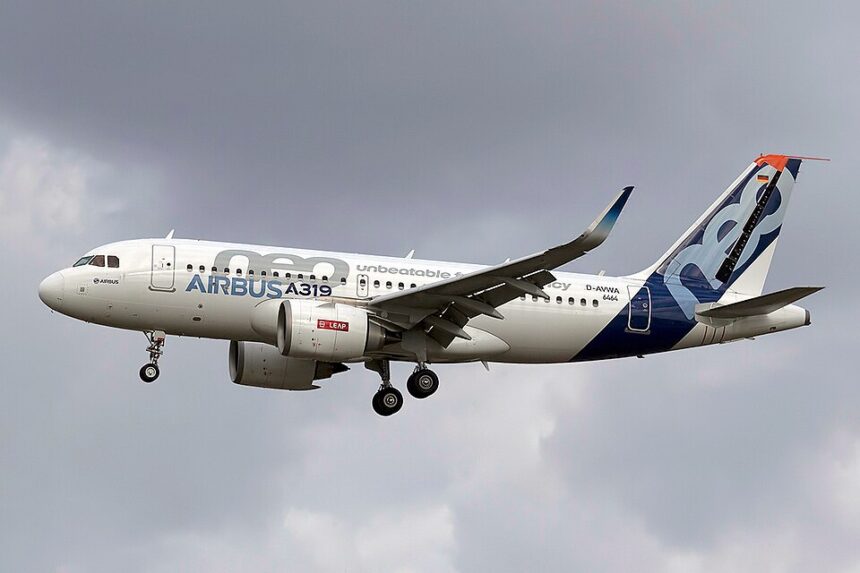
Airbus has published its ‘2026-2045 Global Services Forecast report’ (GSF) and anticipates that aviation passenger numbers will double to 10 billion over the next 20 years. Airbus’ GSF report highlighted that the aviation services market which currently supports more than 29,000 aircraft, is expected to reach US$ 209 billion. By 2045, the services market is predicted to need to support an increasing world fleet of 45,550 aircraft, reaching an estimated value of US $420 billion.
Massive new workforce
The GSF report estimates that over the next 20 years, Europe and the Commonwealth of Independent States (CIS), North America and China will remain the largest services markets. Asia (encompassing Asia-Pacific, China and South Asia) is projected to be the fastest growing services market.
To meet this global growth, the GSF report estimates that there will be a total need for 2.44 million additional skilled people (comprising of 730,000 maintenance technicians, 660,000 pilots and over a million cabin crew). Airbus estimate the training market for these new workers will reach US $17 billion in 2045. It has called on the industry to intensify efforts in attracting and training workers using new technologies and advanced techniques.

Growth in six key service segments
As well as the Training market, the GSF report also predicts growth within the Off-wing maintenance services (the need to remove aircraft engines due to ageing and growing fleets) as well as On-wing maintenance services (covering light inspections to heavier checks). These are separated by the GSF report from Maintenance operations support (defined as providing timely inventory with engineering support to ensure aircraft reliability). Modifications and upgrades of older aircraft through cabin retrofits and modern technology integration is also seen as a growth area.
Cristina Aguilar Greider from Airbus said:
“Airbus is expanding its role as an integral services partner to support our customers across the entire aircraft lifecycle. By integrating predictive operations, fleet modernisation, and advanced digital solutions, we are helping airlines ensure fleet availability, reliability, safety and long-term operational excellence.”
The fastest-growing market is predicted in the GSF report to be Digital and Connectivity, which Airbus predict could triple over the next twenty years. Essentially, this covers the growth and development of computer technology, used to improve overall aviation operational efficiency as well as maintenance services. This is predicted to grow to US $27 billion.
At the beginning of October 2026, Airbus announced new nominations to its Board of Directors following the step-down of chair René Obermann, who is succeeded by Amparo Moraleda.
Global demand for Airbus aircraft remains high, reflected by recent news that aviation finance company Avolon has placed an order for 35 Airbus A330-900s and 75 A320neos.
What are your thoughts on this huge predicted growth in the aviation industry over the next 20 years? Let us know in the comments below.