An international initiative that spotlights the world’s finest modern architectural projects has revealed the top seven most beautiful airports across the globe. Criteria for the list prioritises both beauty and technical innovation. The list is dominated by airports located in Asian countries, with two located in India, one in China, and one in Cambodia. Of the remaining three, two are located in America and one is located in Germany.
The Prix Versailles
The list of the World’s Most Beautiful Airports for 2026 was revealed this week by the Prix Versailles highlighting the top seven most architecturally impressive airports globally. Held annually at UNESCO headquarters in Paris for over a decade, the Prix Versailles is a prestigious international architecture and design award that recognises outstanding contemporary architectural projects according to a certain criteria across multiple categories.
Most people judge an airport by its efficiency, cleanliness, the shops and facilities available, an the quality of the service. According to its website, the Prix Versailles aims to look in more depth at significant architectural projects such as airports, ranking them based on a criteria of beauty, innovation, cultural responsiveness, ecological efficiency, and social interaction.
Secretary General and founder of the Prix Versailles Jérôme Gouadain described contemporary airports as ever present hallmarks of geographical locations as well as spaces in time and history. He stated:
“They are innovative, because they resolve the apparent conflict between the increasing frequency of travel and the need for speed – both central to an airport’s purpose – on the one hand and, on the other, the singularity of a form of tourism that aims to be accessible and that values people’s time in places that, in this day and age, can no longer be described as mere ‘transfer’ spaces. And they are inescapable, in that this infrastructure leaves a lasting environmental footprint on the land but also on the history of humanity.”
As part of the process that identifies and determines this catalogue, The Prix Versailles Selection Committee chooses the airports for the list, while the final World Titles are determined by the Prix Versailles World Jury.
The Top Seven
The seven airports that made it into the Prix Versailles list are as follows:
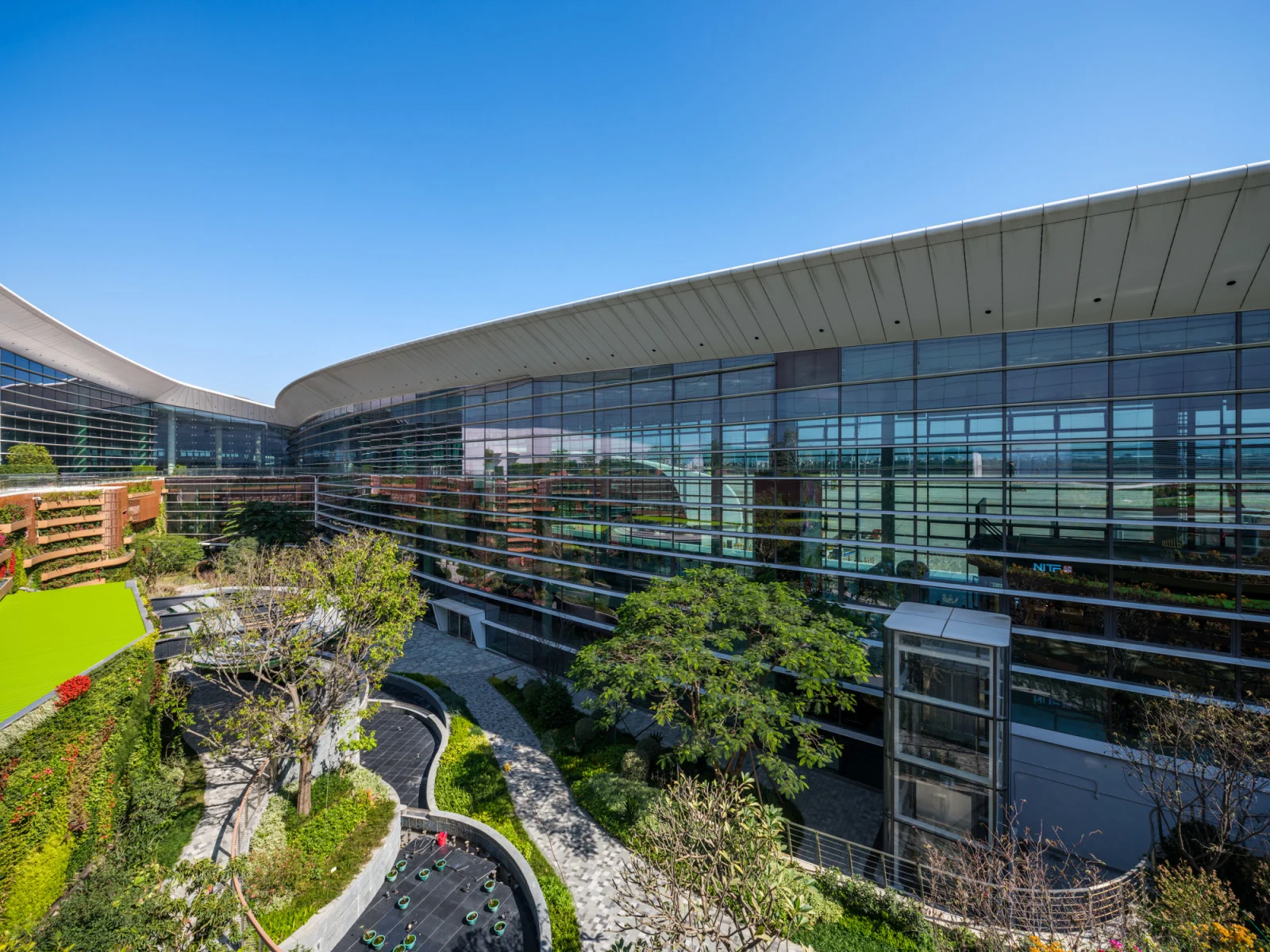
- Guangzhou Baiyun International Airport (CAN) in China is a major transportation hub located in Guangzhou, the capital city of the Guangdong province in China. The airport’s new terminal, Terminal 3, was specifically highlighted in the list, as it was inspired directly from nature, including clouds, water and flowers associated with the Lingnan region.
- Frankfurt Airport (FRA) in Germany was highlighted in the list because it houses a terminal designed by famous architect Christoph Mäckler, which welcomed its first fliers in April of this year. The terminal was constructed to resemble a city more than an airport, and so gates and lounges are built to the proportions of streets and public squares, complimented by jura limestone. Above, three rotating sculptures of coloured aluminium discs hang down from the ceiling.
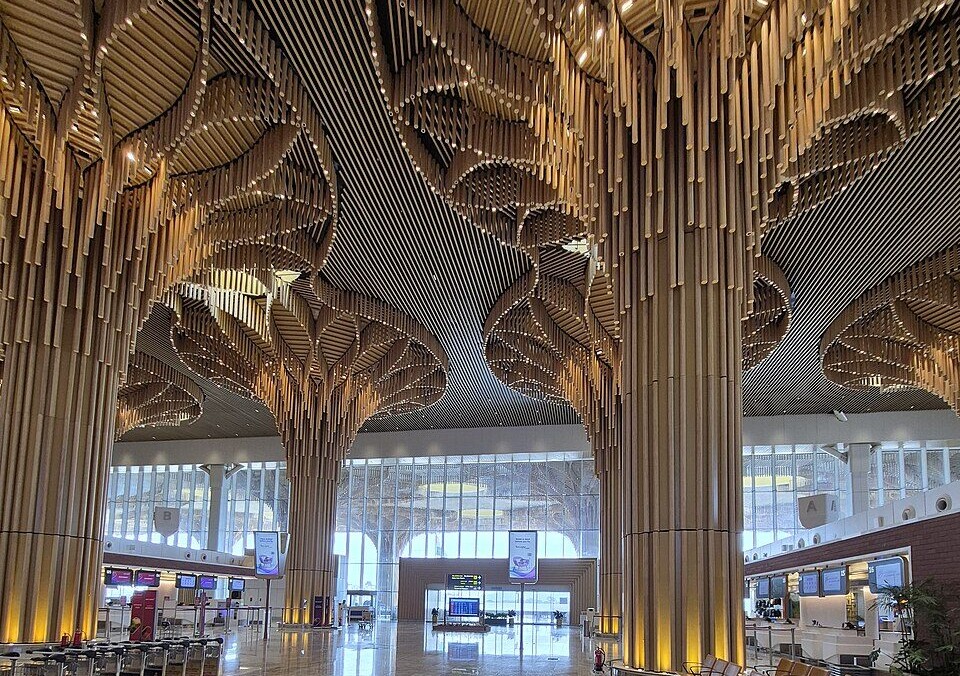
- Lokapriya Gopinath Bardoloi International Airport (GAU), designed by Nuru Karim, in India, was chosen for its highly distinctive look. With the image of a bamboo orchid at its core, the vaulted ceilings of the structure curve to emanate the flower’s petals. To honour the Brahmaputra River, patterns across these ceilings trace its paths, and tribal art and craftsmanship are built into the waiting areas as a tribute to the region’s history.
- Navi Mumbai International Airport (NMI), also located in India. Similarly to GAU, the layout at Terminal 1 in NMI centres around a lotus motif championed by the structure’s designers, the Zaha Hadid Architects. The motif extends from the overhanging petals adorning the roof flowing into lotus-form columns at the terminal’s entrances.
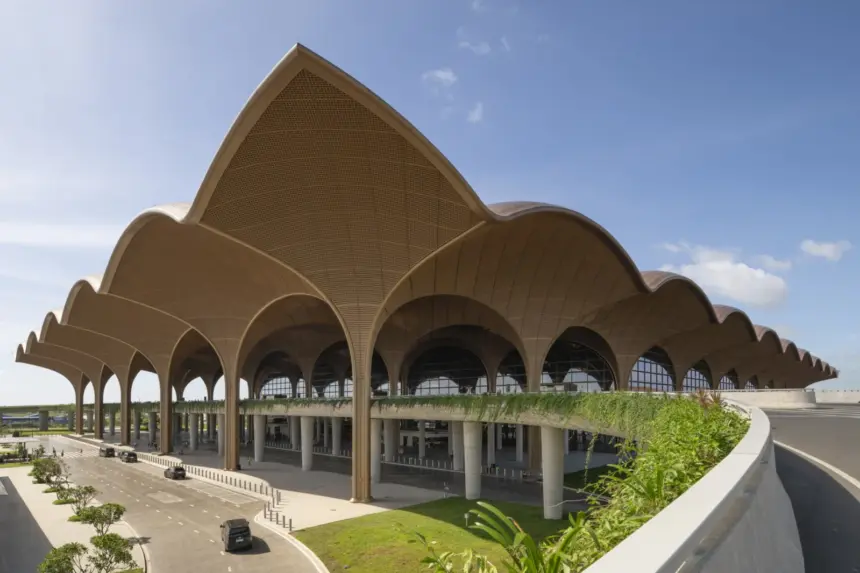
- Techo International Airport (KTI), located near Cambodia’s capital, Phnom Penh, was also included in the list. As one of the largest airports in the world by land area, KTI in Cambodia takes its name from a royal title meaning invincible. The structure was designed by Foster + Partners, who incorporated elements of traditional Khmer culture through the inclusion of Rumduol trees, Cambodia’s national flower, and a single undulating roof that rises to a central peak that mimics the silhouettes of Khmer temples. The underside of the roof also evokes imagery of rattan basketry with its unique woven pattern.
- Pittsburgh International Airport (PIT), in the U.S. was added to the list because of the interesting design of the new landside terminal, which takes inspiration from landmarks in the region, and includes structures to evoke the image of the Allegheny Mountains and nearby rainforests, as well as the Fort Pitt Tunnel.
- Lastly, San Diego International Airport (SAN), was included in the top seven as a result of its new terminal, which combines functionality with style. The first feature highlighted was the impressive 244-metre curved glass facade, which filters daylight and tempers glare while offering modern aesthetic appeal. Additionally, the removal of structural columns from the ticketing hall created a larger open plan space that reduced clutter and cut the carbon footprint of the whole building by 30%.
What do you think about the Prix Versailles’ picks? Let us know in the comments!