
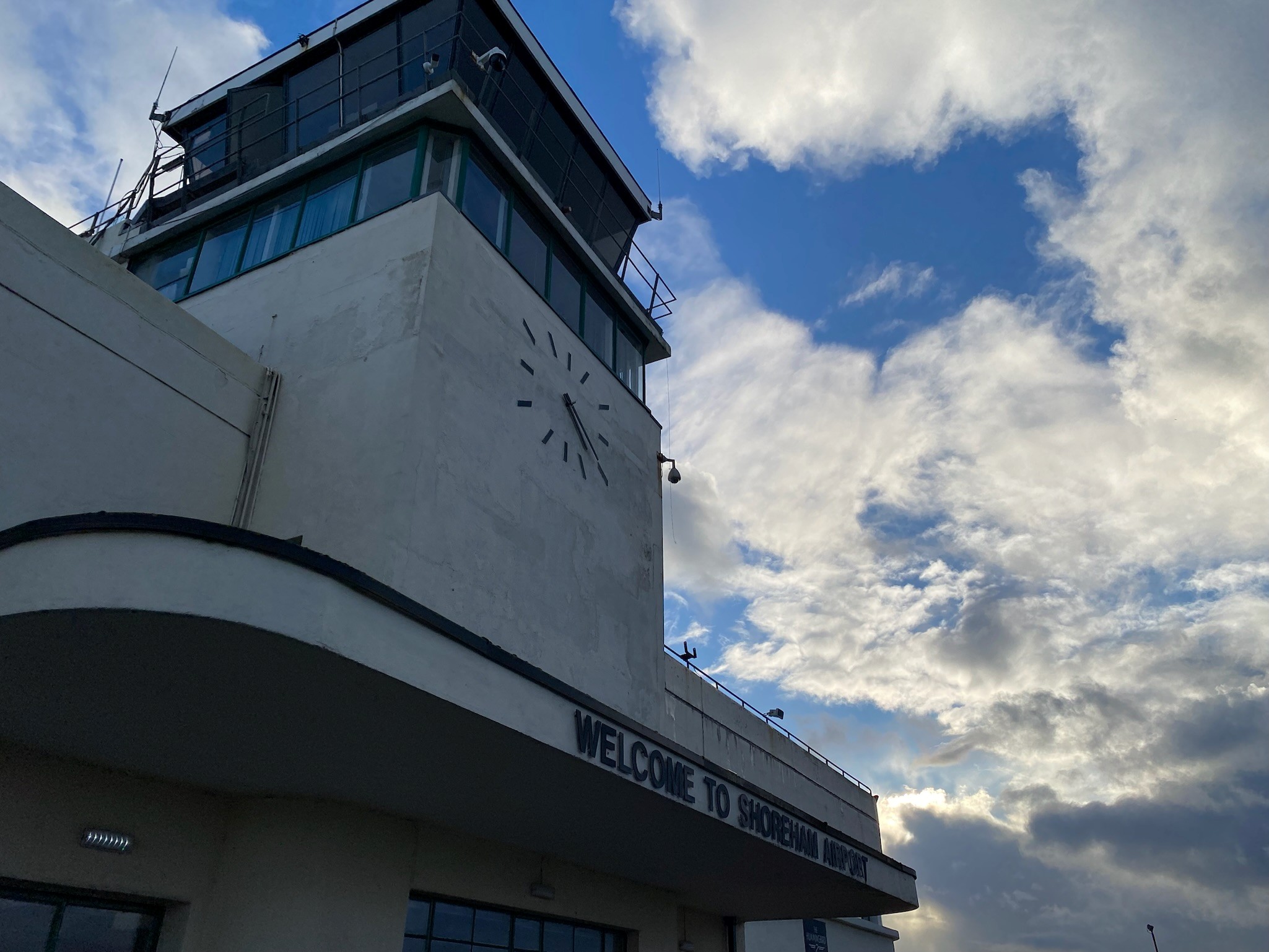
Have you ever wondered what an Air Traffic Controller (ATCO) does? Ahead of the International Day of the Air Traffic Controller on Oct. 20, Travel Radar met up with Charlie Cahill, an ATCO at Brighton City Airport (BCA), formerly known as Shoreham Airport (the IATA code remains ESH). Charlie kindly shared his career experiences, what a typical day looks like, and whether the recent National Air Traffic Services (NATS) system issues affected his work.

Hello Charlie Cahill
Travel Radar: Hello Charlie, thank you so much for your time. Could you share how you became an ATCO?
Charlie: I never originally wanted to become an ATCO. Like most young people aspiring for a career in aviation, I wanted to become a commercial pilot. I slowly fell out of love with the idea over time, exacerbated by the pandemic, when pilots were not getting work. I never entertained the idea of becoming an ATCO, however, as I had just assumed it wasn’t for me. I even remember being asked by a career advisor if I had considered ‘controlling’ as a career, and I laughed, saying it’s something I could never do!
Then, in 2023, when I was looking for a start in aviation, BCA posted a job advert hiring an ‘Air Traffic Services Assistant’ (ATSA). An ATSA essentially works in the control room alongside the ATCOs, acting as their operational assistant. This includes making and receiving telephone calls, processing pertinent flight plan data, submitting weather reports. You essentially complete controlling administrative duties the controller doesn’t have time to do themselves.
I did this job for a year and a half. I initially went into it thinking I’d use it as a stepping stone into the industry, potentially becoming a pilot from there. But the more I worked in Air Traffic Control (ATC), alongside the controllers, the more I fell in love with the job, and realised it wasn’t what I thought it was. It is very hard work to become and remain a controller; however, it is doable, with processes there to support you.
ATCO Training
Travel Radar: Your career sounds amazing, thank you, Charlie. There must be a lot of training involved?
Charlie: It’s a big mix of theoretical, practical, and on-the-job training. You have to initially start by completing what’s called a basic course, either with NATS or with Global Air Traffic Services (Global ATS), the only two ATC training providers in the United Kingdom (UK). I did my 10-week basic course with Global ATS, which covers a broad selection of subjects including aviation law (both modern-day and historical), meteorology, human limitations, aerodynamics, aircraft operations and navigation. The idea behind this course is that it is supposed to give you a well-rounded view of aviation before moving on to specific controller training.
Once the basic course is complete, you then move on to what is called a rating course. A rating allows you to conduct a specific type of ATC. Broadly speaking, there are three types of ATC you’ll see: tower controlling (controlling an airport and its runways), approach controlling (controlling the airspace around an airport, guiding aircraft in to land), and area controlling (controlling the UK’s high-up airways that take an aircraft en route to its destination).
The rating I moved onto was tower controlling (or its technical name, ADI – Aerodrome Control Instrument). This was another 10-week course that focused on teaching practical controlling skills for an airport, such as how to manage your runways and taxiways, when to clear someone to land or take off, and how to deal with different types of aircraft and flights. This was my favourite part of training!
Once you have got your rating, you can apply to the Civil Aviation Authority (CAA) for a student ATC licence. This allows you to go back to a real airport in the UK, and begin controlling there, under the watchful eye of an instructor. Once you have done a set amount of live training with an instructor, and have experienced a variety of scenarios, you’ll be put up for validation, where you have to pass a final practical and theoretical exam with a CAA inspector. Provided that is successful, you get granted your full ATCO licence, and can control by yourself!
This is not the end of the process, though. It differs at every unit, but at BCA we have to have a competency check once a year to make sure we are still controlling correctly. This mimics the validation format, where we have to complete a practical and theoretical assessment with an authorised assessor.
The training process is long and gruelling. I was lucky; it only lasted 9 months for me in total. However, it is not uncommon for it to last up to two years for others. It all depends on how much training you require (multiple ratings at once, exposure to multiple complex aircraft scenarios). For me, doing the basic course plus one rating, I had to complete over 35 exams total in order to be a fully valid controller, from start to finish.
My main inspiration for getting me through this process was the end result, the reward of achieving such a unique and cool job. I’d watched my colleagues at BCA do it while I was assisting, and saw how good at it they were, and thought I would like to be the same.
A typical day
Travel Radar: Well done for all your hard work, Charlie, and I bet you are really good at it! What does a typical day look like for you?
Charlie: For me at BCA, we either work 08:00-18:00, or 10:00-20:00, which matches the airport’s opening hours. Typically, I arrive 15 minutes before my start time to make a hot drink before I head upstairs into the control tower or VCR (Visual Control Room). I then read through the briefing folder, which is compiled in the morning by the ATSA and includes information such as weather charts for the day, pertinent airport information, local airspace information, any changes in procedures. I then read through and sign into the watch log, a handwritten record of everything that has happened on shift. At the controller’s desk, the other controller explains to me what each aircraft is doing, ready for me to take over.
Other airports may do it differently, however. At BCA, we tend to do ‘an hour on, an hour off’, one hour of controlling, then an hour’s break, then repeat until the end of shift. Although that may seem like a lot of breaks, controlling hours are very strictly regulated, as the legal maximum we can do in any one sitting is two hours before we are required to have a legal rest break. I tend to use my breaks for a mixture of both having some downtime between controlling stints and completing some administrative tasks for ATC, such as helping to review or write operational procedures.
Runway occupancy time
Travel Radar: Sounds like a busy day, Charlie, and you deserve those important, regular breaks. Please can you tell me more about BCA traffic?
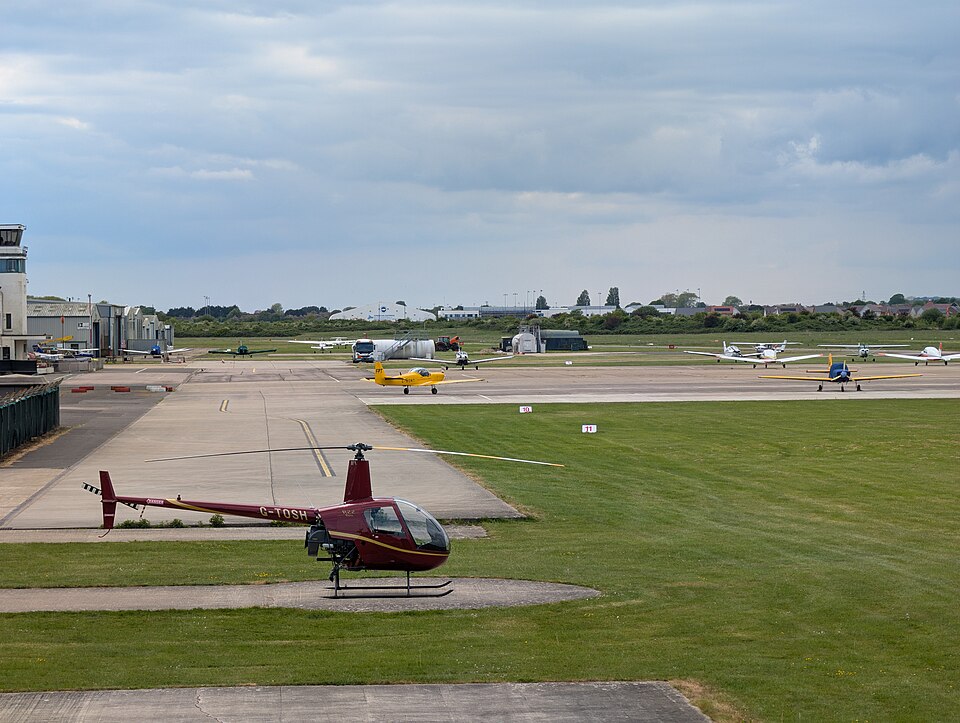
Charlie: Having worked there for a number of years now, I can confidently say the airport is often misunderstood by those who do not operate there. The opinion I’ve heard, both from the general public and other industry professionals, is that because the airport does not facilitate regular commercial flights, there is no point in having the airport. Perhaps the mindset is that it is a small, quiet operation, with perhaps multiple planes a day if we’re lucky. This couldn’t be further from the truth.
Whilst the airport doesn’t have commercial passenger flights, it is used extensively for training, as well as supporting the emergency services and other vital infrastructure. For example, we routinely have the police, the Coastguard and Air Ambulance use BCA as a quick refuelling point between life-saving missions. Additionally, Flight Calibration Limited, which calibrates and checks all the major air navigational infrastructure in the UK, including Gatwick (LGW) and Heathrow’s (LHR) Navigational Aids (NAVAIDS), is based at BCA.
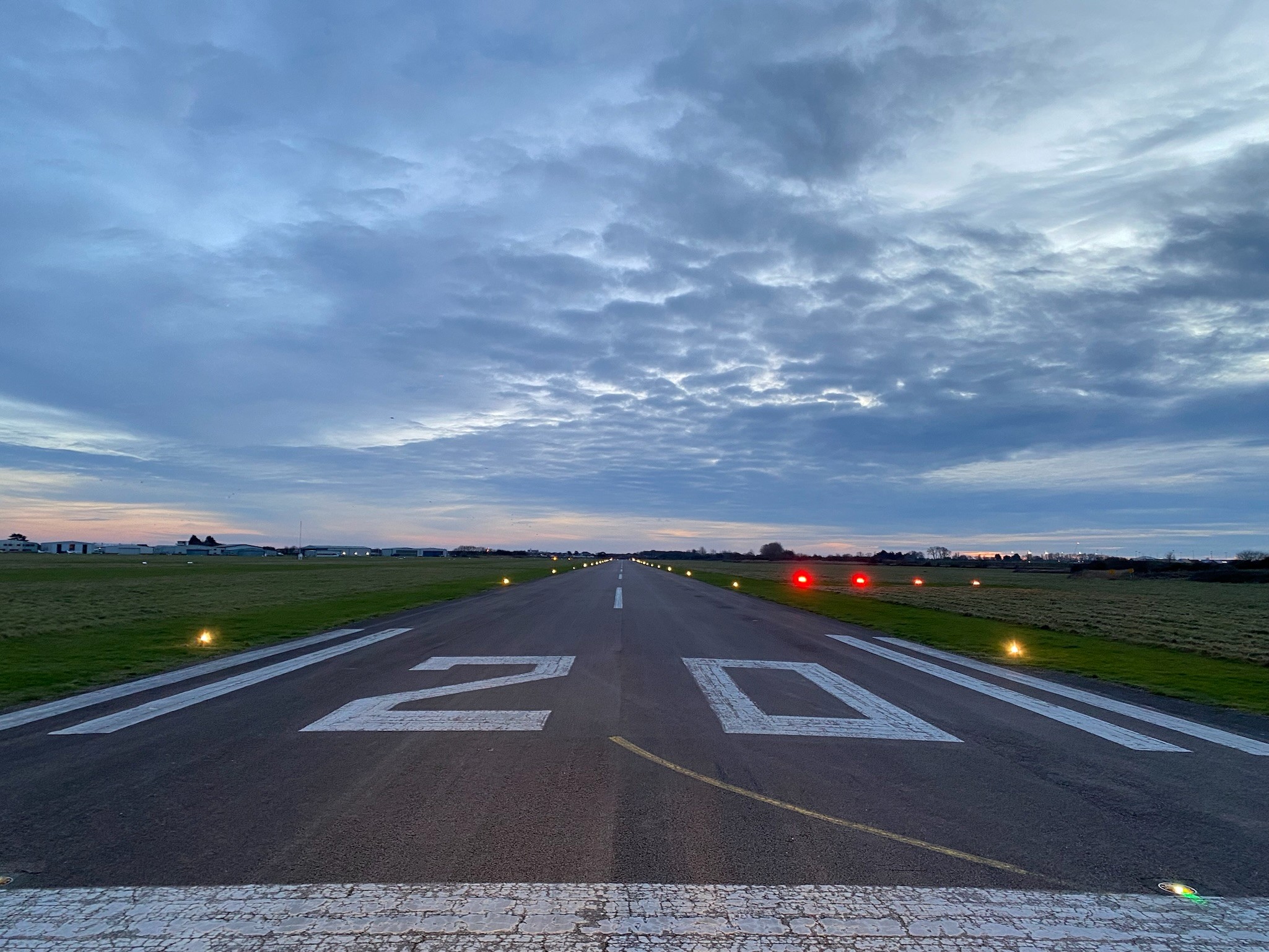
Individuals who wish to become pilots will complete some form of training at BCA at some point throughout their career. Not to mention, we are also a hub for those who operate their own aircraft and wish to visit the south coast, including small corporate jets. We of course have quiet days; however, when the weather is right, everyone wants to fly, meaning the airport can become incredibly busy. On occasion, we can match LGW’s runway occupancy time of one aircraft landing and taking off from the runway every minute!
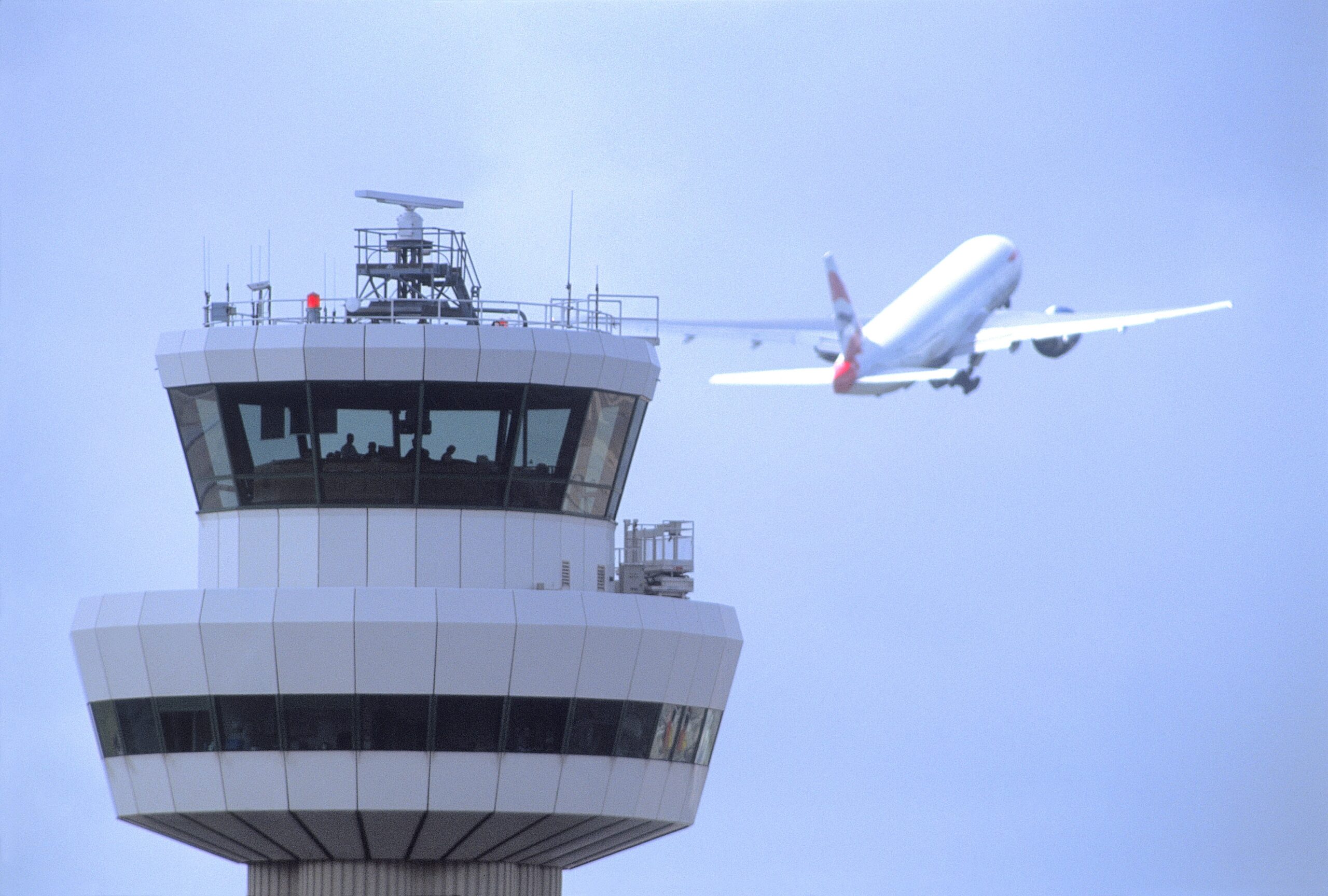
Airport advocate
Travel Radar: Wow, sounds like it can be incredibly busy, Charlie. Why doesn’t BCA offer regular commercial flights?
Charlie: Unfortunately, commercial flights from the airport are not particularly viable, as LGW is only 30 minutes up the road from us. If commercial flights were to be offered from BCA, such as to Paris (PAR), the ticket fares for those flights would be exponential compared to what could be offered from LGW. That is because BCA’s runway is landlocked, so it cannot be expanded any further to accommodate larger jets. Therefore, if commercial flights were to happen, they’d need to be operated with far smaller aircraft, which, as a result, have much smaller passenger numbers with more limited resources. In order for an airline to be successful, they need high passenger volumes to turn a profit and cover operating costs such as aircraft maintenance, fuel, CAA fees, and staffing. Therefore, with this barrier and LGW located so close, I wouldn’t anticipate commercial flights returning anytime soon. However, as an advocate for the airport, I wouldn’t say this is a bad thing. Smaller aerodromes like us allow for the ‘different’ side of aviation to operate, the side that most people don’t even know about. Pilots need somewhere to train, companies that operate smaller aircraft need somewhere to fly, and importantly, the emergency services need somewhere to rendezvous.

NATS issues
Travel Radar: Thank you Charlie, it seems fair to say that BCA may be small but seems perfectly formed. I wonder, did the recent NATS issues affect your work?
Charlie: Luckily for us, the NATS flight planning issue didn’t affect us significantly, because our main type of traffic is training, which does not need formal flight plans. Essentially, if a student pilot was doing take off or landing practice that day, they would just get in the aircraft and go (provided they have done their checks first!) as this doesn’t need to go through the NATS flight planning system. In the UK, broadly speaking, you only need a flight plan if you are entering the high-level airways, or if you are going abroad (or both). We only deal with a handful of flights like this a day, with the rest being training, private flying locally or within the UK, so only a small minority of aircraft operating to, or from BCA would have been affected. Although it causes some issues for us in ATC, it’s not nearly as difficult as it is for the pilots of these aircraft, who (unlike the airlines with operations departments doing the work) have to create the flight plans themselves, meaning they would have been stranded trying to leave or go to BCA. There was not much we could do in ATC, apart from monitor the situation.

Vintage fly-in
Travel Radar: Thank you, Charlie. I wonder, has BCA facilitated any recent public aviation events?
Charlie: We recently held a vintage fly-in, where owners of pre-1960 aircraft could fly their aeroplanes into BCA for the day, to show them off. Despite the weather causing some disturbances in our original plans, the day was still a success, with ten vintage aircraft joining us, for all to enjoy. This is the first of many events to return to the airport, as we rebuild our core events structure again. We wish to bring the local and aviation communities together through events and days that celebrate the South Coast. I can’t say much more; however, there are bigger plans in the works!

Travel Radar: Thank you, Charlie. I am looking forward to hearing more about future events. Finally, do you have any tips for other young people looking to start a career in the aviation industry?
Charlie: If you want a career in aviation, put yourself out there. Show that you are dedicated, that you work hard, because that will put you above others. Come down to places like BCA, because you will meet many pilots there, not just pilots who fly light aircraft, but pilots who have had successful careers with major airlines or ex-military pilots. BCA is fantastic for networking, which will open so many doors for you!
If you want to become an ATCO, find an ATSA job! You can always apply to NATS, however the selection process is rigorous, and many candidates struggle with the NATS training process because they don’t have a background in ATC. I would recommend that all prospective controllers have a job as an ATSA first, because you will really learn what controlling is and what it involves, and most importantly, if it is for you. Having done this job first put me miles ahead of those who hadn’t when I was doing my controller training, because I already knew some key aspects of ATC procedure. So if you want to become a controller, become an assistant to start the process, and go from there.
Huge thanks to Charlie and Brighton City Airport for this inspiring insight into the world of ATC. Perhaps next time you are on a flight or even when you spot a plane crossing the sky, spare a thought for ATCOs and the important work they do, especially on Oct. 20, International Day of the ATCO.