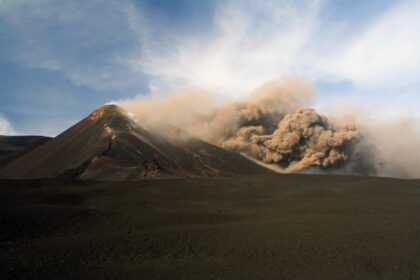
Cancellations following Mount Etna’s volcanic eruption have sparked chaos and led to airport closures in Catania. Catania-Fontanarossa Airport (CTA) has suspended air traffic until at least 10 p.m. on Sept. 15, 2026, after Mount Etna (Europe’s highest and most active volcano) erupted again, sending an ash cloud 4 km into the sky.

Issues Catania Airport has been facing
Catania-Fontanarossa has faced disruption from Etna for a long period of time. Etna’s eruptive activity intensified on Aug. 8, starting a period that restricted airspace in Catania-Fontanarossa. This is the second time this year that Etna has caused significant disruption for passengers after the airport was forced to shut down. The closure of Catania-Fontanarossa Airport during the peak of the Italian summer season has affected thousands of travellers and caused significant disruption across Europe.
In its Sept. 14 update, Catania-Fontanarossa Airport said volcanic activity had forced the closure of airspace sectors around the airport. The managing company that operates Catania-Fontanarossa Airport, SAC, said prevailing winds contributed to the restrictions on Sept. 14, particularly due to prevailing southerly winds. The ash from Etna even forced Sicily’s primary airport, Catania-Fontanarossa, to shut for five consecutive days.
Italy’s National Institute of Geophysics and Volcanology (INGV) raised Etna’s aviation colour to red, reporting serious danger as a response to ongoing volcanic ash emissions.
The Sicilian regional government authority confirmed that by Aug. 12, 2026, Etna had affected around 700 flights at Catania-Fontanarossa Airport, including cancellations, disruptions, and rescheduling through other airports.
Catania-Fontanarossa Airport now recommends that passengers “check the status of their flights with their airlines before travelling to the airport,” with further updates expected in the next few weeks.
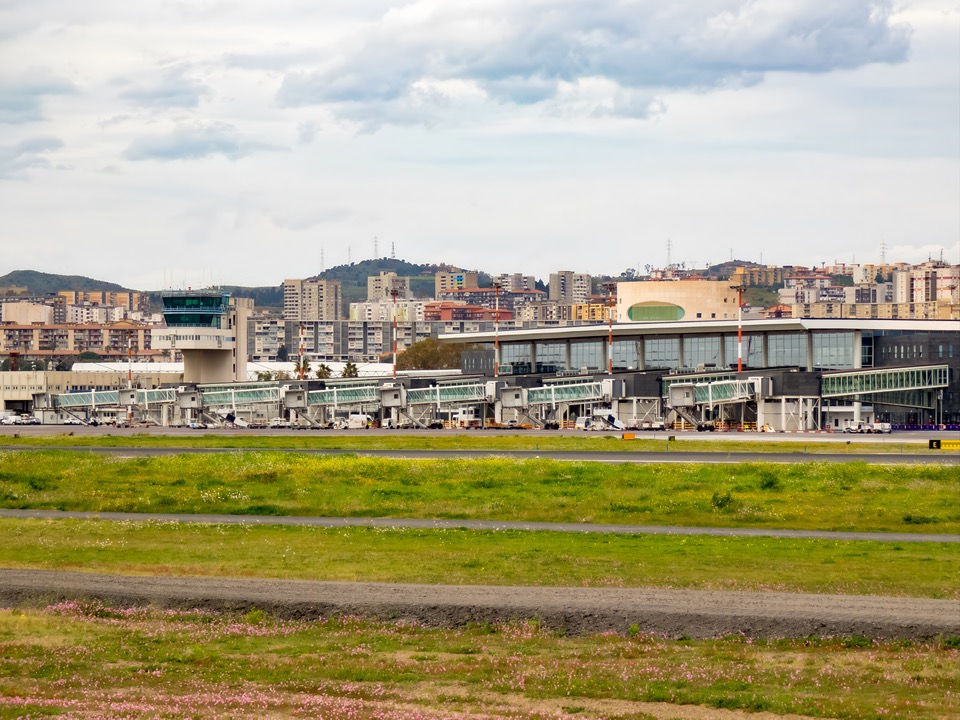
Operational Problems Due To Volcanic Eruption
Airlines can still schedule flights while Catania-Fontanarossa Airport is operating, although operations will be dependent on conditions clearing.
This is similar to the volcanic activity which happened in Indonesia last week, where volcanic ash was detected at the airport.
Orange alerts were issued between many of those red alerts, but for airport operators, Etna is not producing an isolated disruption followed by normality. Catania-Fontanarossa Airline still faces periods where intense weather conditions and volcanic eruptions can remove airport capacity.
Airport operator SAC stated that:
“Due to the emission of volcanic ash into the atmosphere, the closure of sectors B3 and C1 has been extended, resulting in the continued suspension of flight operations until 10. p.m.”
Boris Behncke, a researcher at the National Institute of Geophysics and Volcanology’s Etna Observatory has said:
“Volcanic ash can be a great risk. It can be sucked into the motors, and force them to stall. This is why everyone is so very cautious with aircraft when there is a volcanic ash emission.”
After the shutdown of Catania-Fontanarossa Airport in September, Sicily must plan under the assumption that Catania Airport will lose capacity again as a result of Etna’s ash clouds and volcanic debris.
What do you think should be done to help mitigate airport disruptions in areas of high volcanic risk? Share your comments below to start this conversation!