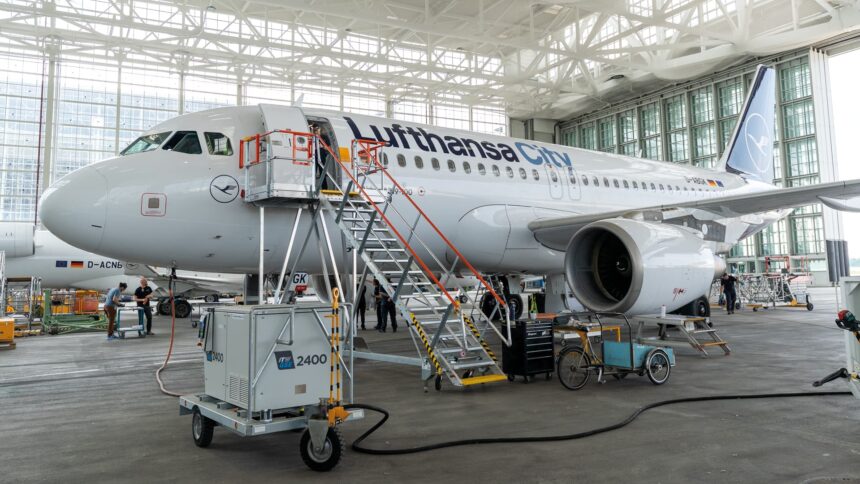
Lufthansa City Airlines has become the first airline in the world to test a new generation of AeroSHARK technology on a short-haul aircraft, as the group continues efforts to improve fuel efficiency and reduce emissions.
The transparent film patches are being trialled on an Airbus A319 operating between Munich and Hamburg with testing expected to continue until February 2027.
New technology enters short-haul
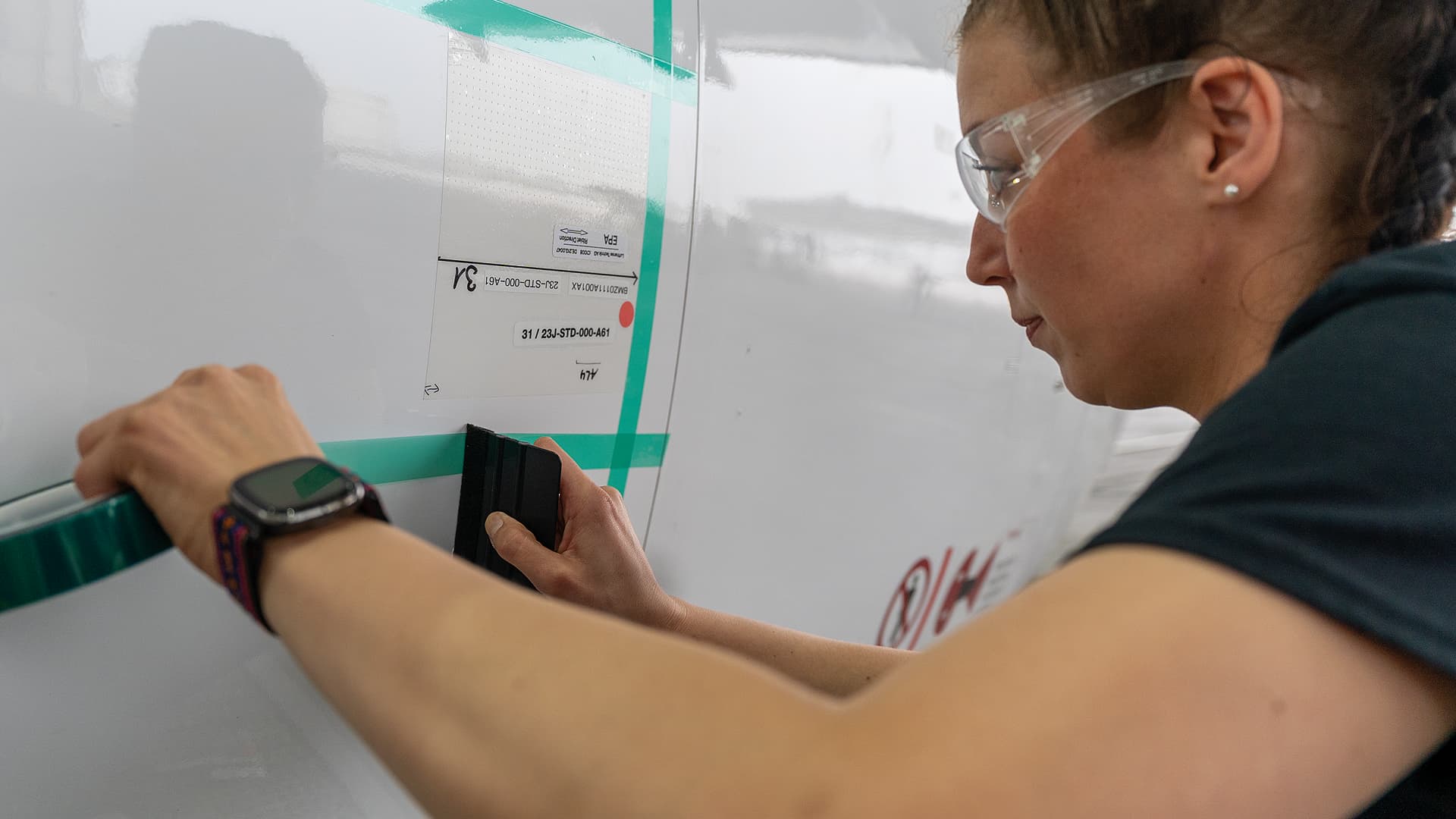
The aircraft has been fitted with around 70 transparent film patches measuring 20 by 20 centimetres. The samples have been applied to selected areas of the fuselage and engine cowlings and will be monitored during regular commercial flights. Lufthansa Technik is carrying out the trial in partnership with Surventis, to evaluate different material compositions under real-world operating conditions.
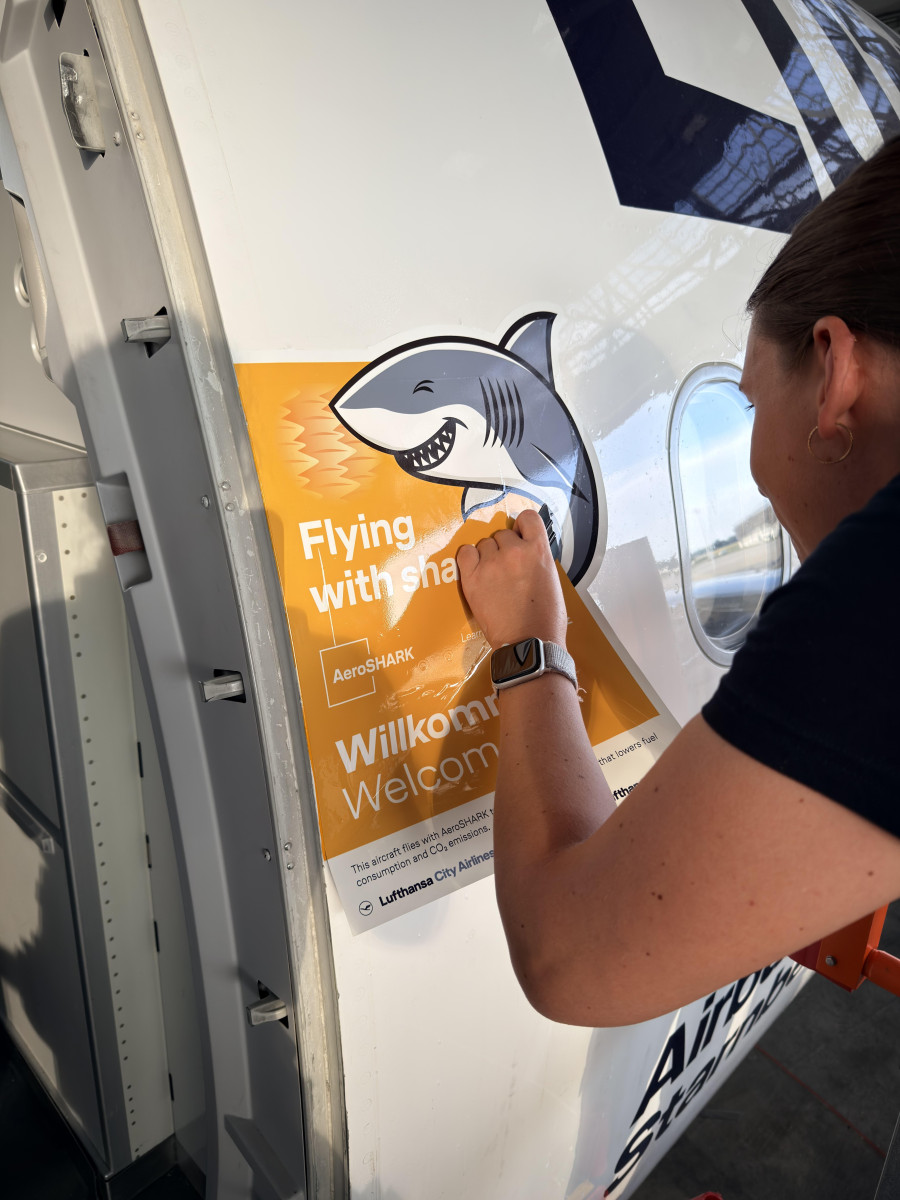
The airline said the patches are almost invisible to passengers, with a welcome display near the aircraft entrance providing information about the trial.
Shark skin inspired innovation
AeroSHARK is a surface film inspired by the microscopic riblet structure found on shark skin, which helps reduce friction as sharks move through water. Applied to aircraft, the technology is designed to reduce aerodynamic drag, lowering fuel consumption and carbon dioxide emissions.
The next generation of the material is being developed for use beyond the fuselage and engine cowlings, with researchers aiming to eventually apply it to wings and tail surfaces, where aerodynamic forces are greater. Lufthansa Technik said the latest trial will help identify the material that offers the best combination of durability, ease of application, cleaning and removal.
A Lufthansa Technik spokesperson said:
“The long-term goal is to tap into additional efficiency potential in flight operations through the broader use of AeroSHARK, thereby contributing to the greater sustainability in air travel.”
AeroSHARK is currently the only riblet technology approved for commercial aviation and has already been installed on 22 Lufthansa long-haul aircraft. According to the airline, these collectively save 19 metric tons of fuel and 60 metric tons of CO2 every day.
Do you think this new technology should be implemented on all aircraft? Let us know in the comments below.