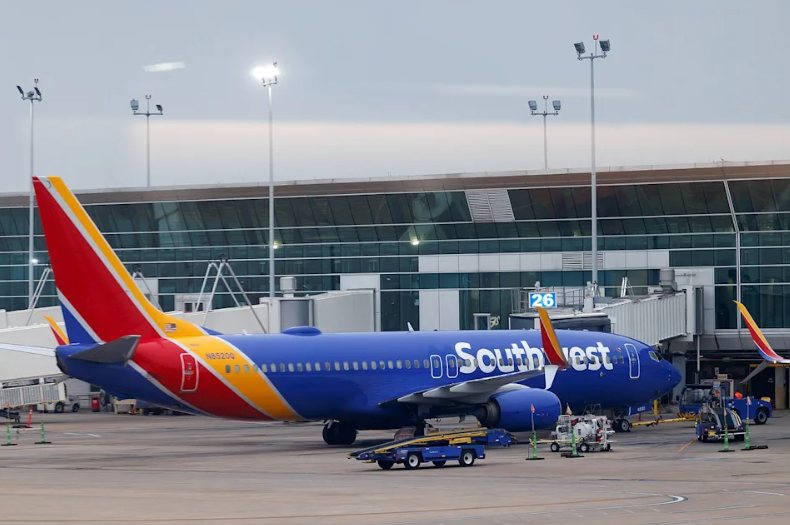
Southwest Airlines has entered into a new $2 billion revolving credit agreement with a stated maturity date of Aug. 10, 2031. The deal includes an uncommitted accordion feature that could increase total capacity to $3 billion and that Southwest can request up to two one-year extensions.
What this likely updates in Southwest’s capital structure
In Southwest’s most recent quarterly filing (Form 10‑Q for the quarter ended June 30, 2026, filed July 23, 2026), the company reported it had access to $1.5 billion under an amended and restated revolving credit facility that expires in August 2028 and that no amounts were outstanding under that facility during the first half of 2026.
Southwest’s Q2 2026 earnings release also described its quarter-end liquidity as $5.3 billion, comprising $3.8 billion in cash and cash equivalents plus a $1.5 billion revolving credit line.
Put together, the reported new $2 billion / 2031 revolver looks like a classic “extend-and-upsize” move: refinancing a revolver well ahead of its maturity to push out the wall, keep bank commitments fresh, and add flexibility if market conditions tighten.
What a revolving credit facility does for an airline
A revolving credit facility (“revolver”) is essentially a committed liquidity backstop: the company can draw funds up to the facility limit, repay them, and reborrow, typically for working capital and general corporate purposes.
The accordion feature is important because it gives the company a pre-negotiated mechanism to increase the facility size (here, reportedly up to $3 billion) if lenders are willing and conditions are met, often faster and cheaper than arranging a brand-new facility under pressure.
Even if Southwest doesn’t draw on the revolver, the maturity date signals to investors, credit analysts, and counterparties that the airline has a longer-duration liquidity safety net.
Do you think this sets the paradigm for other airlines? Let us know in the comments.