


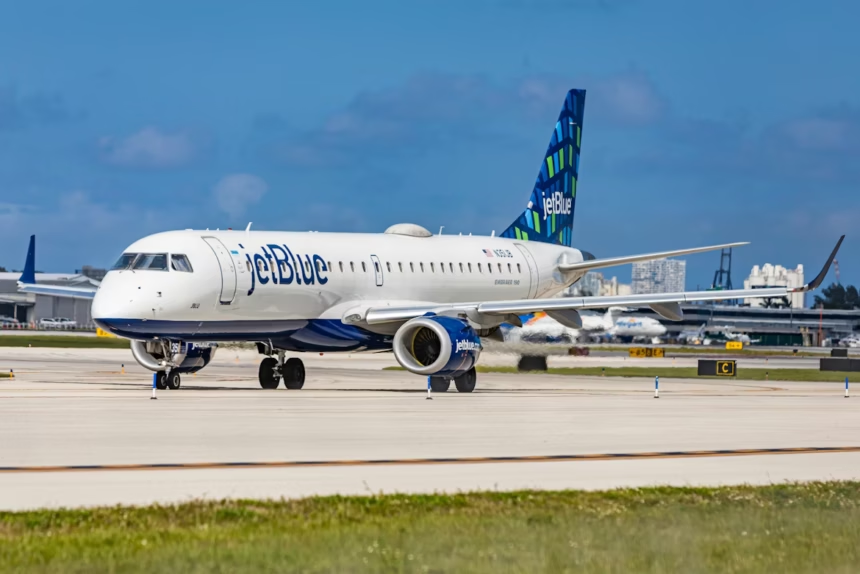
Significant delays were seen at Newark Liberty International Airport on Feb. 18, 2026. This followed an incident where a JetBlue plane turned back soon after takeoff. As a result, authorities paused departures temporarily. The decision came due to safety protocols triggered by the event. Operations resumed once conditions were confirmed stable.

Emergency landing and passenger evacuation
Travelling from Newark toward West Palm Beach, the aircraft returned just minutes into flight at approximately 5.45 p.m. local time. An urgent descent followed, leading to a safe touchdown under controlled conditions. Once stopped, crew members noticed traces of smoke within the cockpit area. The plane came to rest on a taxiway instead of the main runway.
All individuals on board exited without harm, and there were zero accounts of physical damage. Safety protocols took effect precisely when required during the incident.
What stood out was the movement on the ground during response operations. Officials responded quickly, and visibility remained clear as passengers were directed safely away from the aircraft. Response units arrived shortly after initial alerts. Activity continued without pause once perimeter control began.

Airport Operations Temporarily Suspended
A temporary shutdown followed at sections of Newark Liberty International Airport after the plane’s relocation from the taxiway, then checks began. Safety reviews took place once movement operations resumed slowly afterwards.
The Port Authority of New York and New Jersey and the Federal Aviation Authority (FAA) temporarily halted operations as a precaution. Though routine checks prompted no immediate threat, suspension followed standard protocol without delay. From early morning onward, oversight bodies-maintained alignment on grounding decisions. Only after full coordination did authorities allow reconsideration of flight activity. Despite minimal risk indicators, pausing continued until assessment teams filed final clearance.
At around 7 p.m., flights resumed after crews had removed hazards and inspectors confirmed safe conditions. Routine activity across the airfield returned afterwards.

Safety Procedures and Industry Context
Smoke in the cockpit triggers immediate action. When systems behave unpredictably, turning back follows established protocols. Safety guidelines demand attention to any sign of combustion, no matter the cause. Immediate action forms part of global aviation standards in such cases.
When emergencies arise, moving people quickly becomes necessary. Though it interrupts normal operations, safety improves when exits happen fast. Procedures exist not to complicate things but to reduce danger during uncertain moments. Passengers and staff benefit even if the process feels sudden or inconvenient.
Although JetBlue has not shared specific results, safety continues to be emphasised above all else. What matters most, according to the airline, is maintaining secure travel conditions. Still, full details have not been made public at this time. Priority rests firmly on the protection of passengers, even without complete data release.
Fewer takeoffs happened lately at large airfields across the globe, due to firm rules tied to sudden plane issues and ground track conditions. Though rare, such pauses follow patterns seen before when safety protocols activate unexpectedly.
Stay informed on aviation safety matters while exploring current reports about airport activities through Travel Radar‘s continuous reporting on all things aviation worldwide.


