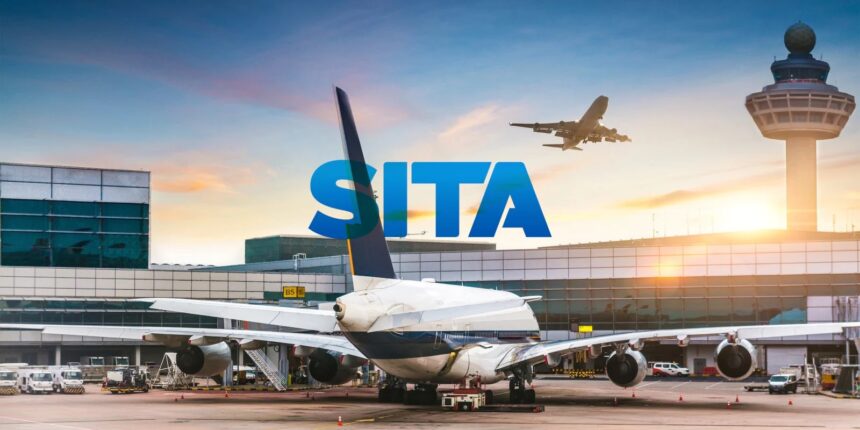
Multinational Information and Telecommunications (IT) company Société Internationale de Télécommunications Aéronautiques (SITA) has released its 2025 Impact Report. The report highlights how the aviation industry is preparing to support 10 billion passengers a year by the year 2050 (a projected figure from IATA – The International Air Transport Association).
Software over concrete
SITA’s report explores how the aviation industry’s increased use of artificial intelligence (AI) and other technology, will enable it to move twice as many passengers in a generation without increasing the number of airports, aircraft or border staff. This ever-advancing technology is said not only to add capacity but can also manage disruption and reduce environmental footprints.
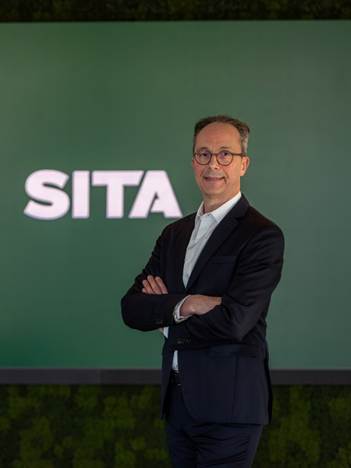
David Lavorel, SITA CEO said:
“With passenger numbers heading toward 10 billion a year by 2050, the question is unavoidable: how do we move twice as many travellers without doubling our infrastructure? The SITA Impact Report 2025 shows how that shift is already underway. Airports are scaling capacity within the buildings they already have, avoiding the cost and timelines of new construction. Governments are clearing borders before passengers ever reach a queue or an officer’s booth. AI is moving out of pilot programs and into the operations rooms where flights are run. None of this is one company’s achievement. It is a shared tech transformation, where airlines, airports, governments and partners are powering the future of air transport together.”
Successes
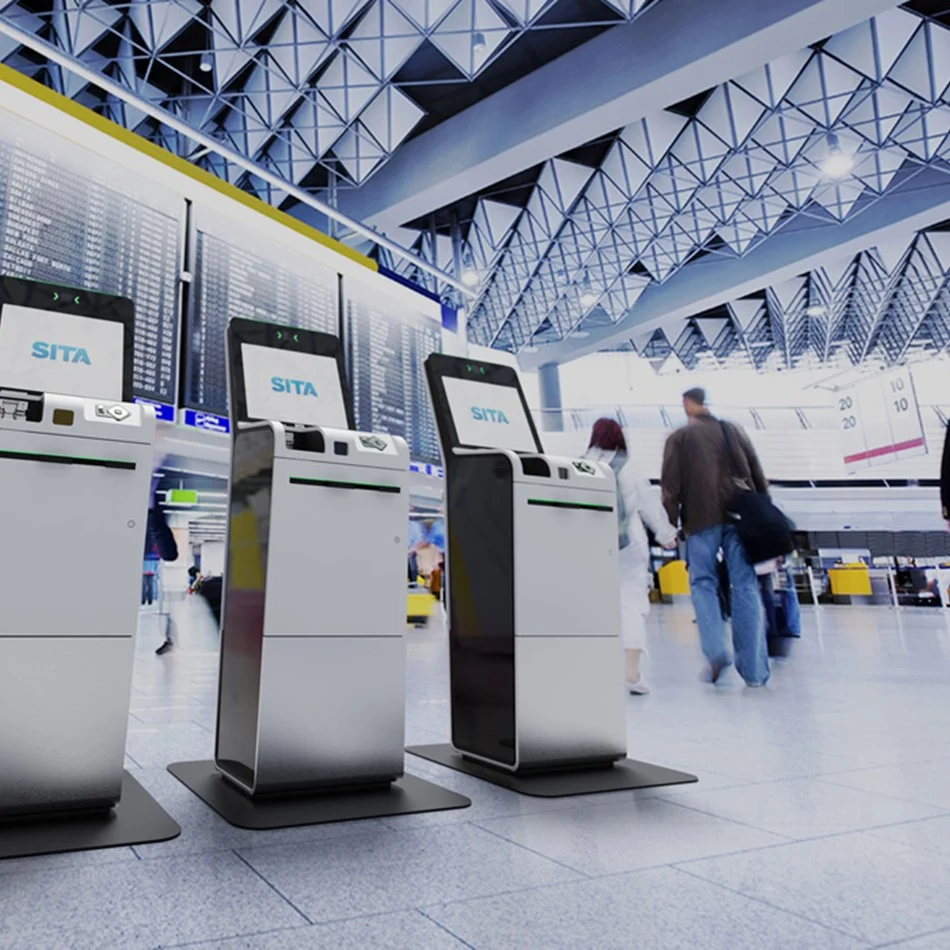
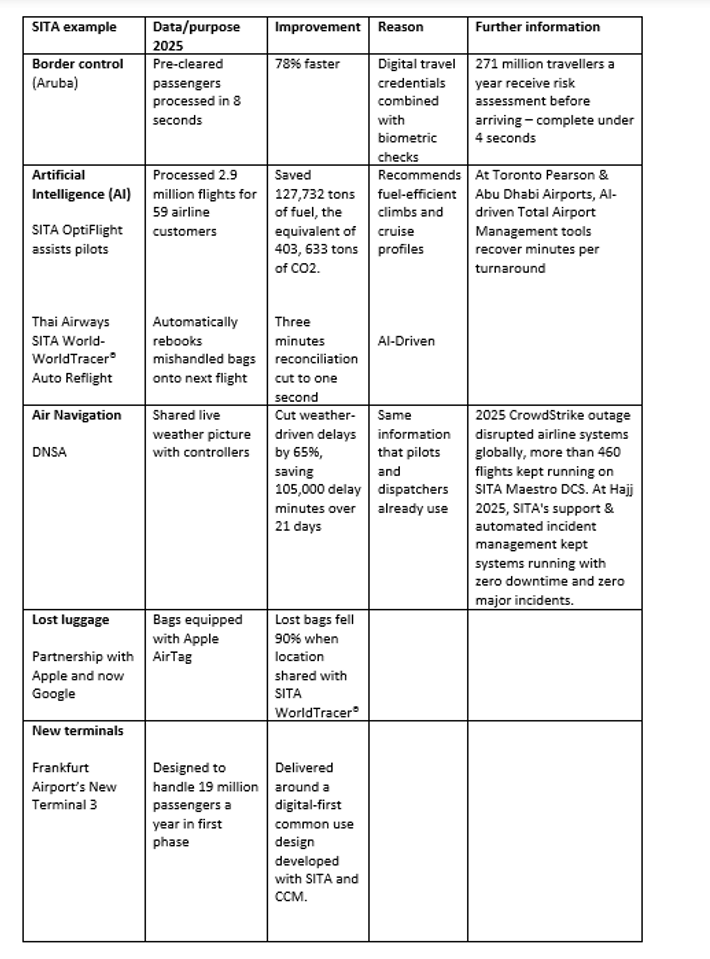
The report highlights some case studies where technology made a significant impact in the aviation sector, at airports, at border control, during flights and with baggage handling. The key points are summarised in the table below:
Financial performance
SITA’s Impact Report also detailed a 7% growth in its revenue to US$1.71 billion in 2025, the fourth consecutive year of 7 to 8% growth. SITA supports over 1,000 airports and over 19,600 aircraft worldwide. These impressive figures evidence that technology not only improves efficiency but it itself, is a profitable business.
In April 2026, the company also released its annual Air Transport IT Report which highlighted the importance of efficient data coordination between teams and systems.
Technology has always been at the forefront of the aviation industry and artificial intelligence is proving that processes can and will, be further streamlined. Currently however, humans are still much needed for safety-critical decisions and whilst pilots are often assisted by technology, they will remain in charge of flying commercial planes for the foreseeable future.
Do you feel excited or perhaps worried about the growth of AI technology in the aviation industry? Let us know in the comments below.