In a volatile global environment, CargoTech is using technology to navigate disruption in the air cargo sector. By combining real-time market data with advanced artificial intelligence, the group and its member companies support airlines, freight forwarders, and logistics providers in responding to operational challenges.
AI-driven visibility and decision-making tools
Ongoing instability in the Middle East, including airspace restrictions and regional conflict affecting flight routes, is creating disruption across air cargo networks. CargoTech says its solutions support more agile decision-making, improved capacity management, and operational resilience across the industry.
CargoTech’s approach centres on providing real-time visibility, dynamic scenario planning, and data-led decision support. By integrating AI across its portfolio, the company enables users to analyse shifting demand, monitor capacity changes, and adjust pricing or routing strategies in response to fast-moving conditions.
Cédric Millet, President of CargoTech, said:
“Visibility, transparency and clarity are crucial in times of crisis, and this is where AI really comes into its own, as it can take shifting data, combine it with real-time flight and capacity circumstances, and, within seconds, bring structure to chaos.”
Solutions across the CargoTech ecosystem, including CargoAi’s CargoMart, Rotate’s demand and capacity data tools, Wiremind’s CargoStack Optimiser, and Aerios’ CarrierApp, provide users with data on routes, pricing, and market trends. These platforms are designed to support decentralised decision-making while maintaining service continuity.
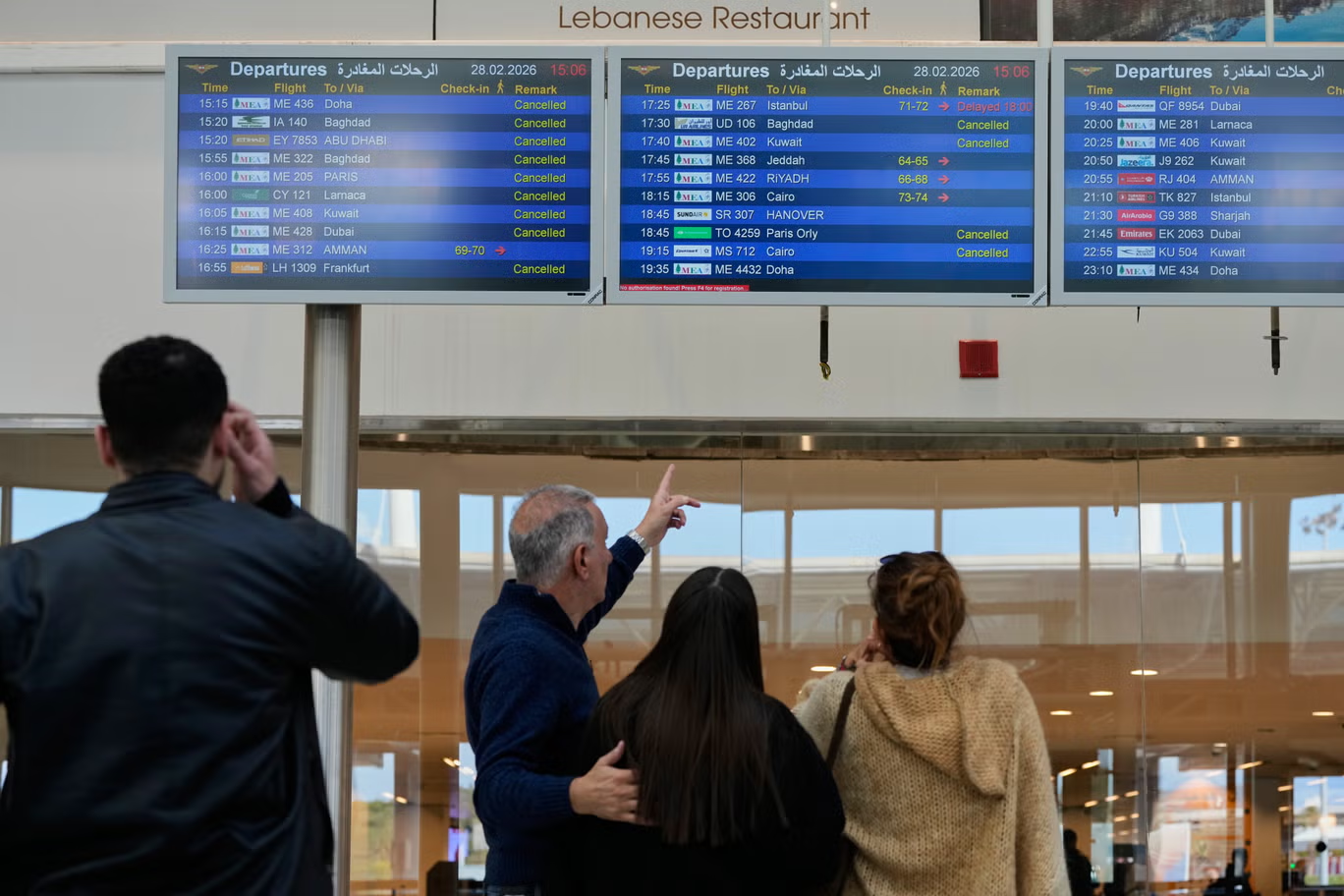
Supporting operations during the Middle East crisis
CargoTech’s technologies are currently being used to help customers manage the impact of the Middle East crisis. This includes disruptions caused by airspace closures, rerouting, and fluctuating demand linked to regional instability. Data-driven insights on airspace restrictions, capacity disruptions, and shifting demand patterns allow operators to adapt networks and maintain efficiency.
Initiatives such as dedicated analytics taskforces, real-time forecasting adjustments, and live market visibility tools enable companies to reassess routes, redeploy capacity, and respond to fluctuations in charter demand. The ability to access this information through dashboards and APIs ensures that decision-makers can act quickly, regardless of location.
These capabilities highlight increasing use of data-driven operations in the air cargo industry, particularly in times of uncertainty.
What do you think of CargoTech’s use of AI and real-time data to navigate air cargo disruptions? Share your thoughts in the comments below!