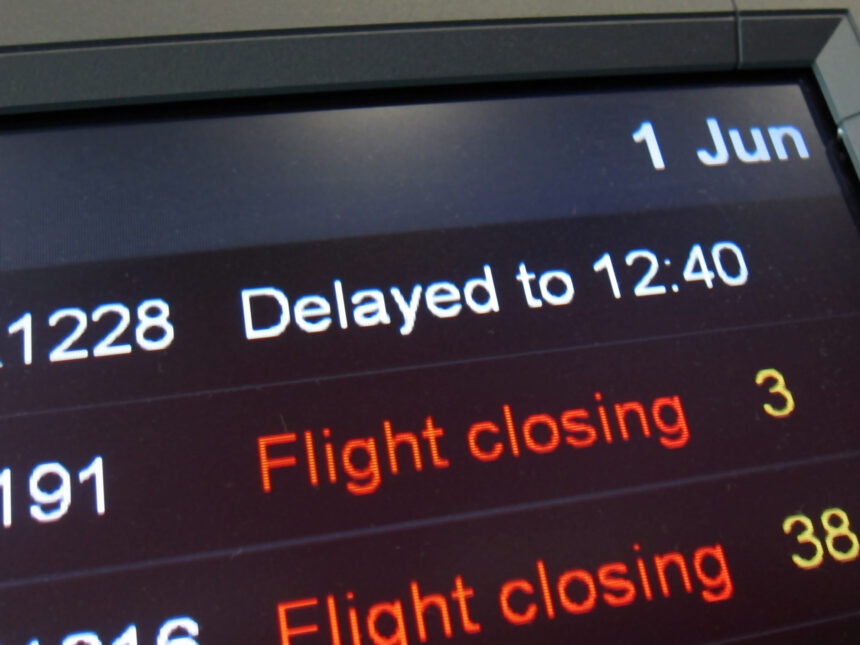
Flight delays remain one of the most common disruptions in air travel. Even in 2026, with improvements in operational planning and air traffic management, delays still occur due to weather, technical issues, airport congestion, and staffing shortages. For passengers travelling within Europe or departing from the United Kingdom, strong legal protections remain in place. Understanding how these rules work can help travellers determine whether they are entitled to financial compensation and how to claim it.
The legal framework governing compensation for delayed flights in Europe is based primarily on passenger rights regulations that apply across the European Union and in the United Kingdom. Although the UK left the EU, the fundamental rules for flight delay compensation remain largely aligned. For travellers, this means that the principles for claiming compensation are still broadly the same on both sides of the Channel.
The Legal Framework for Flight Delay Compensation
Passenger rights in the EU are based on Regulation EC261, while the UK operates a parallel regime commonly referred to as UK261. In practice, the rights granted under these systems are nearly identical. Both regulations establish clear obligations for airlines when passengers experience long delays, cancellations, or denied boarding.
These laws apply depending on the route of the flight and the airline operating it. For example, EU rules generally apply to flights departing from an EU airport regardless of the airline. They also apply to flights arriving in the EU if they are operated by an EU-based airline. In the UK, the same structure applies to flights departing from UK airports or arriving on UK airlines.
Because the regulatory frameworks mirror each other closely, passengers travelling between the EU and the UK often fall under both systems depending on the direction of travel and the airline involved.
When Does a Delay Become Eligible for Compensation?
A key element of the legislation is the threshold for delay. Not every delay automatically entitles passengers to financial compensation. Instead, the delay must meet specific criteria related to duration and cause.
In general, passengers may become eligible for compensation if they arrive at their final destination at least three hours later than originally scheduled. The time of arrival is defined as the moment when the aircraft doors open at the destination airport, allowing passengers to disembark.
The delay must also be the airline’s responsibility. If the disruption is caused by factors within the airline’s control, such as technical problems with the aircraft or operational issues with crew scheduling, compensation may be due. However, if the delay is caused by extraordinary circumstances beyond the airline’s control, compensation may not apply.
Extraordinary Circumstances Explained
Airlines are not required to pay compensation when delays are caused by extraordinary circumstances. These are events that could not have been avoided even if all reasonable measures had been taken.
Examples may include severe weather conditions, airport closures, air traffic control restrictions, political instability, or security risks. Strikes that affect airport staff or air traffic controllers may also fall into this category.
However, not all disruptions qualify as extraordinary. Technical faults discovered during normal aircraft maintenance are generally considered part of the airline’s operational responsibility. Courts across Europe have repeatedly clarified that routine technical issues do not exempt airlines from paying compensation.
For passengers seeking compensation for a delayed flight in the UK, understanding whether the delay falls under extraordinary circumstances is often the most important factor in determining eligibility.
Compensation Amounts and Distance Categories
The amount of compensation passengers can receive depends on the distance of the flight and the length of the delay at arrival. The regulations define three main distance categories.
For short haul flights up to 1,500 kilometres, passengers may be entitled to compensation of up to 250 euros or the equivalent in pounds.
For medium haul flights between 1,500 and 3,500 kilometres, compensation can reach up to 400 euros.
For long haul flights over 3,500 kilometres, the maximum compensation amount is typically 600 euros.
In some cases, airlines may reduce the compensation by 50 percent if the delay is relatively short compared with the scheduled flight length. For example, if the arrival delay is just over three hours on a long haul route, the compensation may be reduced.
Despite these variations, the core principle remains that passengers suffering significant delays may receive financial compensation when the airline is responsible.
Additional Passenger Rights During a Delay
Compensation is only one part of passenger protection. Even if compensation is not ultimately payable, airlines still have obligations to provide care and assistance when delays reach certain thresholds.
When a delay exceeds two hours on short haul routes or three hours on longer routes, airlines must offer passengers reasonable care. This may include meals, refreshments, and access to communication such as phone calls or internet access.
If the delay becomes very long or extends overnight, airlines may also be required to provide hotel accommodation and transport between the airport and the hotel.
These rights apply regardless of the cause of the delay. Even when extraordinary circumstances are involved, airlines must still take care of passengers while they wait for their flight.
Time Limits for Submitting Claims
Passengers do not need to submit a compensation claim immediately after a delay. In many jurisdictions within Europe, claims can be made several years after the flight occurred.
In the United Kingdom, the limitation period for submitting a claim is generally six years from the date of the disrupted flight. This relatively long timeframe allows passengers to pursue compensation even if they only become aware of their rights later.
However, it is always advisable to keep documentation related to the flight, such as boarding passes, booking confirmations, and communication from the airline regarding the delay.
How Passengers Can Claim Compensation
Passengers can claim compensation directly from the airline by submitting a formal request that includes details of the flight, the delay experienced, and supporting documents.
In practice, many travellers choose to use specialised claim services that assist with the process. Companies such as AirHelp focus on helping passengers pursue compensation claims and handle communication with airlines on their behalf.
These services can be particularly helpful when airlines dispute the cause of the delay or when legal action becomes necessary. They typically operate on a success fee basis, meaning passengers only pay if compensation is successfully obtained.
For travellers unfamiliar with the legal details of passenger rights regulations, using such services can simplify the process of claiming compensation for a delayed flight.
Operational Context in 2026
The aviation industry in 2026 continues to face operational challenges. High passenger demand, ongoing air traffic congestion in certain regions, and occasional staffing shortages still contribute to delays across European airspace.
At the same time, regulators and airlines are investing heavily in technology and operational improvements aimed at reducing disruption. Advances in predictive maintenance, improved flight scheduling algorithms, and modernised air traffic management systems are gradually improving reliability.
Nevertheless, delays remain an unavoidable part of aviation. This is precisely why robust passenger protection frameworks remain essential.
What Travellers Should Remember
For passengers travelling within Europe or between the EU and the UK, understanding flight delay rights can make a significant difference when disruptions occur. The rules governing compensation remain well established and continue to offer meaningful protection.
If a flight arrives more than three hours late and the airline is responsible for the disruption, passengers may be entitled to financial compensation. In addition, airlines must provide care and assistance during significant delays, regardless of the cause.
Travellers who believe they may qualify for compensation for a delayed flight in the UK or in the EU should review the circumstances of their delay and consider submitting a claim. With clear regulations in place and the option to seek help from specialist claim services, passengers have strong tools available to protect their rights when travel plans are disrupted.