By using this site, you agree to the Privacy Policy and Terms of Use.
Accept
Travel Radar - Aviation NewsTravel Radar - Aviation News
  • Breaking News
  • Aviation
    • Aircraft
    • Airlines
    • Airshow & Events
    • Careers
    • Manufacturing
  • Travel
    • Airports
    • Points & Loyalty
    • Technology
    • Trip Reviews
  • Newsletters
  • Aircraft for Sale
Reading: UK’s Sustainable Aviation Fuel Plan: A Greener Future
Share
Sign In
Notification Show More
Font ResizerAa
Font ResizerAa
Travel Radar - Aviation NewsTravel Radar - Aviation News
  • Breaking News
  • Aviation
  • Travel
  • Newsletters
  • Aircraft for Sale
  • Breaking News
  • Aviation
    • Aircraft
    • Airlines
    • Airshow & Events
    • Careers
    • Manufacturing
  • Travel
    • Airports
    • Points & Loyalty
    • Technology
    • Trip Reviews
  • Newsletters
  • Aircraft for Sale
Signin Sign In
Follow US
Copyright © Travel Radar Media Ltd. 2025 | All Rights Reserved
Travel Radar - Aviation News > News > Travel > Technology > UK’s Sustainable Aviation Fuel Plan: A Greener Future
AviationTechnology

UK’s Sustainable Aviation Fuel Plan: A Greener Future

Francesca Sullivan-Rouse
Last updated: 26 November 2024 19:52
By Francesca Sullivan-Rouse
4 Min Read
Share
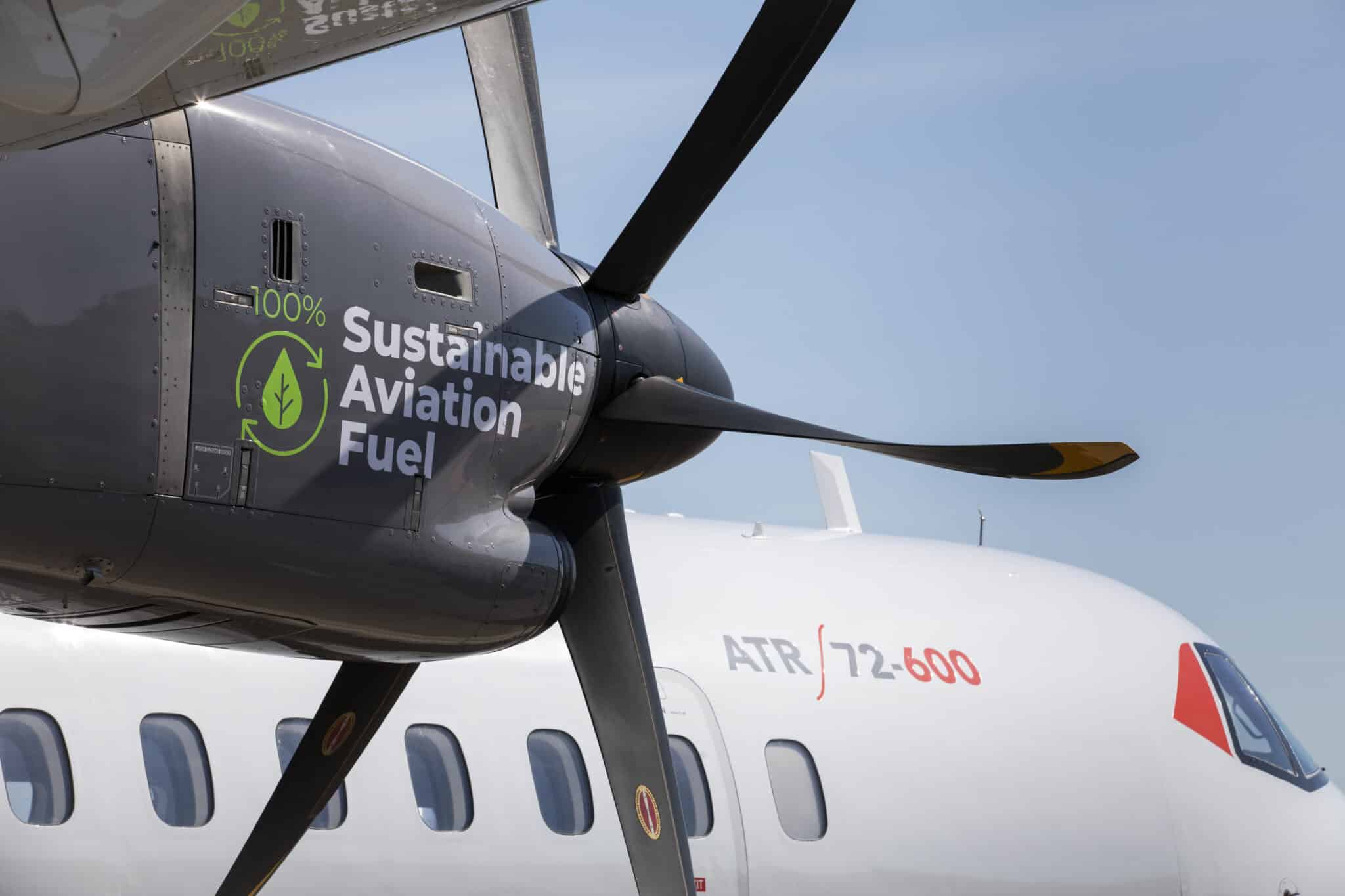
Sustainable Aviation Fuel © Rico Luman
SHARE

As the global aviation industry faces mounting pressure to reduce carbon emissions, the UK has launched a pioneering plan to integrate sustainable aviation fuel (SAF) into its operations, aiming to achieve net-zero emissions for domestic flights by 2040.
Summary
SAF Production UKImpact on PassengersThe Future of Aviation Sustainability
Sustainable Aviation Fuel
Sustainable Aviation Fuel © Mélody Chunlaud

SAF Production UK

The UK government has pledged significant investments in SAF production, including a £165 million fund to accelerate the development of SAF plants. The UK will introduce this plan in 2025, starting with 2% of jet fuel demand and increasing to 10% by 2030 and 22% by 2040. SAF, derived from renewable sources such as agricultural waste, household waste, cooking oil, and even captured carbon, have the potential to cut aviation emissions by up to 70% compared to conventional jet fuel. By supporting domestic SAF production, the UK also seeks to create thousands of green jobs, boost regional economies, and position itself as a global leader in sustainable aviation technologies.

Transport Secretary Mark Harper said: “Sustainable aviation fuel protects the future of UK aviation, the thousands of British jobs that depend on it, and the holidays and business travel flights that we all rely on.”

Key to success of this plan is collaboration between the government, private sector, and research institutions. Airlines such as British airways and Virgin Atlantic are already committed to SAF usage, while major energy companies are investing in scalable SAF solutions. Additionally, regulatory frameworks, including SAF blending mandates, aim to ensure that sustainable fuel becomes a standard in UK aviation.
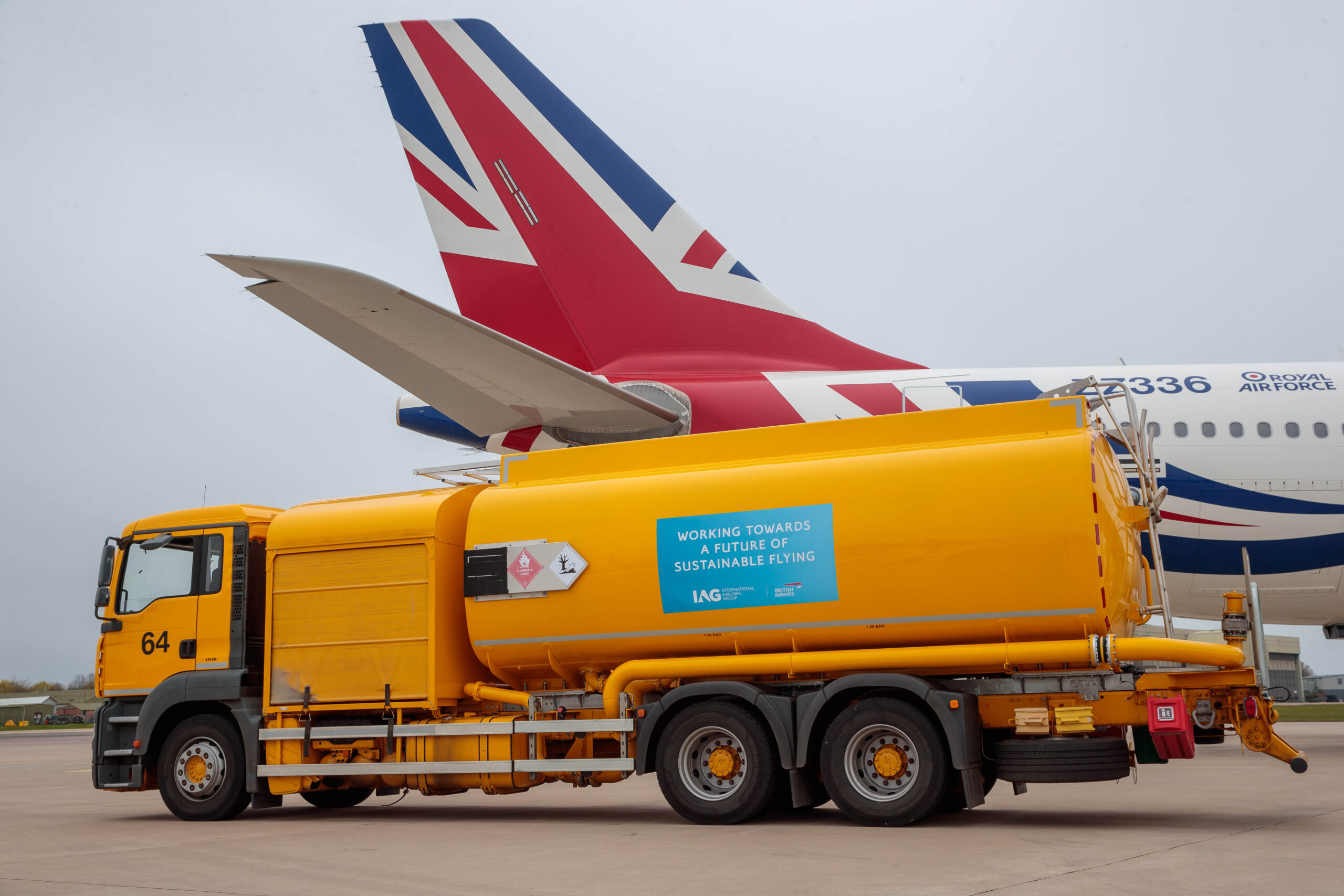
RAF Voyager aircraft being fuelled with 43% SAF
RAF Voyager aircraft being fuelled with 43% SAF © Nick Morrish

Impact on Passengers

The adoption of SAF is set to have a noticeable impact on passengers, primarily by enhancing environmental benefits and potentially shifting ticket pricing. For eco-conscious travellers, the use of SAF offers s tangible way to reduce the carbon footprint of their journey’s. This aligns with growing consumer demand for greener travel options and allows passengers to feel that their choices contribute to global sustainability efforts. However, the current higher production costs of SAF may lead to a modest increase in ticket prices as airlines work to integrate these fuels into their operations. Over time, scaling SAF production and improving cost efficiency will stabilise prices.

However, challenges remain. SAF production is currently more expensive than traditional jet fuel, and scaling up supply to meet demand requires further innovation and investment. To address this, the UK is exploring policies such as tax incentives and research grants to make SAF more commercially viable.

The Future of Aviation Sustainability

The UK’s sustainable aviation fuel plan represents a bold step toward decarbonising air travel and achieving the country’s net-zero targets by 2050. By embracing innovation and fostering public-private partnerships, the UK is not only mitigating the environmental impact of aviation but also setting a precedent for global action in the fight against climate change.

How can sustainable aviation fuel reshape the future of air travel? Share your thoughts on the UK’s ambitious plan to lead the way in green aviation technology


You Might Also Like

Virgin Atlantic Agrees Sale and Leaseback of A330-900s to AerCap
Etihad Airways signs codeshare partnership with STARLUX Airlines
Asiana Airlines to Return to Europe after Five years
Hokkaido Air System Still Affected By Grounded ATR 42-600
2026 aviation airshows and conferences calendar
Share This Article
Facebook Twitter Email Copy Link
What’s your thoughts?
Love2
Sad0
Happy0
Angry0
Francesca Sullivan-Rouse
ByFrancesca Sullivan-Rouse
Aviation Reporter - A personable writer and journalist with 3+ years of experience in the luxury hotel and travel industry. An agile thinker with expertise in interpersonal communication and research, Francesca brings her wealth of industry experience to her journalism at Travel Radar.
Previous Article The image of American Airline Boeing 737-8 MAX during the flight. American Airlines Aircraft Experienced an Engine Fire after Takeoff
Next Article Lots of people waiting with their luggage at London Heathrow Airport. Storm Bert Sparks Weekend Travel Chaos at UK Airports
Subscribe
Login
Notify of
guest

guest

0 Comments
Oldest
Newest Upvoted
Inline Feedbacks
View all comments

Stay Connected

FacebookLike
TwitterFollow
InstagramFollow
YoutubeSubscribe

Trending News

The front section of a British Airways plane on an airport taxiway against a pink and blue sky. The ground the plan is upon is dark grey concrete with yellow markings. The British Airways branding can be seen on the side of the plane's white body, and the engines are blue.
Threat of Fuel Shortage Prompts Airlines to Demand Leniency
Airlines Aviation Did You Know
The image depicts thefront of a TransPennine class 185 train as it prepares to leave Manchester Airport Station. The front is yellow, and the body of the train is dark blue, light blue, and purple. The Front of the train is the main focus of the image, and is central.
New Night-time Train to Manchester Airport Starting in May
Airports Did You Know Travel
Weverse option on the Korean Air SKYPASS
Korean Air links Loyalty Programme with Weverse
Airlines Points & Loyalty Travel
Aerial View of Dubai Skyline with Burj Khalifa
How to start a British aviation consultancy business in Dubai
Aviation Travel
An aerial view of the town of Kotor, Croatia
Why Kastela Is Becoming a Smart Departure Point for Croatia Sailing Holidays
Travel Travel Radar

Travel Radar is the leading digital hub for all things aviation and air-travel. Discover our latest aviation news, aviation data, insight and analysis.


Discover

  • Latest News
  • Subscribe
  • Weekly Digest
  • Contact Us
  • Privacy Policy
  • About Us
  • Advertising
  • Media Coverage
  • Press & Events
  • Join Our Team
  • Our Brands

Signup to our Newsletter!

And get the latest aviation news via our weekly news digest!

© Travel Radar Media Ltd. 2015-2026 | ISSN #2635-0696 | Trademark #UK00003579704
wpDiscuz
adbanner
Welcome to the TR Community!

Sign in to your account

Not a member? Sign Up