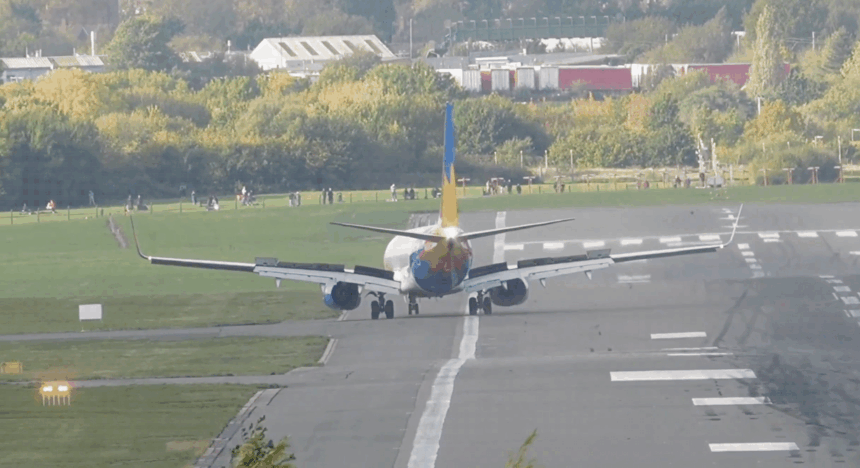
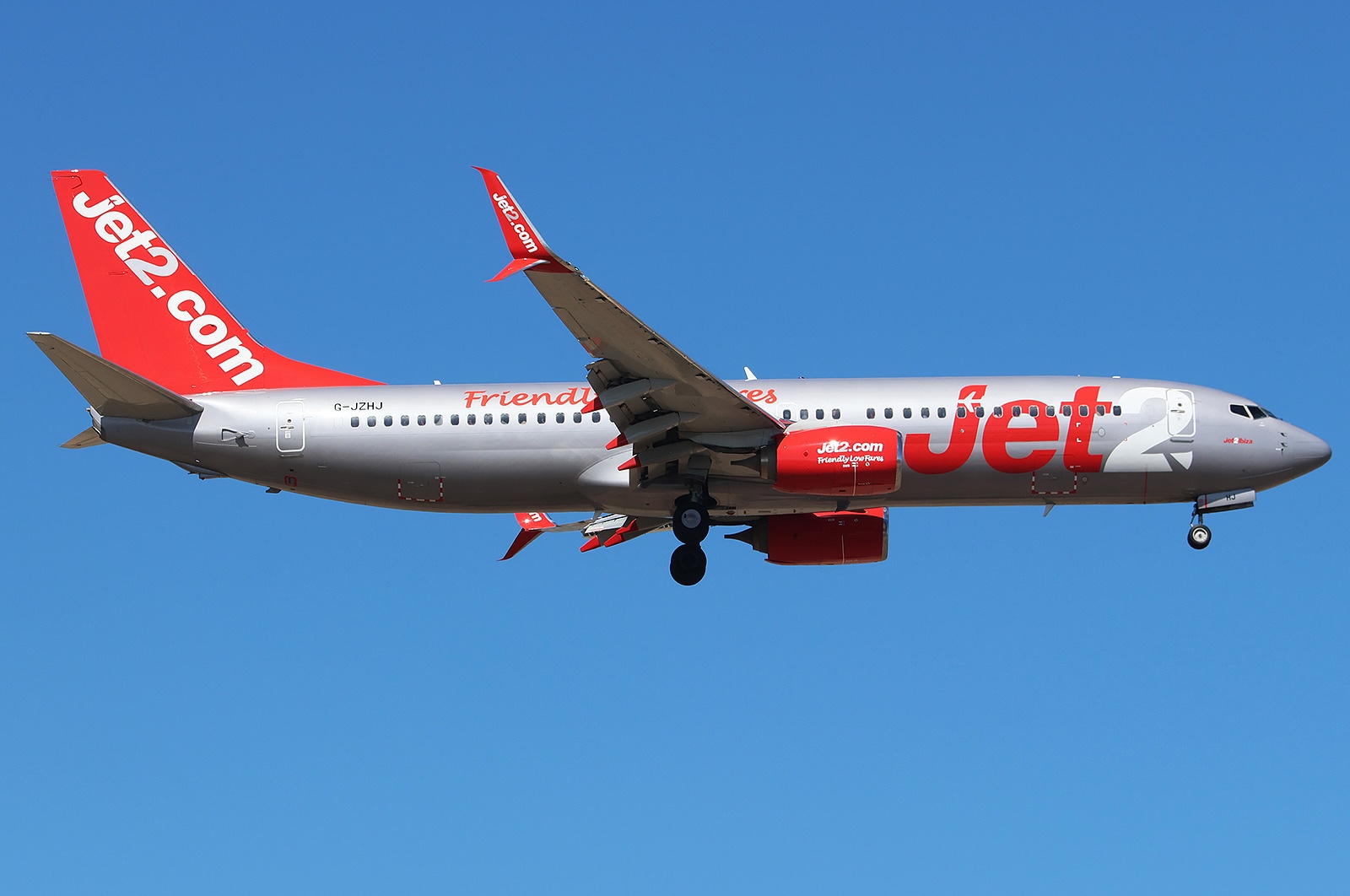
Jet2 flight LS1310, operated by a Boeing 737-800, swerved off the runway at Birmingham International Airport (BHX) on Sunday. The aircraft swerving was caused by the strong winds from Storm Boelo.
What happened?
Landing at around 2:19 p.m. local time on Runway 33, the Boeing 737-800 aircraft veered onto the grass amid strong winds from Storm Boelo.
Weather observations from BHX showed strong westerly winds earlier that day. The 10:50 a.m. UTC METAR (Meteorological Aerodrome Report) recorded winds from 270° at 18 knots, gusting to 29 knots, with the direction varying between 240° and 320°. The accompanying 11:19 a.m. UTC TAF forecast winds from 270° at 18 knots, gusting to 35 knots, with temporary gusts potentially reaching 45 knots between 12:00 p.m. and 3:00 p.m. UTC.
Weather conditions like the wind observed earlier that day, and Runway 33’s northwest orientation, can create a crosswind issue during landing, causing aircraft alignment issues during touchdown.
Although modern aircraft are designed to operate in challenging weather, strong, unpredictable winds can nevertheless complicate takeoff and landing processes, especially when crosswinds affect an aircraft’s alignment with the runway.
A Jet2 spokesperson said:
“Flight LS1310 from Venice to Birmingham temporarily moved off the runway after landing at Birmingham Airport earlier this afternoon, due to exceptional weather conditions caused by Storm Boelo.”

How unpredictable weather complicates airport operations and flights
Wind is an important consideration during every aircraft landing. Crosswinds like the one experienced by flight LS1310 can push an aircraft sideways from the runway, making pilots make corrections to maintain an appropriate alignment with the runway. Strong winds make those corrections more demanding and harder to make, particularly during the final approach and touchdown.
Airports can respond to inclement weather by changing runway configurations, adjusting arrival rates, delaying departures or diverting flights when conditions warrant it. Ground crews may also need to take extra precautions during strong winds.