


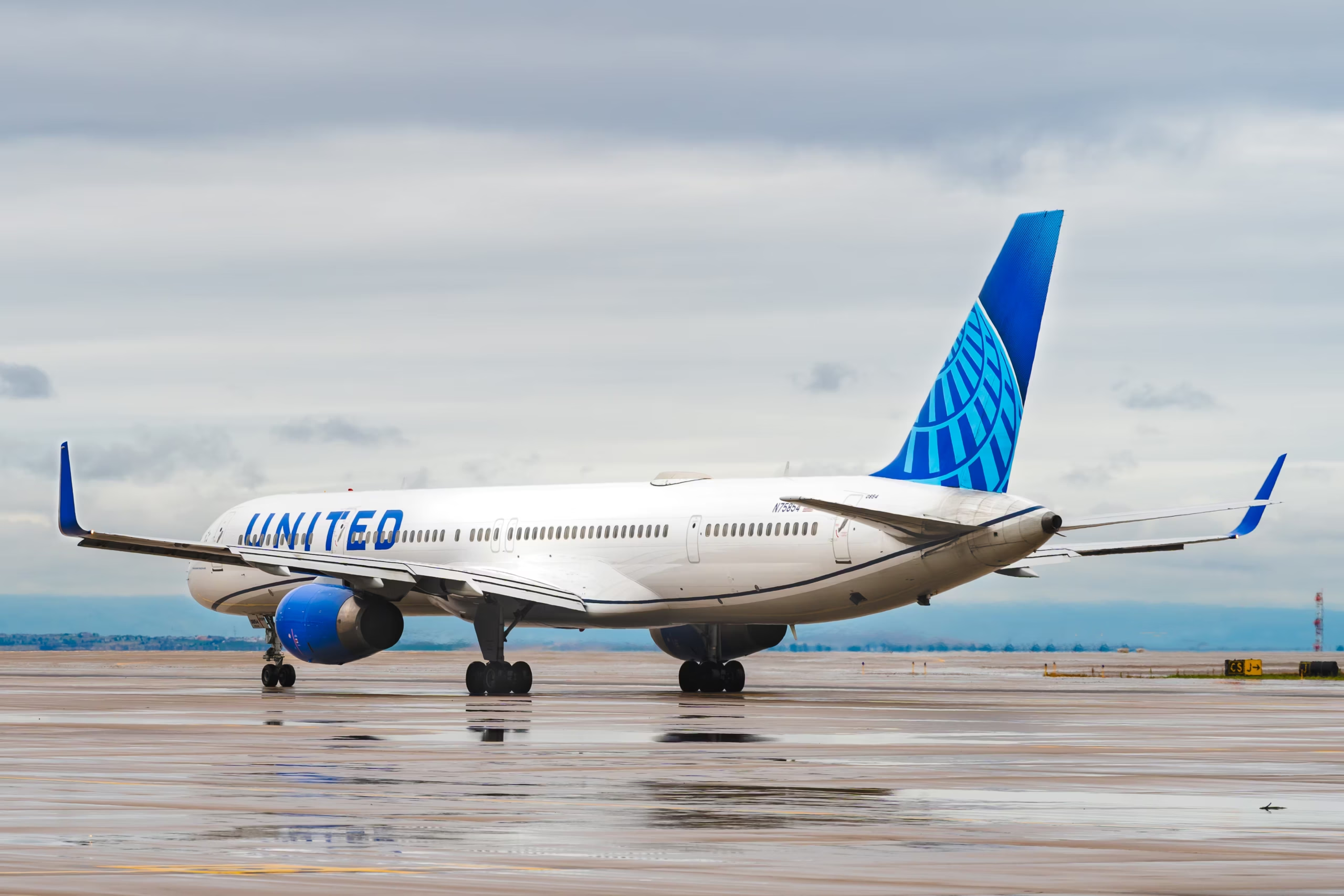
A routine domestic flight had an unexpected reroute on Monday morning when United Airlines flight 1207 was forced to return to Newark Liberty International Airport (EWR) shortly after departure following a reported bird strike.
Windshield Damage Raises Further Concerns
The flight, operated by a Boeing 737 MAX 8, departed EWR on March 9, 2026 bound for Jacksonville, Florida. Flight tracking data shows the aircraft taking off at approximately 8:19 a.m. carrying 145 people on board.
Just minutes after becoming airborne, while climbing through roughly 3,000 feet, the flight crew informed air traffic control that the aircraft had struck a bird and requested delay vectors as they evaluated the situation.
Shortly after reporting the strike, the crew indicated that the aircraft’s cockpit windshield had cracked and that there was a risk of cabin pressure loss.
While bird strikes are often associated with birds being ingested into engines, impacts can occur anywhere on the aircraft. Depending on the size of the bird and the aircraft’s speed at the time of impact, strikes can damage parts of the fuselage, radome or cockpit windows.
A cracked windshield presents a significant concern for flight crews. It can reduce visibility and, in extreme cases, compromise the aircraft’s ability to maintain proper cabin pressure. Given these risks, the pilots chose to declare an emergency and return to Newark.

Safe Landing Back At Newark
After turning away from its planned route, the aircraft performed a wide loop to the west of the airport while controllers prepared for its return. The Boeing 737 MAX 8 landed safely on runway 22L at Newark at approximately 8:40 a.m., about 20 minutes after takeoff.
No injuries were reported among passengers or crew members.
The Federal Aviation Administration (FAA) later confirmed the incident in a statement, noting that the crew reported both a cracked windshield and risk of a pressurisation issue after the bird strike. The agency said it will investigate the event.

Bird Strikes Remain A Common Aviation Hazard
Bird strikes are a persistent challenge for airlines and airports around the world, particularly during takeoff and landing. According to the wildlife strike data from FAA, most wildlife encounters occur at relatively low altitudes, often below 1,500 feet.
In 2024 alone, more than 22,000 wildlife strikes were recorded across the United States, highlighting how common these events are despite ongoing mitigation efforts.
Newark is considered one of the airports where bird strikes occur relatively frequently due to its location near wetlands and other wildlife habitats that attract birds.
The airport has experienced several high-profile wildlife strike incidents in recent years. One notable case occurred in March 2025 when a FedEx Boeing 767 suffered an engine fire after striking birds shortly after departure. The aircraft was forced to make an emergency return to Newark, with flames from the engine visible from the ground.

What Happens After A Bird Strike?
Once an aircraft returns to the ground following a bird strike, maintenance teams conduct a detailed inspection. This process goes beyond checking the engines and often includes examining the windshield area, radome, fuselage panels and surrounding structures.
If the cockpit windshield required replacement, the process can take considerable time. Aircraft windscreens are multi-layered with heated components integrated into the aircraft’s electrical and pressurisation system. Replacing one involves removing the damaged panel, installing a new unit and carrying out system checks to ensure everything functions correctly.
For passengers on Flight 1207, the incident ultimately resulted in a delay rather than a cancellation. United later arranged a replacement aircraft, which departed Newark and arrived in Jacksonville roughly four hours behind the original schedule.
What are your thoughts? Let us know in the comments below.


