An unusual incident at Frankfurt Airport has resulted in six airport staff contracting malaria. This raises concerns over mosquito-borne diseases during travel.

How the Incident Unfolded
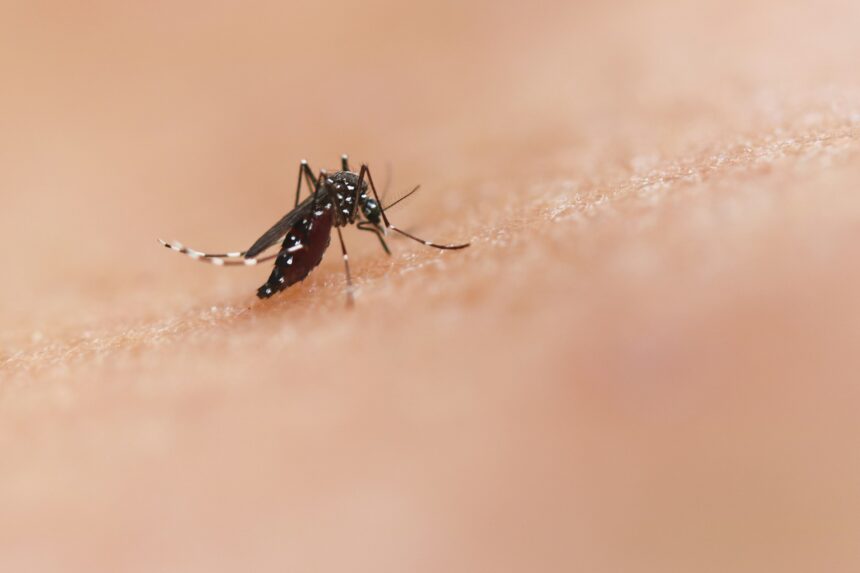
Two Frankfurt Airport workers have died of malaria after six employees contracted this mosquito-borne disease. BBC reported that the mosquitoes are believed to have arrived in Germany aboard an aircraft arriving from a region where malaria is endemic. This is a case of “airport malaria”, which is a recognised but rare occurrence whereby infected mosquitoes are transported by aircraft. According to South China Morning Post, the first death occurred in July and the second in August. The other four staff have recovered from the infection.
The Frankfurt Public Health Department is investigating the outbreak. At the airport, traps have been installed to capture the mosquitoes for further research on their species and origin. Peter Tinnemann, the head of the Frankfurt Public Health Department, said that the mosquito is most likely already dead, and that there is no likelihood of person-to-person transmission.

Disinsection Procedures and Pest-Control Measures
Aircraft follow a disinsection procedure between flights that could minimise the risk of insect-borne diseases. According to the World Health Organisation (WHO), each country has different requirements for disinsection. The guide produced by the WHO recommends applying pesticides in the passenger cabins, including toilet areas and the cargo hold, with aerosols and residual treatment of aircraft surfaces. The flight deck and crew rest areas are treated by aerosol application only. Residual treatment is longer-lasting, where it can be effective for six to eight weeks, while an aerosol treatment is only effective for a single flight. Therefore, reapplication is necessary to kill any small flying insects that are present.
Pest-control measures also differ by country. According to WHO, departure airports can carry out surveillance for the presence of vectors, close the jetway, walkway, stairway, or door to the aircraft when not in service, and provide a designated parking position to isolate aircraft from vector threats. Arrival airports can also provide a designated parking position if arriving aircraft may be carrying infectious agents or vectors and implement a vector control programme.
The International Civil Aviation Organisation (ICAO) suggests measures such as spraying or trapping vectors with the aim of keeping a vector free area within the 400 meters airport perimeter. This can also require the support of an engineering department or contractors who can implement physical, mechanical and environmental control measures.
Do you think airports and aircraft currently have adequate and effective health measures? Let us know in the comments!