
By using this site, you agree to the Privacy Policy and Terms of Use.
Accept
Travel Radar - Aviation NewsTravel Radar - Aviation News
  • Breaking News
  • Aviation
    • Aircraft
    • Airlines
    • Airshow & Events
    • Careers
    • Manufacturing
  • Travel
    • Airports
    • Points & Loyalty
    • Technology
    • Trip Reviews
  • Newsletters
  • Aircraft for Sale
Reading: Sustainable aviation changes in the UK 2026
Share
Sign In
Notification Show More
Font ResizerAa
Font ResizerAa
Travel Radar - Aviation NewsTravel Radar - Aviation News
  • Breaking News
  • Aviation
  • Travel
  • Newsletters
  • Aircraft for Sale
  • Breaking News
  • Aviation
    • Aircraft
    • Airlines
    • Airshow & Events
    • Careers
    • Manufacturing
  • Travel
    • Airports
    • Points & Loyalty
    • Technology
    • Trip Reviews
  • Newsletters
  • Aircraft for Sale
Signin Sign In
Follow US
Copyright © Travel Radar Media Ltd. 2025 | All Rights Reserved
Travel Radar - Aviation News > News > Travel > Did You Know > Sustainable aviation changes in the UK 2026
AviationDid You KnowTechnology

Sustainable aviation changes in the UK 2026

How the UK are implimenting aviation changes to hit net-zero by 2050.

Eve Powell
Last updated: 11 March 2026 21:18
By Eve Powell
4 Min Read
Share
Airbus taking off in blue skies.
Beautiful blue skies, with an airbus having taken off. © Jensen Mann
SHARE

Travellers are increasingly concerned about airline sustainability going into 2026. The question follows, what are airlines doing in response to this? Focusing on the UK,  it is clear the aviation industry is taking several steps to reduce its environmental impact, linking with governmental plans to achieve the long-term goal of  net-zero carbon emissions by 2050. These actions involve cleaner fuels, more efficient aircraft, improved flight operations, and government policies that encourage sustainable aviation.
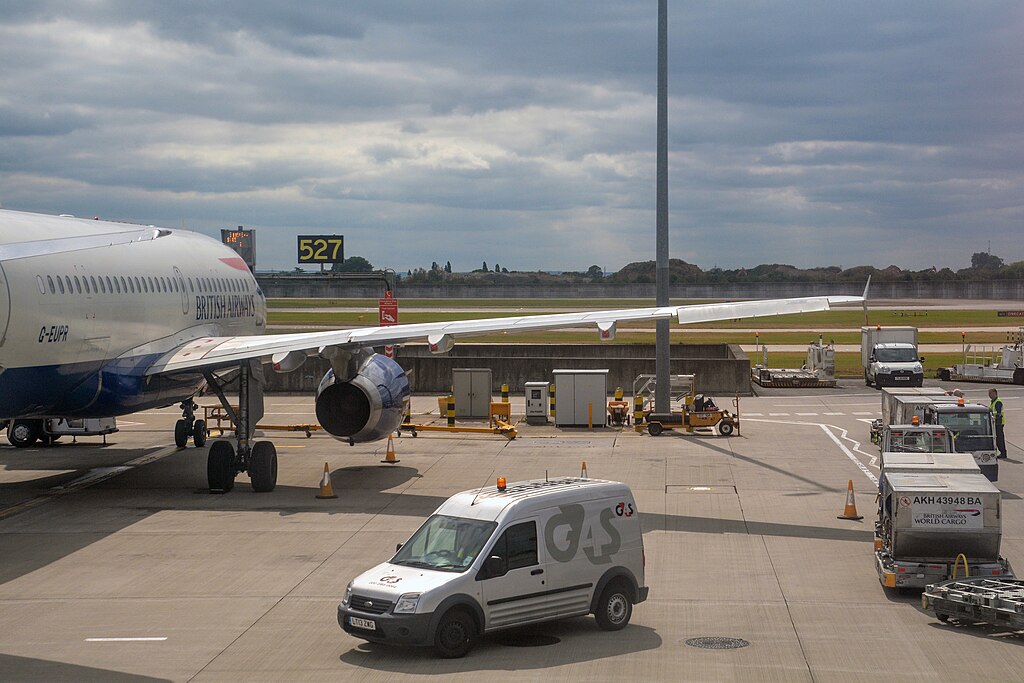
Aircraft on the London Heathrow Airport's tarmac; a van in the foreground.
London Heathrow Airport © Lewis Clark

Increasing the use of sustainable aviation fuel

One of the most significant measures taken is the introduction of the Sustainable Aviation Fuel (SAF) which is produced from renewable materials such as waste oils, agricultural waste, and synthetic fuels made from captured carbon.

The U.K. introduced a SAF mandate in 2025, requiring airlines to use a percentage of sustainable fuel in their jet fuel mix. This should be expected to increase and according to government plans will deliver 10% of all jet fuel in flights taking off from the U.K. from sustainable sources by 2030 and 22% by 2040.

London Heathrow Airport, specifically, is encouraging airlines to use more sustainable fuel by offering financial incentives. In 2026, the airport aims for about 5.6% of its aviation fuel to be SAF, supported by more than £80 million in funding for airlines.

Matt Gorman, Heathrow’s director of sustainability, said:

“Sustainable Aviation Fuel is not a hypothetical concept for the future; it’s already producing real impact in 2026. Heathrow is leading the way globally.”

SAF is a key lever on aviation’s journey to net zero by 2050 and a key element of Heathrow’s Net Zero Plan. Yet Conservative leader Kemi Badenoch asserts criticises the industry and government for this unrealistic plan and believes actions taken to achieve this will worsen the economy. Despite criticism, the government and aviation industry have done nothing to halt efforts.
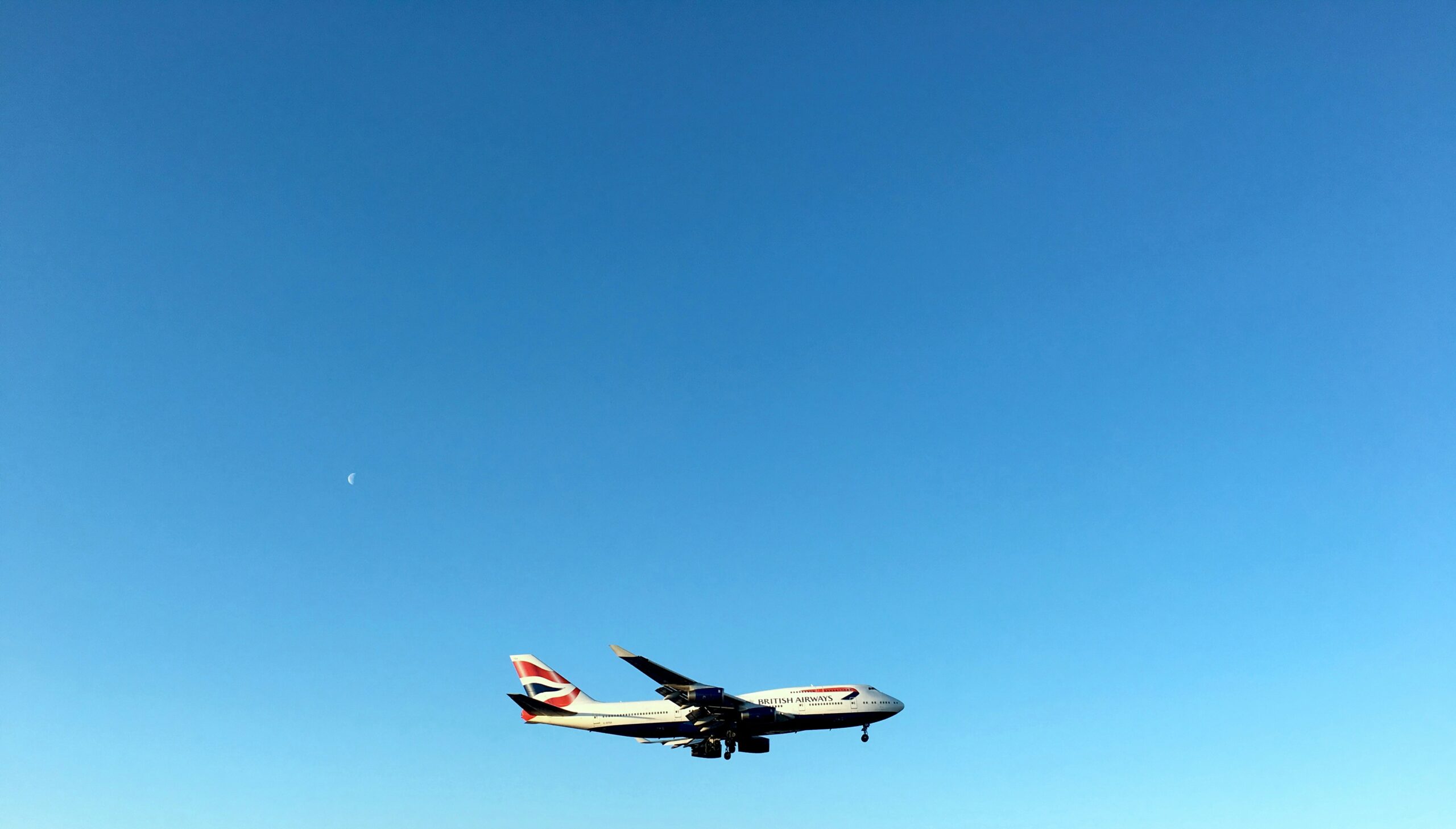
British Airways Airbus in flight, near Birmingham.
British Airways Airbus © Karen Uppal

New Aviation Technology and improving sustainability

According to stats taken from Synopsis, now over 50% of passengers recognising environmental as a factor in their airline choice and 84% prioritising sustainable travel. This means that technology needs to evolve in order to reflect travellers wants.

Government funding programmes, such as the Advanced Fuels Fund, support research and development of these technologies and aim to build commercial-scale sustainable fuel plants in the U.K. Research is going into hybrid and electric aircraft, hydrogen engines and synthetic fuels.

U.K. airlines are also reducing wastage onboard. For example, airline groups such as IAG have introduced targets to reduce on-board waste per passenger and increase recycling across operations.

Airlines operating in the UK are replacing older aircraft with new-generation, fuel-efficient planes. These aircraft uses advanced engines, lightweight materials, and improved aerodynamics. The benefits to these new aircraft include a reduction in fuel consumption, reduced CO2 Emissions and reduced noise pollution.
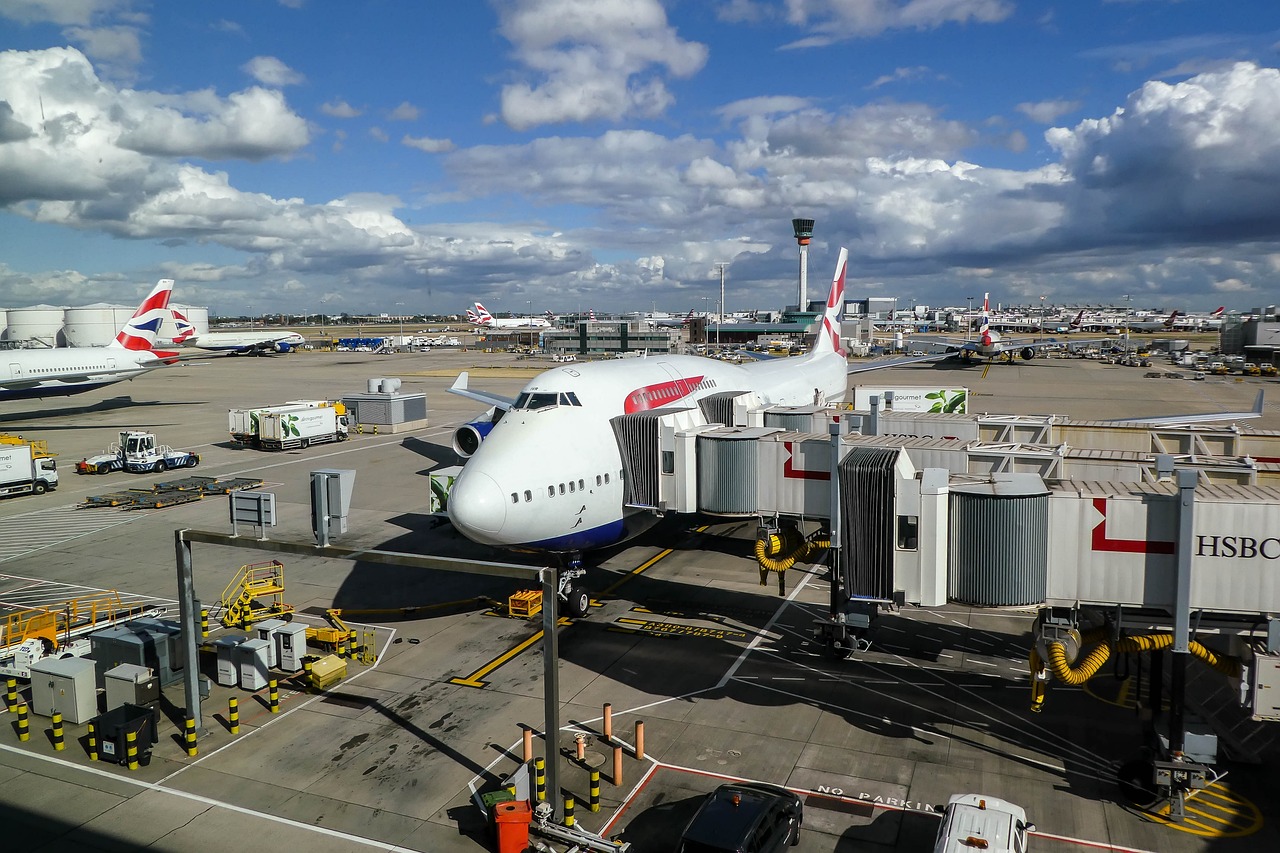
Image of London Heathrow.
Sunny London Heathrow airport © Jack Robinson

Overall, going into 2026 and beyond, the U.K. government, airlines and airports are addressing their environmental impact through several key actions, including increasing the use of sustainable aviation fuel, investing in more efficient aircraft, modernising airspace and developing new technologies.

While these initiatives will reduce emissions and improve sustainability, they are highly focused toward meeting net zero by 2050, which many criticise as an impossible goal.

Let us know what you think about these initiatives in the comments below.

You Might Also Like

Tragic Accident in Georgia: 2 Dead in Plane Crash
Brussels Airlines Expects Busiest Summer
Planned strikes threaten Christmas and New Year journeys in Europe
Deadly Plane Crash Near Crystal Airport
Vietjet Qazaqstan: A New Airline Launch in Central Asia
Share This Article
Facebook Twitter Email Copy Link
What’s your thoughts?
Love0
Sad0
Happy0
Angry0
Previous Article Avianca Airbus A320 aircraft Avianca to Add Two Airbus A330-900 Aircraft to Its Fleet
Next Article An Airbus A330neo aircraft takes off from the Airbus delivery center in Colomiers near Toulouse, France, March 20, 2019 GOL to Add Airbus A330-900neo Aircraft as It Eyes Long-Haul Expansion
Leave a Comment

Leave a Reply Cancel reply

Your email address will not be published. Required fields are marked *


Stay Connected

FacebookLike
TwitterFollow
InstagramFollow
YoutubeSubscribe

Trending News

There are multiple police and emergency service vehicles lined up along the left on the image, getting further away from the camera and becoming obscured to the camera by shrubbery and trees. A police officer is walking along a path beside the vehicles towards the camera. Police tape can be seen in the back, cutting off the background. The foreground is occupied mainly by the path/country road and the first police car in the line. The background is occupied mainly by greenery, and several emergency personnel in high vis.
Royal Navy Helicopter Crashes in Devon, Killing Three People
Aircraft Aviation Incidents & Accidents
Image shows Aer Lingus cabin crew at Dublin Airport
Aer Lingus launches new route from Dublin to Pittsburgh
Aircraft Airports Aviation Travel
Air Astana Airbus A321 taking off against a blue sky
Air Astana Expands China Network
Aircraft Aviation Route Development
A close-up view of the side of a white and green Frontier jetliner
Frontier flight diverts after passenger tries to open cabin door
Aviation Incidents & Accidents
An aerial view of the runway meeting the sea at Beirut–Rafic Hariri International Airport
Lebanon Launches Safety Audit of MEA Following Pilots Concerns
Airline Economics Aviation

Travel Radar is the leading digital hub for all things aviation and air-travel. Discover our latest aviation news, aviation data, insight and analysis.


Discover

  • Latest News
  • Subscribe
  • Weekly Digest
  • Contact Us
  • Privacy Policy
  • About Us
  • Advertising
  • Media Coverage
  • Press & Events
  • Join Our Team
  • Our Brands

Signup to our Newsletter!

And get the latest aviation news via our weekly news digest!

© Travel Radar Media Ltd. 2015-2026 | ISSN #2635-0696 | Trademark #UK00003579704
adbanner
Welcome to the TR Community!

Sign in to your account

Not a member? Sign Up