At any given moment – in a pre-COVID-19 world – there could be around 10,000 planes in the sky. Right now, the bottom has dropped out of the aviation industry, and many airlines have announced they have grounded their entire fleet.
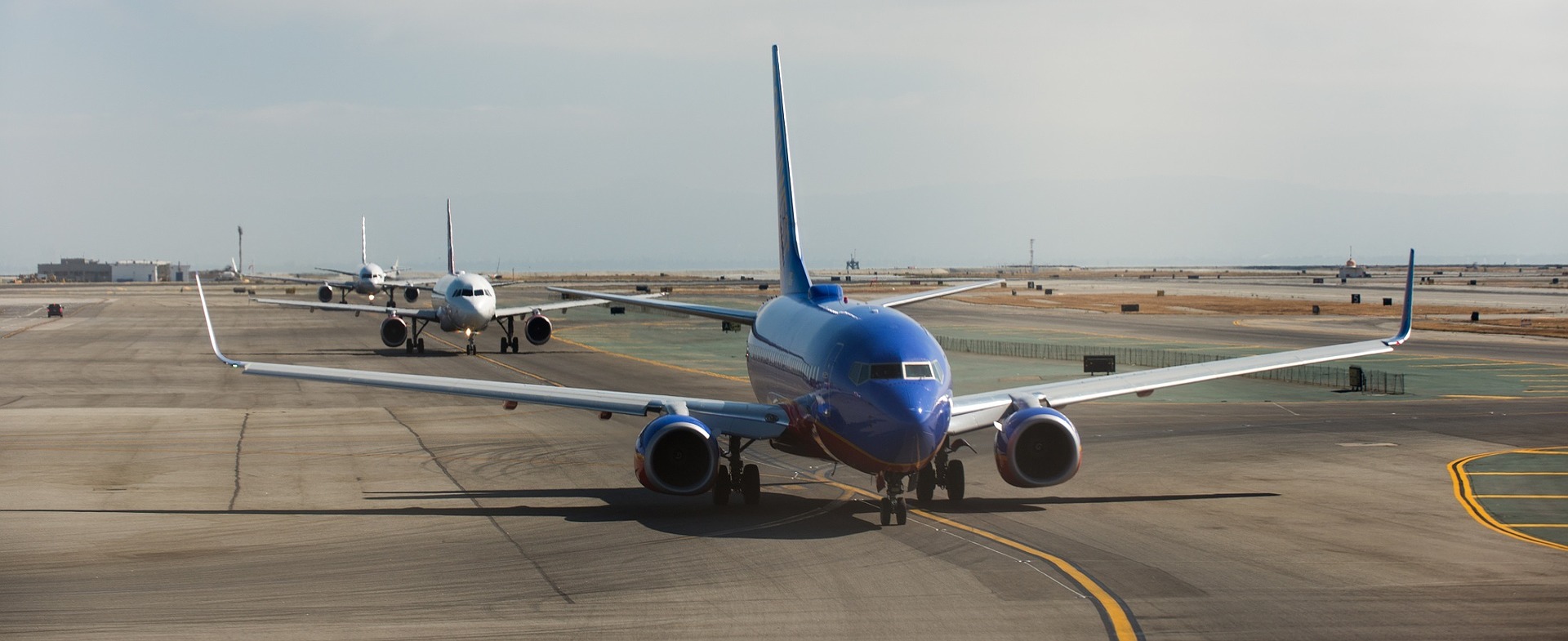
Images showing row after row of neat, liveried aircraft sitting on tarmac have been beamed around the world. According to the global flight tracker FlightRadar24, the number of flights worldwide has fallen by around 40% in the past two weeks, while the International Air Transport Association (IATA) says around a third of the total commercial passenger fleet in the world is now grounded.
At least 70 of the world’s airlines have grounded all, or a large percentage of, their fleet, including some of the behemoth’s of the full-service and low-cost carrier world, such as easyJet, Singapore Airlines, Cathay Pacific, American Airlines, Southwest, Emirates and Etihad.
But, what exactly does it mean to ground a commercial fleet? For airlines, grounding an aircraft, or a whole fleet, is certainly not as easy as simply parking their planes up at the local airport and leaving them until the world opens again. The whole aviation system is designed so that thousands of planes are always in the air. It actually takes a lot of time, effort, and money, to ground a fleet.
Storage solutions
The first question is where to store your planes. When you’re used to many of your craft being in the air, and being charged by the hour for those which are on the ground at the airport, what do you do when you need to store your planes for an extended period of time?
With a lack of flights taking off, some airports have recommissioned their runways as storage facilities. At Copenhagen Airport, for example, an extra 60 planes are being stored on unused runways, on top of the 80 regular parking slots at the airport.
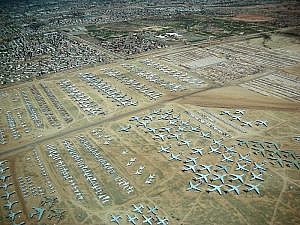 Many carriers are parking up their craft on available airport space. However, in the US and Australia, desert storage facilities are in huge demand, as the arid climate is kinder to stored aircraft. These desert areas are renowned as airplane “boneyards” but they are also used as temporary storage. American Airlines, for example, has spread its fleet across a number of locations, including at the former US military air base, the Roswell International Air Center in New Mexico.
Keeping planes air worthy
The facilities aren’t just parking lots, however. They have all the equipment and expertise needed to keep planes operational, even if they aren’t flying. It means, airlines across the world have found themselves hit with a double-whammy of losses and costs. Not only are they losing ticket sales right now, but they are having to pay to keep their craft on the ground. According to City of Roswell authorities, plane parking there is as cheap, if not cheaper, than parking up your car at a long-stay carpark, with even the heaviest of craft charged just $14 per day. But the real cost comes in the preparation and maintenance.
Just keeping a plane on the ground can cost tens of thousands of dollars, depending on the maintenance plan that the airline chooses. Airlines must make a strategic decision about how quickly they may need their aircraft to get back into the skies. If airlines want to ensure that their planes are able to fly later the same day or the following day, they must choose “active parking mode”.
This entails keeping all of the engines and major systems running regularly on top of routine maintenance. A cheaper option for airlines is to choose short-term storage, where it takes a crew a few days to preserve a plane by removing all fluids – sort of like embalming but for planes – so it can be safely stored for between three months to a year.
Many airlines are paying for a mix of active parking and short-term storage, until they are able to get their fleet back in the air once more.