By using this site, you agree to the Privacy Policy and Terms of Use.
Accept
Travel Radar - Aviation NewsTravel Radar - Aviation News
  • Breaking News
  • Aviation
    • Aircraft
    • Airlines
    • Airshow & Events
    • Careers
    • Manufacturing
  • Travel
    • Airports
    • Points & Loyalty
    • Technology
    • Trip Reviews
  • Newsletters
  • Aircraft for Sale
Reading: Forward to the Past: How Quick a Recovery for Commercial Aviation?
Share
Sign In
Notification Show More
Font ResizerAa
Font ResizerAa
Travel Radar - Aviation NewsTravel Radar - Aviation News
  • Breaking News
  • Aviation
  • Travel
  • Newsletters
  • Aircraft for Sale
  • Breaking News
  • Aviation
    • Aircraft
    • Airlines
    • Airshow & Events
    • Careers
    • Manufacturing
  • Travel
    • Airports
    • Points & Loyalty
    • Technology
    • Trip Reviews
  • Newsletters
  • Aircraft for Sale
Signin Sign In
Follow US
Copyright © Travel Radar Media Ltd. 2025 | All Rights Reserved
Travel Radar - Aviation News > News > Forward to the Past: How Quick a Recovery for Commercial Aviation?

Forward to the Past: How Quick a Recovery for Commercial Aviation?

Travel Radar
Last updated: 26 March 2020 16:00
By Travel Radar Staff
4 Min Read
Share
SHARE

Now that most of the world’s airlines are operating with a minimal schedule–if at all–is the industry at rock-bottom and what are the prospects for a recovery?

Are we then at the nadir of the disruption? Probably. There are a few airlines carrying on with a very limited service—such as Emirates, but in this case probably under duress from governments outside the UAE to keep some service running in order to repatriate citizens–hence the Emirates about-face recently on an announcement of imminent closure. We can expect these ‘repatriation’ flights to cease by—at the latest—mid next week.
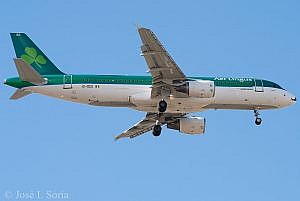
IAG’s Aer Lingus c. Flickr Commons

The pattern of passenger demand before, during and after an outbreak is broadly symmetric, with perhaps a slightly slower recovery than decline, but demand afterwards equalling that of before and rapidly surpassing it. Especially in the Asia-Pacific region, as with the SARS outbreak, the decline was severe but over relatively quickly.

But there is a large difference between previous outbreaks and COVID-19. Firstly, while previous outbreaks may have been more lethal (particularly Ebola) very few have been as contagious.  Originating in China and largely confined to bordering countries, SARS infected 8098 people with 774 resultant fatalities, hence a regional effect rather than a global one. Secondly, the impact in the East was to some degree masked by the rapid growth in the economies of the region, allowing more people with more disposable incomes, to demand more passenger seats.

The pattern of current passenger demand in China, although with some qualifications (e.g. the domestic demand is quite different from Europe) is perhaps the best guide we have at the moment.

In that country, international departure seats reached a peak in the week of 13th January at about 16.3 million and domestic seats at roughly 14.3, declining slightly to 16 and 14 million respectively at 27th January. The demand then fell drastically to the low point of 17th February at about 4 million/3.7 million seats.
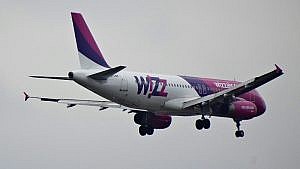
Survivor? Wizz c Flickr Commons

Since that point demand in both domestic and international sectors has recovered by about 50%. Very approximately then the Chinese market will have recovered fully in another eight weeks, or roughly four months from the beginning.

For the world outside of the Far East and China, that places a recovery in mid-July. With the accumulation of demand, and low fuel prices the recovery might conceivably be a little quicker, especially if government support accelerates supply and airlines offer discounted fares to boost demand.

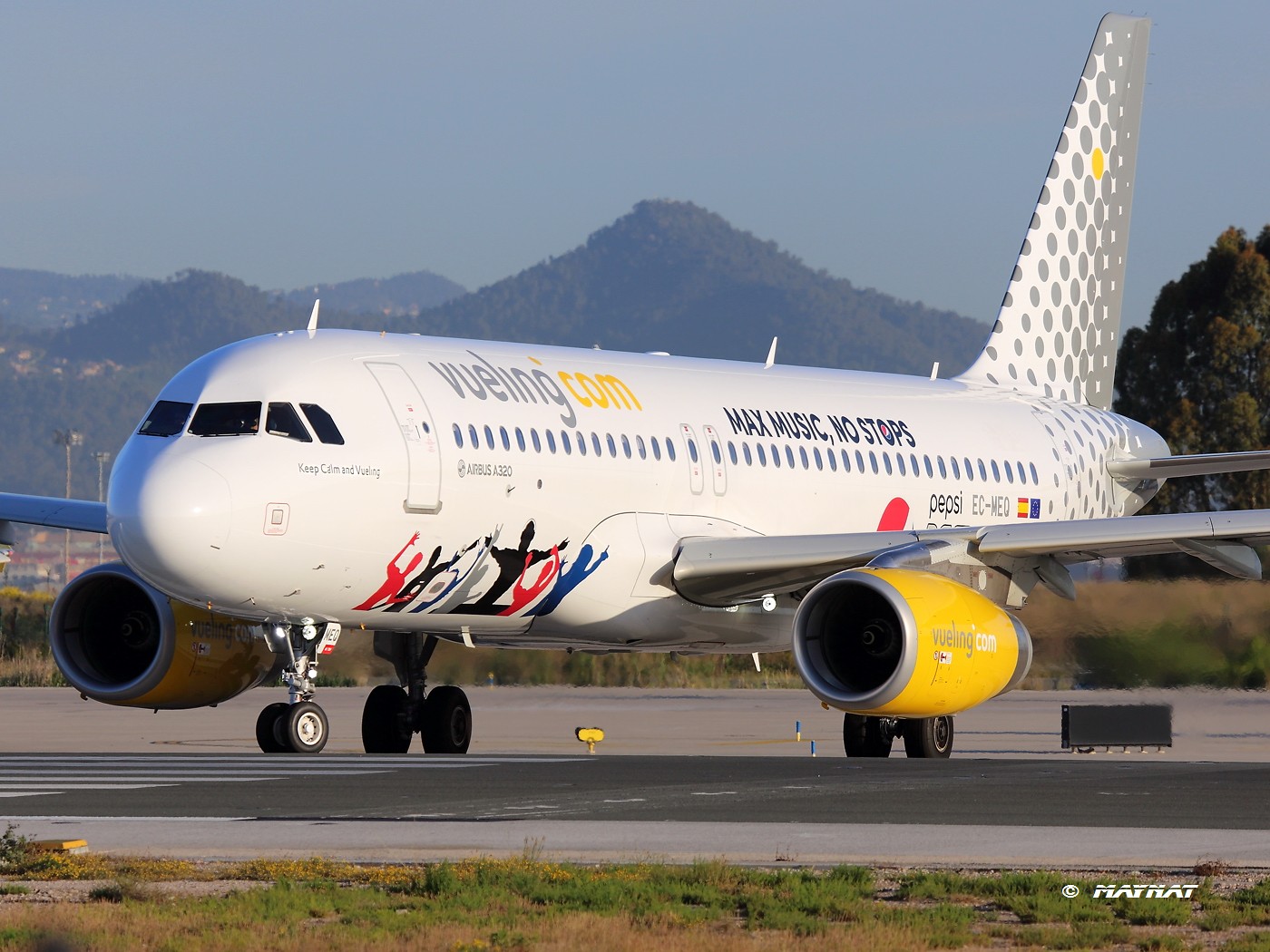
The question now though is given the unprecedented scope of the coronavirus, will the business revert to the status in 2019? Probably not. Where carriers were financially insecure late last year, they may not be in business by the middle of this year, and by definition are unlikely to attract government support. And who might the unscathed be? IAG, (BA, Iberia, Aer Lingus, Vueling, Level) Ryanair, and Wizz look as if they might emerge with little damage. The fate of US airlines depends on the support of the US government. Those needing substantial support will include Lufthansa and Air France/KLM. Alitalia might disappear.

Let’s re-examine in a few weeks. We’ll keep you posted.
You Might Also Like

Breeze Airways Flight Diverts After Unruly Passenger Restraint Failure
Flair not Canadian? Airline’s licence may be revoked
Expanded Codeshare with ITA Airways and Lufthansa Group
EgyptAir Crash Report Confirmed Explosives Detected Onboard
Ethiopian Airlines: The bold ambition towards expansion
Share This Article
Facebook Twitter Email Copy Link
What’s your thoughts?
Love0
Sad0
Happy0
Angry0
Travel Radar
ByTravel Radar Staff
Follow:
Articles from guest contributors wishing to remain anonymous are credited to this account. Want to contribute to Travel Radar either in-name, or anonymously? Get in touch: [email protected]
Previous Article No Blanket Help for UK Airlines
Next Article St Helena: A COVID-19 free island, and staying that way
Subscribe
Login
Notify of
guest

guest

2 Comments
Oldest
Newest Upvoted
Inline Feedbacks
View all comments

Stay Connected

FacebookLike
TwitterFollow
InstagramFollow
YoutubeSubscribe

Trending News

an Airbus A321-200NX operated by VietJet Air.
VietJetAir Selected Additional Engines for Fleet of A321s
Aircraft Airline Economics Airlines Airshow & Events Manufacturing
SpiceJet aircraft flying.
SpiceJet Launches Ahmedabad–Sharjah Route
Airline Economics Airlines Aviation Route Development Travel
Flynas aircraft A320neo flying in the blue sky.
Syria and the Saudi Flynas launch new airline, Flynas Syria
Airline Economics Airlines Airports Aviation Travel
A side view of a Japan Airlines Airbus A350-1000 in mid-air with its landing gear deployed. The aircraft features a white fuselage with "JAPAN AIRLINES" written in black and the iconic red "Tsurumaru" crane logo on the tail, flying over a lush green hillside.
Japan Airlines is upgrading Boeing 787-9 with new business class
Aircraft Airlines Aviation Travel
A side profile of a United Airlines Boeing 737 MAX 8 parked on a concrete airport taxiway under a bright blue sky with scattered white clouds. The aircraft features the modern "Evolution" livery with a blue tail globe, blue engine nacelles, and "UNITED" in large blue lettering across the white fuselage.
71% of United Airlines flight attendants reject tentative labour contract
Airline Economics Airlines Aviation Careers

Travel Radar is the leading digital hub for all things aviation and air-travel. Discover our latest aviation news, aviation data, insight and analysis.


Discover

  • Latest News
  • Subscribe
  • Weekly Digest
  • Contact Us
  • Privacy Policy
  • About Us
  • Advertising
  • Media Coverage
  • Press & Events
  • Join Our Team
  • Our Brands

Signup to our Newsletter!

And get the latest aviation news via our weekly news digest!

© Travel Radar Media Ltd. 2015-2026 | ISSN #2635-0696 | Trademark #UK00003579704
wpDiscuz
adbanner
Welcome to the TR Community!

Sign in to your account

Not a member? Sign Up