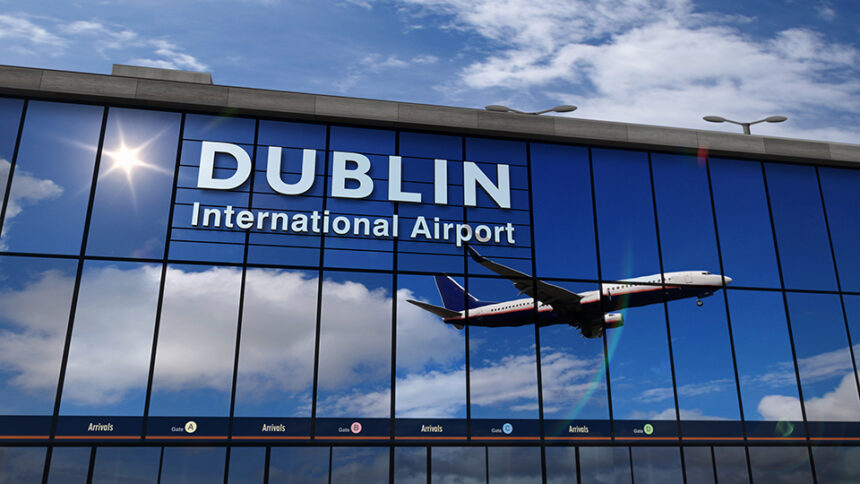
The Irish Government officially passed new legislation which will see the highly controversial passenger limit at Dublin Airport (DUB) lifted. Previously set at 32 million travellers annually, the cap has faced intense criticism from international airlines and business leaders since its introduction in 2007, long arguing that it stifles economic growth.

Why Was The Cap in Place?
The Dublin Airport (Passenger Capacity) Act 2026 was officially signed into law by President Catherine Connolly on July 16, 2026, following a decisive 118 to 28 vote in the Dáil and a 31 to 11 vote in the Seanad. The original 32 million restriction was imposed as a planning condition for Terminal 2, at a time when the airport handled 23 million passengers, primarily to avoid severe road congestion in the surrounding area. However, the limit has been vastly exceeded on multiple occasions due to modern demand; in 2025, passenger numbers reached 36.4 million, overshooting the cap by more than four million.
The restriction is currently suspended, following a legal dispute in 2024 regarding its enforcement awaits a ruling from the Court of Justice of the European Union (CJEU).

Economic Warnings and Transatlantic Threats
The rush to abolish the cap has largely been driven by the threat of international retaliation. U.S. airline lobby group, Airlines for America (A4A) – which represents major carriers like Delta and United – pressured the U.S. government to restrict Irish transatlantic flights if the cap was not swiftly scrapped.
Domestically, the aviation industry warned of consequences of the limit being enforced, including Irish Transport Minister Darragh O’Brien, who warned that thousand of jobs were at risk in DUB if the bill was not passed.
Ryanair Group Chief Executive Michael O’Leary cautioned that the limit:
“would not just stop Dublin Airport growing but would require the existing airlines to reduce traffic by up to 6 million passengers annually.”
Meanwhile, the airport’s operator, daa, highlighted a significant unmet demand for direct connectivity from regions like South America and Asia, which they argue has been stifled by the cap.

Environmental and Community Backlash
Despite the economic arguments, the new law faces opposition from environmental groups and local residents. Aviation currently accounts for 10% of Ireland’s carbon emissions. Critics, including Friends of the Earth CEO Deirdre Duffy, have condemned the legislation as it exempts itself from obligations of the Climate Action and Low Carbon Development Act 2015, deeming it a step in the wrong direction.
These concerns were echoed by Green Party leader Roderic O’Gorman who noted that local infrastructure was already at capacity, further stating that the government is:
“barely paying lip service to climate.”
Dr Niamh Maher, a local resident living under the flight path, has like many other residents, voiced her frustrations over noise pollution. She expressed that her community feels ignored and treated as collateral damage. In response to community concerns, daa has stated that it takes its responsibilities seriously, having invested 23 million euros in insulation and home buyouts for affected residents.
Despite concerns, the Transport Minister insists the law will facilitate more sustainable development:
“Any charge that we are setting aside any environmental considerations are absolutely not true.”

Next Steps
The act transfers the planning authority for the airport from Fingal County Council to An Coimisiún Pleanála.
Although the legislation has passed, removing the cap will not be an immediate process. Before Irish Transport Minister O’Brien can formally revoke or amend the cap, An Coimisiún Pleanála must conduct an independent environmental impact assessment as required by EU law.
The process involves the preparation of the environmental assessment, running a 30-working-day public consultation, and leaving a further eight-week window for judicial reviews. This means the actual legislation changes could take up to a year.
To add to complications, questions are now being raised around how the European court will ultimately rule on the broader legal dispute in the coming months.
What do you think about the change in legislation? Let us know in the comments below.