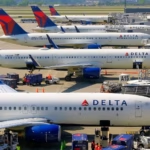
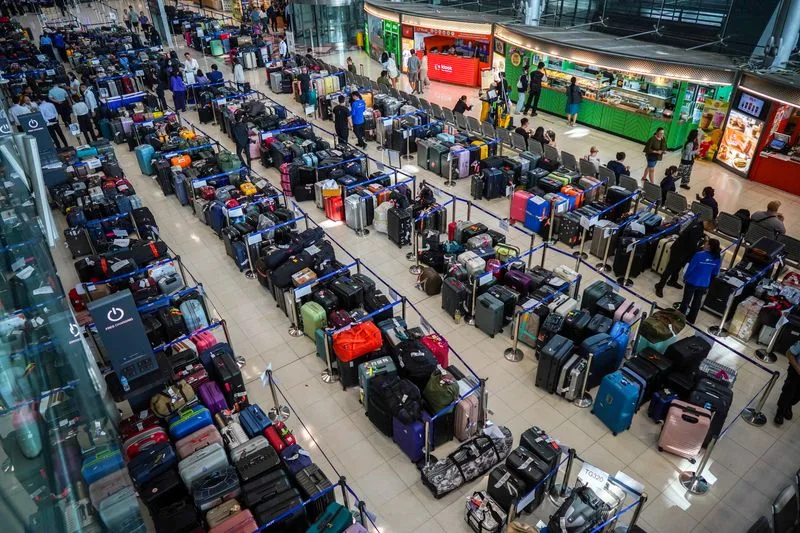
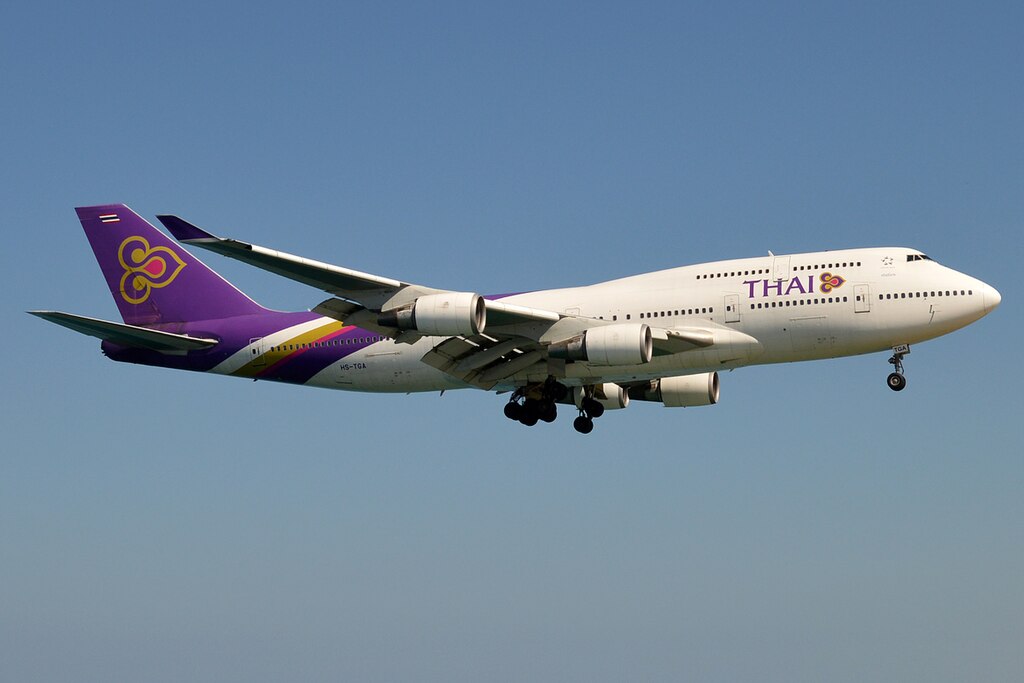
Continuous heavy rain in 42 Thailand provinces has caused widespread flooding since Sept. 16. The capital, Bangkok, has been severely flooded since Sept. 26, affecting both international airports, Don Mueang (DMK) and Suvarnabhumi (BKK). According to the Bangkok Post, airport staff have been unable to travel to work, causing 59 Thai Airways flights to be cancelled so far, with many more flights delayed due to a significant luggage backlog.
Airport chaos
Whilst both BKK and DMK airports remained open throughout the crisis, the Tourism Authority for Thailand (TAT) highlighted that road access to both may be affected by flooding.
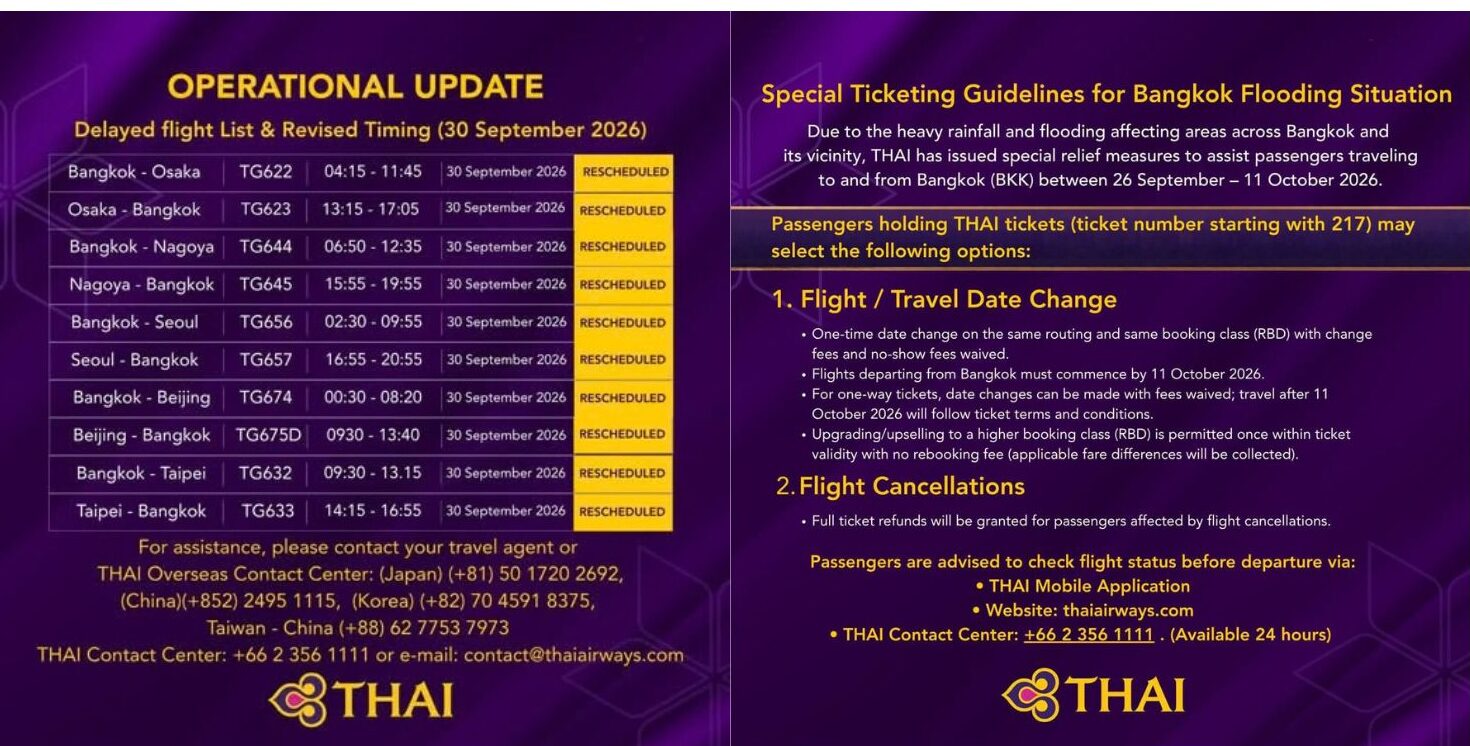
Thai Airways has posted operational updates for BKK customers on its Facebook page. Chief Executive, Chai Eamsiri apologised for the disruption (which is expected to continue for a few more days) and told Reuters on Sept. 29, that:
“Almost 100% of flights over the past two days were delayed, with fewer than 3% on schedule as operational capacity could not be sustained.”
The Thai Examiner states that military personnel from the Royal Thai Air Force as well as Thai Airways office employees had to be drafted in to help clear the baggage backlog. This was said to be caused not just because of a staff shortage but also because necessary equipment was said to be “defective or unavailable”.
However, Airports of Thailand (AOT) told the Thai Examiner that the airport’s two other ground-handling operators continued functioning normally. Eamsiri confirmed that the airline was “mobilising personnel to accelerate deliveries” whilst pledging to “continue until every outstanding bag was returned”.
Disaster zone
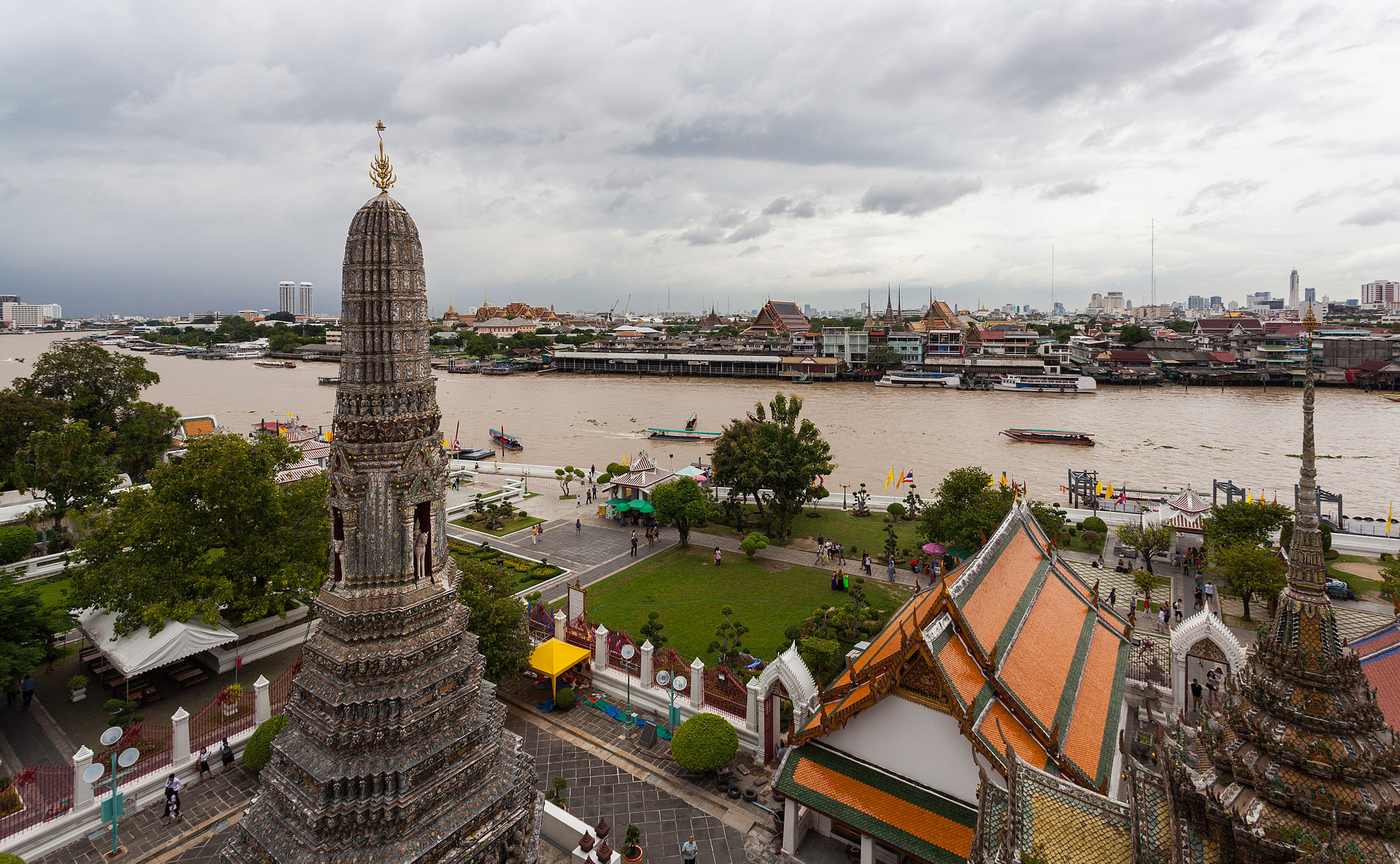
On Sept. 27, Bangkok Governor Chadchart Sittipunt declared all 50 districts of the city to be a disaster-affected zone which “poses a risk to lives”. Major roads were flooded and water was waist-high after nearly 12 inches of rain fell within 48 hours. Some 700,000 residents are thought to be affected and have been asked to avoid unnecessary travel. Those living near canals have also been advised to move possessions to higher ground.
The Thai government announced a multi-million aid package on Sept. 29 to address the impact of the floods, following the Interior Ministry update that at least 23 people across the country were thought to have lost their lives. A two-day public holiday on Sept. 28 and 29 was also declared to allow authorities to attempt to drain rainwaters.
UK Foreign Office Advice
Whilst the travel advice page on the UK’s Foreign Office (FCDO) website carries the warning ‘FCDO advises against all but essential travel to parts of Thailand’, this does not include Bangkok.
From the map, these “parts” are concentrated on the Thailand-Malaysia and Thailand – Cambodia borders due to attacks and fighting. The rest of the country including Bangkok and other flood-affected provinces remain green, with travellers advised to “see travel advice before travelling”.
The updated severe flooding advice highlights that “Travel disruption, including road closures and flooding of low-lying areas, is possible.” The website also mentions the special public holidays and states “Many government offices and services may be closed or operating with reduced capacity. Follow the advice of local authorities if you plan to travel.”
Whilst Thai Airways have detailed their “special ticketing guidelines” for customers, it is always best to contact them directly, as well as any other operators for guidance. If Thailand travellers choose to cancel trips due to the severe flooding, cancellations might not be refunded or covered by their travel insurance (unless the FCDO update their advice not to travel to specific areas).
In January 2026, severe flooding due to heavy rainfall also occurred in Limpopo, South Africa. Last month also saw severe flooding in Nepal due to a glacial collapse.
Has your recent or upcoming trip to Thailand been affected by the severe flooding? Let us know in the comments below.