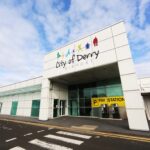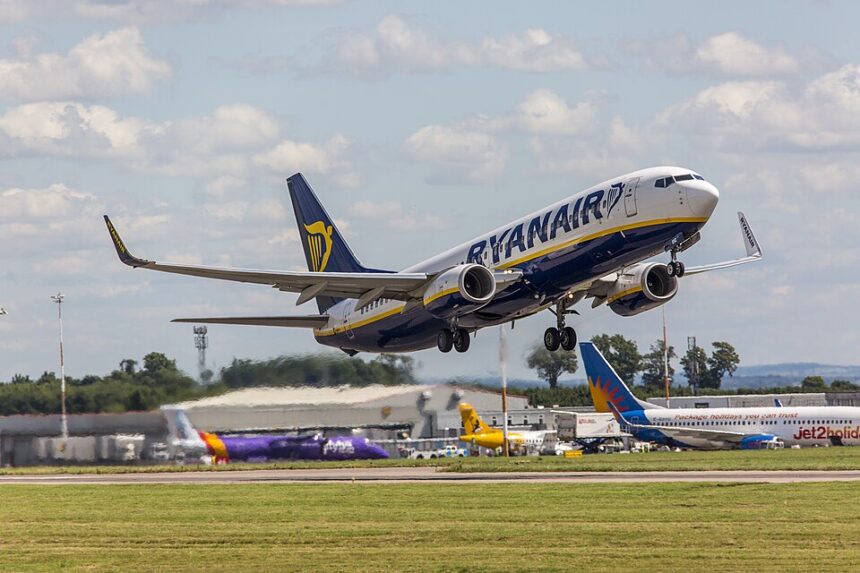
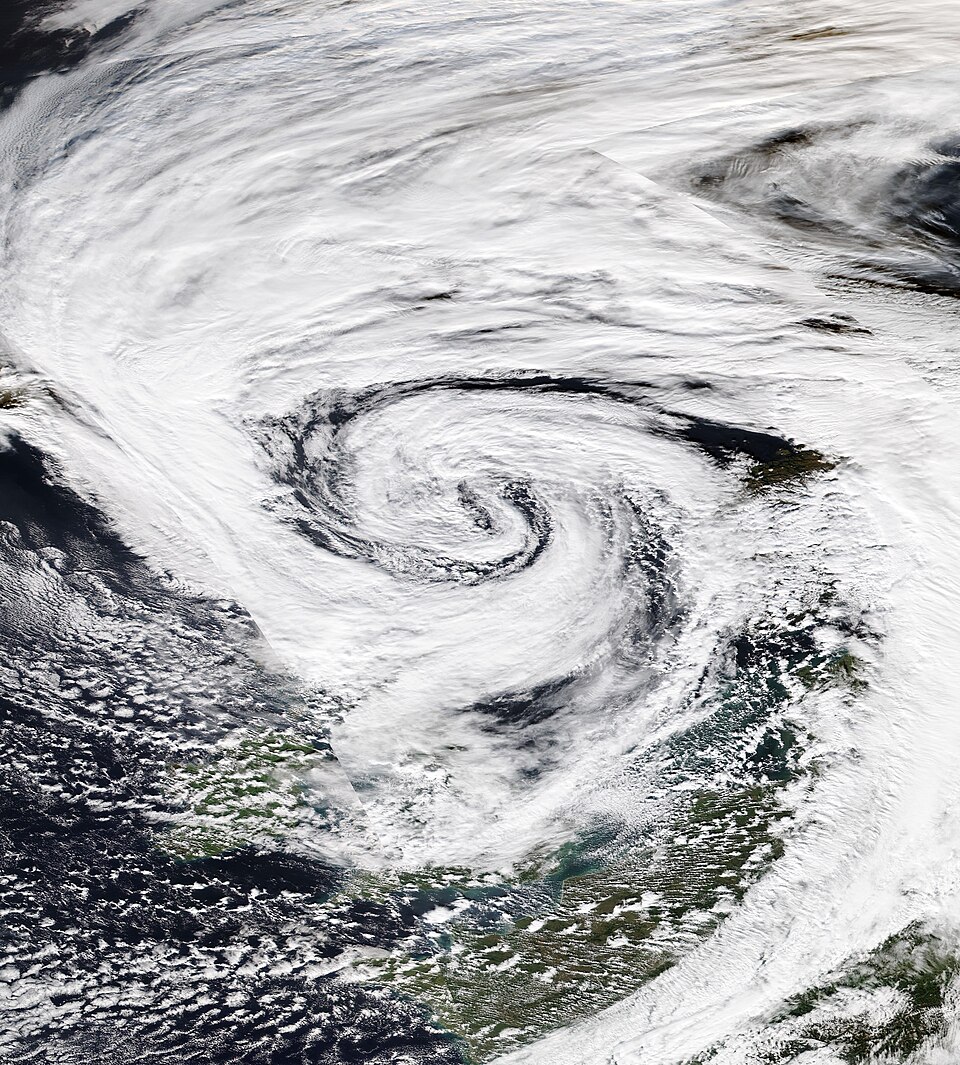
In October 2025, Storm Amy hit the UK, bringing high winds and heavy rain to Scotland, with significant disruption to flights and travel networks. An Air Accidents Investigation Branch (AAIB) report published on Sept. 26, 2026, sheds new light on a serious safety incident triggered by Storm Amy. The report discusses the safety lessons for airline expansions in Scotland and examines the critical air traffic control refusal at Manchester that caused Mayday distress.
What Happened During the Boeing 737-800 Incident?
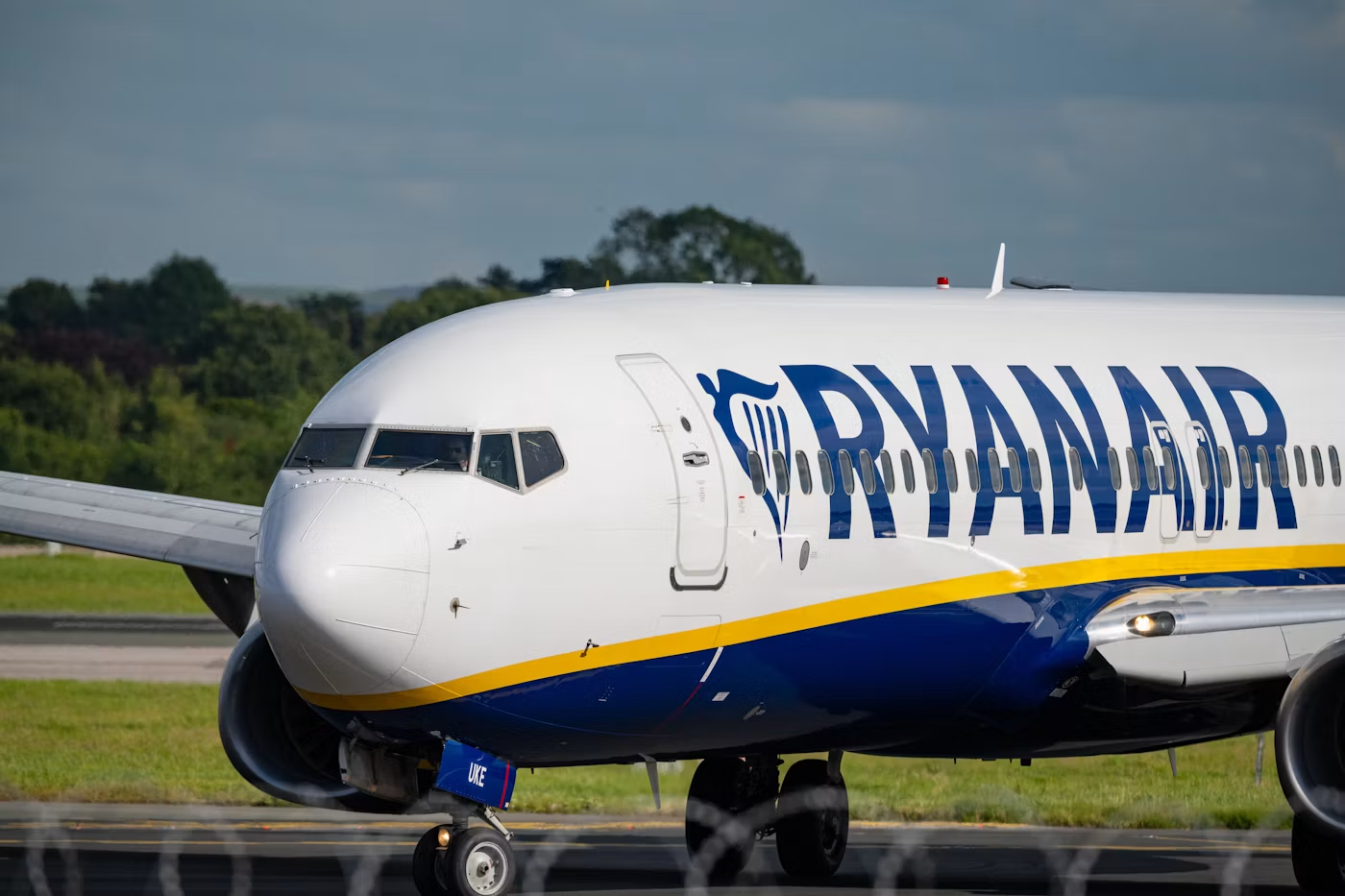
During the storm, Malta Air Flight FR3418 was pushed to the limit, with the Boeing 737-800 declaring a critical fuel emergency after the severe weather and communication disruptions. Flight FR3418 was operating from Pisa International Airport Galileo Galilei (PSA) to Glasgow Prestwick (PIK), where Storm Amy was passing through Scotland.
Before the flight, weather warnings were issued, and preparations were put in place as groundwork for the flight ahead. The crew took extra fuel to allow for possible delays and diversions due to the weather; they reported 45 minutes before departure that they were aware of the potential for wind disruption in Scotland and Northern England. Prior to declaring the fuel emergency, the pilots had calculated that they would arrive at Manchester with between 500 and 700 kg of fuel.
As a response to Storm Amy’s strong turbulence and high winds, flight FR3418 fought wind shear over both Prestwick and Edinburgh, where the crew conducted two wind shear escape manoeuvres during the flight.
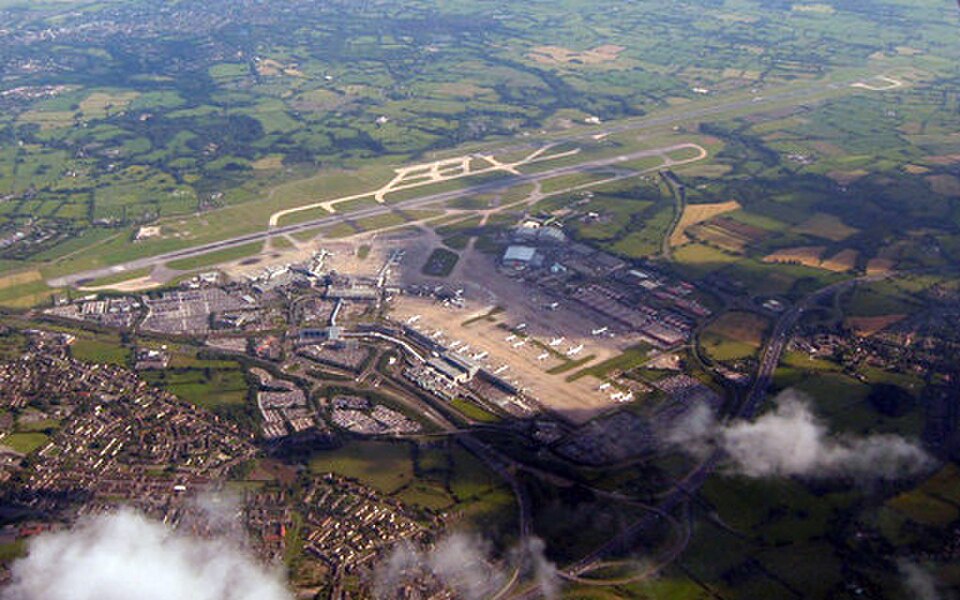
On final approach to Prestwick (PIK), Flight FR3418 encountered severe wind shear, forcing the crew to abort the landing and execute an escape manoeuvre while still airborne. After a second go-around, the crew requested to divert to Manchester (MAN) as it had more favourable weather conditions. Manchester (MAN) was unable to accept their diversion request, but no explanation was given for why the request had been refused.
AAIB Report Findings
The AAIB report said:
“The nearest alternative airport was Glasgow Airport, which was reporting in the ATIS that aircraft had experienced windshear on finals. Based on this information the pilots requested a diversion to Edinburgh, this request was made six minutes after they were told by ATC that Manchester had refused to accept the diversion.”
The AAIB report details how better communication at Manchester Airport (MAN) could have prevented the situation entirely. Following the refusal, the flight proceeded to Edinburgh (EDI) as the pilots believed that their fuel state did not permit them to declare a fuel emergency, which would have allowed them to go to Manchester. An attempt at landing in Edinburgh was affected by another wind shear. The crew were left to declare an emergency and divert to Manchester.
Prior to declaring the fuel emergency, the pilots had calculated and agreed that they would arrive at Manchester (MAN) with between 500 and 700 kg of fuel. The 737-800 landed with 363kg of fuel left, less than the final reserve fuel of 1,100kg.
The operator’s Operations Manual states:
“The objective of the Final Reserve Fuel (FRF) protection is to ensure that a safe landing is made at any aerodrome when unforeseen circumstances may not allow [the crew] to safely complete the flight as originally planned. The commander should always consider first planning a safe landing option and estimating whether this landing can be performed with more than the FRF.”
In this circumstance, the commander considered a diversion to Manchester (MAN) to be the safest option, even though it would inevitably lead to landing below the final reserve fuel.
Future Outlook and Ryanair’s Expansion
Ryanair announced a new route departing from Glasgow Prestwick Airport (PIK) to Turin Italy (TRN), in May this year. The route is intended to launch in late 2026. The dangerous fuel emergency from the previous year should lead to better preparation before any flights in the Scottish-Italian network. The budget airline has pushed forward with its winter expansion, but this must be met with safety and precaution, especially after such a near-miss occurrence last year.
The FR3418 fuel emergency is a lesson for budget airlines that are expanding winter operations in Scottish airspace. Both instances last year were unsafe: flying through a windshear warning while on approach and diverting to Manchester (MAN) with a fuel quantity between 500 and 700kg are both calculations that would result in a final reserve fuel of 1,100kg. As a result, inter-airport coordination is necessary before new Scottish-Italian flight networks are introduced.
What do you think the best option would have been? Do you think the commander made the right decision to divert to Manchester? Share your thoughts in the comments below!