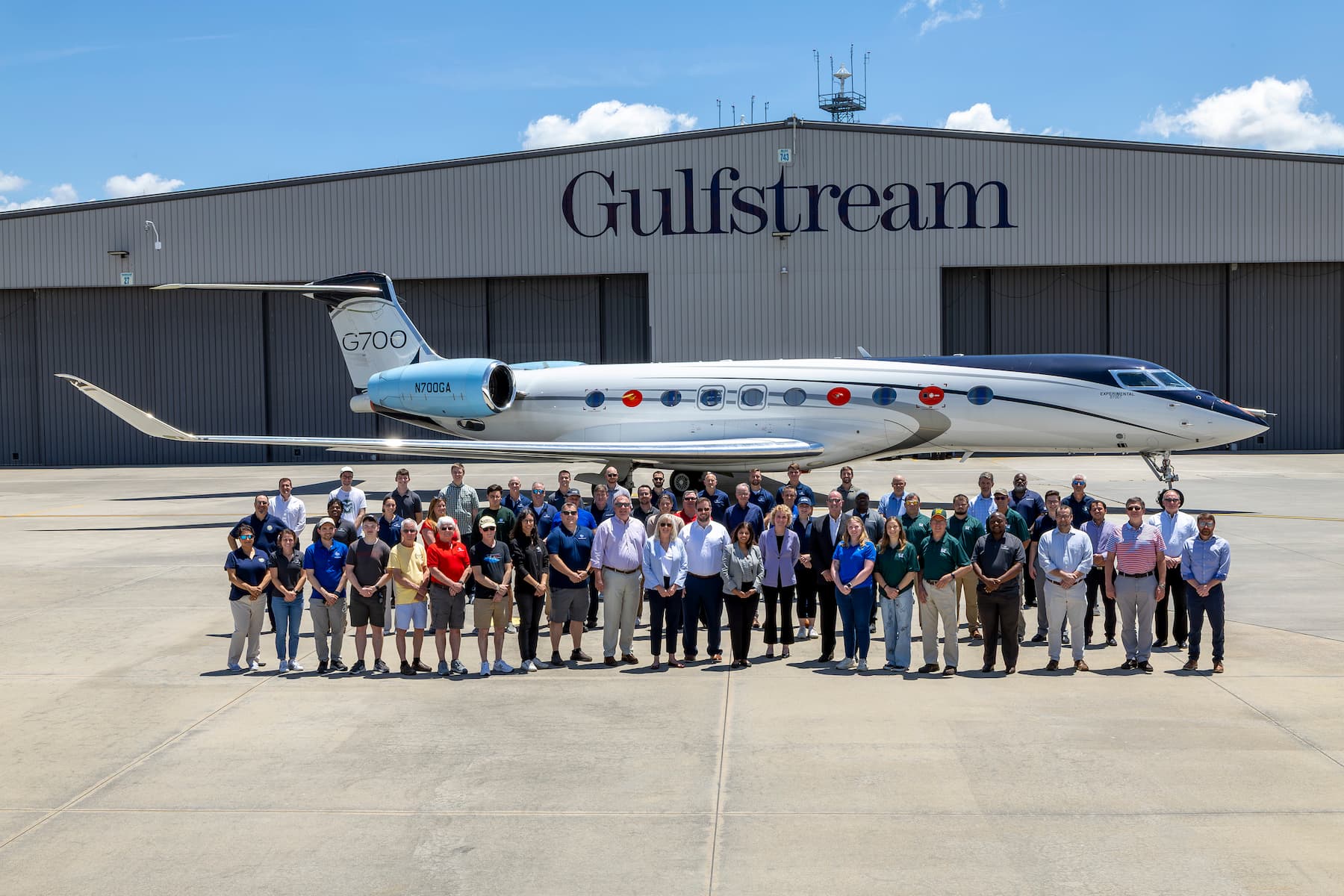
British aero-engine manufacturer Rolls-Royce has announced that its Pearl 700 engines successfully powered the first flight of the Gulfstream 800 ultra-long-range business jet, using 100% Sustainable Aviation Fuel (SAF). This positive news from the high-altitude flight test campaign is a major step forward toward SAF being fully certified for commercial aviation.
Flight-test campaign
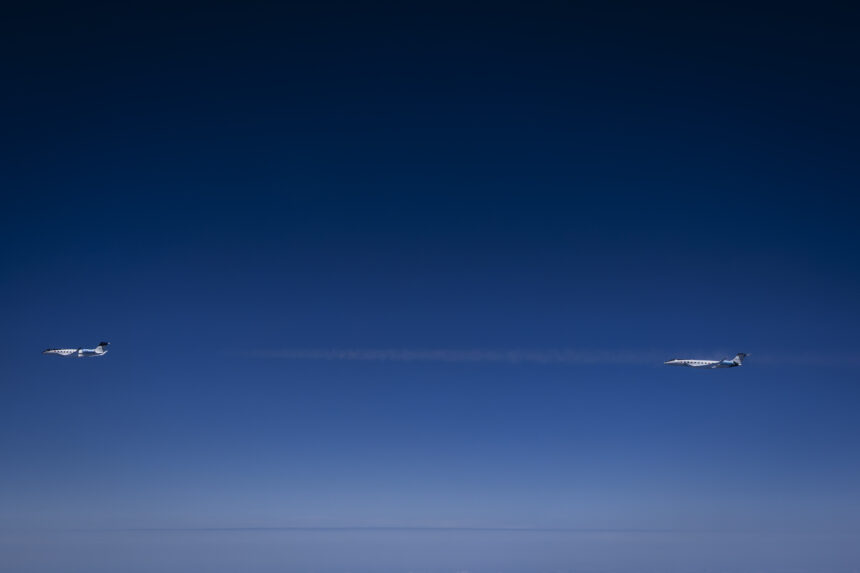
To undertake the experiment, a second modified Gulfstream 800 aircraft was converted into a “flying emissions measurement laboratory” and flew in close formation with the first at altitudes of up to 50,000 feet. This is higher than most commercial airlines (which typically fly at 25,000-40,000 feet) but is more typical for business aviation. Researchers were then able to capture precise measurements of particulate matter, and preliminary results suggested a “significant, measurable” reduction in emissions that contribute to contrail formation.
Rolls-Royce director of Research and Technology, Alan Newby, said:
“Sustainable Aviation Fuels in combination with compatible, ultra-efficient aero engines will not only play a vital role in decarbonising aviation but have also been shown to reduce certain non-CO2 emissions. The valuable insights we have gained from these latest tests at high altitudes, as well as the data from projects like QRITOS or ECLIF3, are driving real progress in understanding aviation’s non-CO2 climate impacts and potential mitigation options.”

Ongoing research
Concurrently, there is other research on the environmental effects of jet fuel carbon emissions, which more recently focuses on contrails. These are the white trails or streaks of cloud and even ice clouds (contrail cirrus) which form when the air at an altitude of 10-12 kilometres is so cold and damp that leftover aircraft exhaust fumes can freeze. This can be likened to autumnal conditions, when the warm air we breathe forms small fog droplets. To monitor the effects of contrails and subsequent changes in the chemical composition of the atmosphere, ten operational commercial aircraft worldwide are currently fitted with equipment from the In-service Aircraft for a Global Observing System (IAGOS).
The Gulfstream Aerospace and Rolls-Royce high-altitude flight test campaign also included input from other agencies, including the National Aeronautics and Space Administration (NASA) and the Federal Aviation Administration (FAA). The gathered data will inform future fuel standards and help develop strategies to ultimately reduce the environmental impact of air travel. The use of SAF has the potential to reduce net CO₂ emissions from lifestyle by about 80% (compared to conventional jet fuel).
The flight tests also demonstrated that all of Rolls-Royce’s Trent engines currently in production and its business aviation engines can operate with 100% SAF, meaning a future with cleaner fuel looks promising.
Do you feel enthused by this dawn of a new, cleaner air travel era? Or perhaps more sceptical about the cost? Let us know in the comments below.