
Travellers are increasingly concerned about airline sustainability going into 2026. The question follows, what are airlines doing in response to this? Focusing on the UK, it is clear the aviation industry is taking several steps to reduce its environmental impact, linking with governmental plans to achieve the long-term goal of net-zero carbon emissions by 2050. These actions involve cleaner fuels, more efficient aircraft, improved flight operations, and government policies that encourage sustainable aviation.

Increasing the use of sustainable aviation fuel
One of the most significant measures taken is the introduction of the Sustainable Aviation Fuel (SAF) which is produced from renewable materials such as waste oils, agricultural waste, and synthetic fuels made from captured carbon.
The U.K. introduced a SAF mandate in 2025, requiring airlines to use a percentage of sustainable fuel in their jet fuel mix. This should be expected to increase and according to government plans will deliver 10% of all jet fuel in flights taking off from the U.K. from sustainable sources by 2030 and 22% by 2040.
London Heathrow Airport, specifically, is encouraging airlines to use more sustainable fuel by offering financial incentives. In 2026, the airport aims for about 5.6% of its aviation fuel to be SAF, supported by more than £80 million in funding for airlines.
Matt Gorman, Heathrow’s director of sustainability, said:
“Sustainable Aviation Fuel is not a hypothetical concept for the future; it’s already producing real impact in 2026. Heathrow is leading the way globally.”
SAF is a key lever on aviation’s journey to net zero by 2050 and a key element of Heathrow’s Net Zero Plan. Yet Conservative leader Kemi Badenoch asserts criticises the industry and government for this unrealistic plan and believes actions taken to achieve this will worsen the economy. Despite criticism, the government and aviation industry have done nothing to halt efforts.

New Aviation Technology and improving sustainability
According to stats taken from Synopsis, now over 50% of passengers recognising environmental as a factor in their airline choice and 84% prioritising sustainable travel. This means that technology needs to evolve in order to reflect travellers wants.
Government funding programmes, such as the Advanced Fuels Fund, support research and development of these technologies and aim to build commercial-scale sustainable fuel plants in the U.K. Research is going into hybrid and electric aircraft, hydrogen engines and synthetic fuels.
U.K. airlines are also reducing wastage onboard. For example, airline groups such as IAG have introduced targets to reduce on-board waste per passenger and increase recycling across operations.
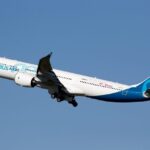
Airlines operating in the UK are replacing older aircraft with new-generation, fuel-efficient planes. These aircraft uses advanced engines, lightweight materials, and improved aerodynamics. The benefits to these new aircraft include a reduction in fuel consumption, reduced CO2 Emissions and reduced noise pollution.

Overall, going into 2026 and beyond, the U.K. government, airlines and airports are addressing their environmental impact through several key actions, including increasing the use of sustainable aviation fuel, investing in more efficient aircraft, modernising airspace and developing new technologies.
While these initiatives will reduce emissions and improve sustainability, they are highly focused toward meeting net zero by 2050, which many criticise as an impossible goal.
Let us know what you think about these initiatives in the comments below.