Major airspace closures across the Middle East triggered widespread flight cancellations and diversions on Feb. 28 after U.S. and Israeli strikes on Iran escalated regional tensions.
Dubai and Regional Skies Impacted
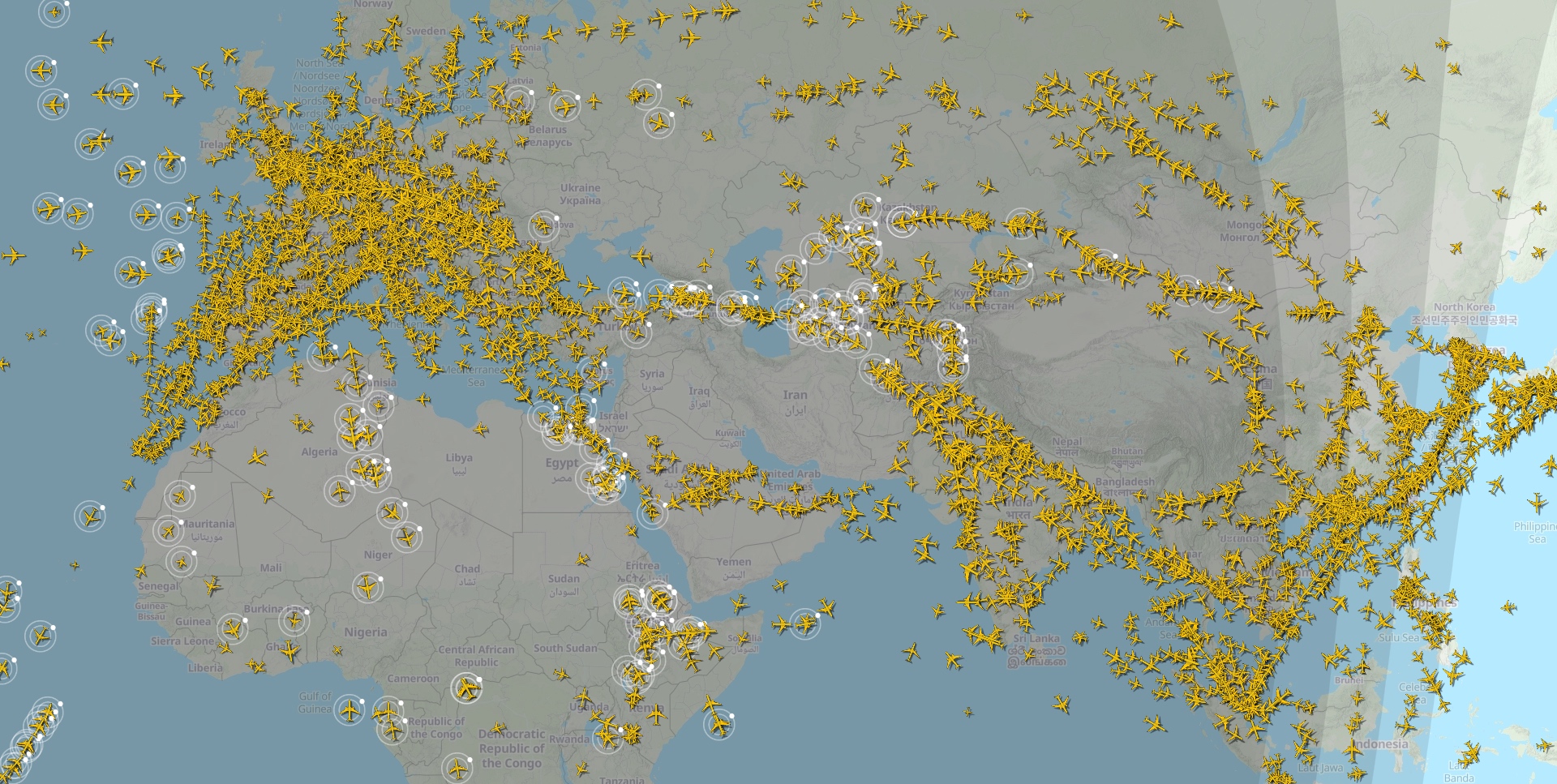
Several countries in the region temporarily shut or restricted their airspace as a safety precaution, disrupting one of the world’s busiest flight corridors. The sudden closures affected hubs including Dubai, Doha and Tel Aviv, forcing airlines to suspend services, reroute aircraft or delay departures.
Airspace over Iran was closed following the strikes, with neighbouring countries also introducing restrictions amid security concerns. Qatar, Bahrain, Kuwait, Jordan and Iraq were among those limiting civilian flights, and Israel also halted traffic through its skies. The closures significantly affected traffic flows through the Gulf, where airlines routinely operate long-haul routes that depend on Iranian and Iraqi air corridors.
In the United Arab Emirates, Dubai International Airport, one of the world’s busiest international hubs, saw cancellations and delays as airlines adjusted flight paths or paused operations following the strikes.
Airlines Suspend and Reroute Services
A number of major airlines have responded to the closures by cancelling or adjusting flights:
- Emirates and flydubai suspended services to and from the UAE while local airspace remained restricted.
- Etihad Airways also reported delays and cancellations on inbound and outbound services.
- British Airways has cancelled flights to Tel Aviv and Bahrain until March 3.
- European carriers, including Lufthansa, Wizz Air, Ita Airways and others, cancelled flights on routes to Tel Aviv, Beirut and Tehran through at least March 7.
- Indian carriers, including Air India and IndiGo, advised customers that services to affected destinations were halted or subject to change.
- Finnair suspended its flights to Doha and Dubai until March 6.
Travel advisories from European governments and other authorities have been updated to reflect the changing situation, and passengers are being urged to check with carriers for updates.
Travel Radar will continue to monitor developments as airlines adjust operations.