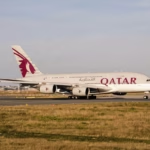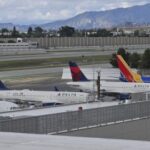
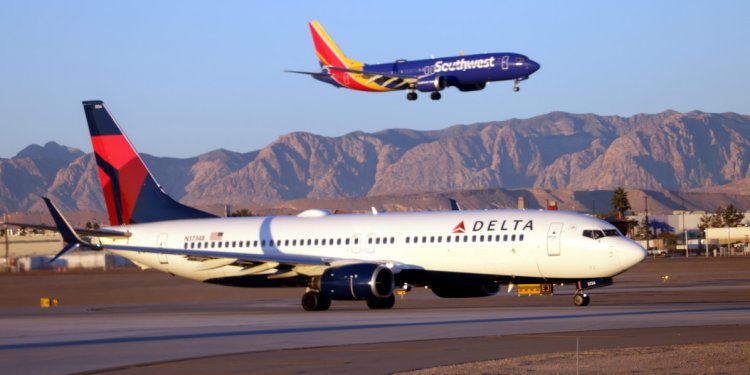
Several major U.S. airlines are facing two proposed class-action lawsuits over alleged violations of federal antitrust laws. They are accused of sharing nonpublic fare information to artificially inflate airfares. Among the defendants are “Big Four” carriers American Airlines, Delta Air Lines, Southwest Airlines and United Airlines.
2026 airline antitrust lawsuits
The first lawsuit, Brown et al. v. Airline Tariff Publishing Co. et al, was filed Nov. 2 in the U.S. District Court for the Eastern District of Virginia.
The defendants include American Airlines Inc., Delta Air Lines Inc., Southwest Airlines Co., Alaska Airlines Inc., and JetBlue Airways Corp., as well as the Airline Tariff Publishing Company (ATPCO) and its subsidiary, 3Victors, Inc. They are accused of conspiring to increase and stabilize domestic airfares, violating the Sherman Antitrust Act, which prohibits anticompetitive business practices.
A separate but similar action, Ward et al v. Airline Tariff Publishing Co. et al, was filed Nov. 4 in the U.S. District Court for the Western District of Washington. This suit named Alaska Air Group, Inc.; American Airlines Group Inc.; Delta Air Lines, Inc., Hawaiian Holdings, Inc.; JetBlue Airways Corporation; Southwest Airlines Co.; and United Airlines, Inc. as defendants, along with ATPCO and 3Victors, Inc.
ATPCO is a privately held data clearinghouse jointly owned by American Airlines, Delta Air Lines, United Airlines, Air Canada, Air France, All Nippon Airways, British Airways, KLM, LATAM and Lufthansa. ATPCO acquired travel data analytics company 3Victors in December 2023.
The plaintiffs in the Washington case also allege that airlines’ use of ATPCO effectively suppresses competition, driving up the cost of air travel. The suit states that ATPCO used tools from 3Victors – a central data repository called Iris and an analytics dashboard called PriceEye – to establish a repository of confidential airline pricing information on a “give-to-get” basis, with participating carriers required to contribute their own data to access information from other airlines.
“Through ATPCO, the defendants have engineered a new, highly sophisticated information exchange to monitor one another’s pricing and artificially inflate the cost of air travel for millions of Americans.”

The 1994 DOJ case
The allegations seem to echo a previous case; the Nov. 4 suit describes it as a “modern replication of the conduct the Department of Justice halted thirty years ago”.
On Dec. 21, 1992, the Department of Justice (DOJ) filed a civil complaint against ATPCO (then known as ATP) and eight major U.S. airlines for alleged price fixing using ATPCO’s database. The DOJ Antitrust Division identified over 50 separate price-fixing agreements covering hundreds of routes.
The airlines ultimately agreed to settle the allegations through consent decrees, avoiding a trial. None admitted wrongdoing. United and USAir agreed to the decrees immediately; Alaska Airlines, American Airlines, Continental Airlines, Delta Air Lines, Northwest Airlines and Trans World Airlines all initially contested the claims until settling in 1994.
In March 1994, Assistant Attorney General Anne K. Bingaman, head of the Antitrust Division, said:
“The airlines used the ATP fare dissemination system to carry on conversations just as direct and detailed as those traditionally conducted by conspirators over the telephone or in hotel rooms. Although their method was novel, their conduct amounted to price fixing, plain and simple.”
The consent decrees put restrictions on how airlines could use and publish fare data, including prohibiting certain methods of communicating pricing intentions and requiring detailed records of fare filings. The consent decrees remained in effect for 10 years.
ATPCO has again denied allegations of wrongdoing. A company spokeswoman said: “We plan to defend ourselves vigorously against them.”
Do you think the latest lawsuits could lead to significant changes in how airlines share fare information?