
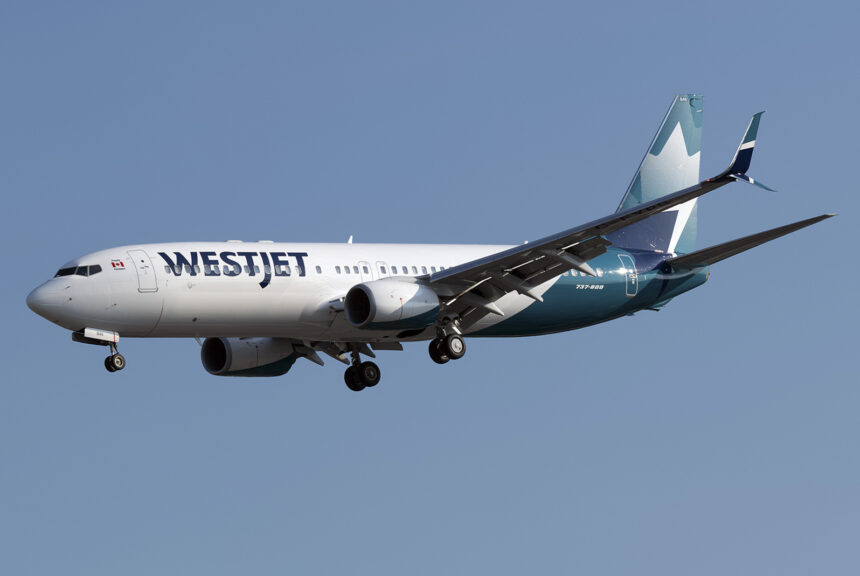
WestJet has called for a National Aviation Strategy to address the financial pressures airlines are facing during a period of ever-increasing fuel prices. Alexis von Hoensbroech, CEO of WestJet, has warned that Canada’s aviation industry is being pushed to its limits amid what he has described as a “growing market imbalance”. The airline has called for a more competitive airline industry and a national strategy that will help Canadian airlines to manage the pressures they are facing.

Fuel Costs Are Not The Whole Story, Says WestJet CEO
The cost of flying in Canada is at an extreme high, largely due to significant rises in fuel costs that are affecting airlines worldwide. At the Calgary Chamber of Commerce event on Oct/ 29, WestJet’s CEO Alexis von Hoensbroech warned that rising jet fuel prices had created an additional $1.6 billion in annual costs for the airline.
He warned that these costs would undoubtedly reshape airline pricing, and passengers should expect higher ticket prices into 2027 and 2028 if jet fuel costs remain high.
However, Mr von Hoensbroech also highlighted that the challenges Canadian airlines were facing did not entirely derive from fuel costs. He warned that cumulative changes and market interventions were also significantly straining the industry. He stated:
“That is why the fuel story is not only about fuel. Fuel is bringing to light what was already there: Canada’s aviation system has very few shock absorbers left.”
WestJet has also argued that continual market interventions from the Canadian government have hindered the aviation industry’s market growth. The government has launched a loan program to support airlines. Known as the Liquidity for Airline Sector Resilience (LASR), the program offers up to CA$150 million to eligible airlines to offset the elevated fuel costs.
WestJet has disputed the fairness and effectiveness of this program, however. Mr von Hoensbroech noted at the event on Oct. 29 that airline business models do not support repaying loans and government intervention could disrupt the market.
He argued that if some airlines were receiving funds from the Canadian government whilst others weren’t, then the market’s overall ability to function would be impacted and hinder efforts to restore the financial and competitive health of the market.
WestJet has launched an appeal to the government to launch a national aviation strategy that would benefit the industry’s market. Mr von Hoensbroech said this at the Chamber of Commerce event:
“We are asking Canada to be bold and strategic in developing a National Aviation Strategy that advances the essential nature of aviation and leads to a competitive, affordable and healthy airline industry.”

Canada vs United States: WestJet Calls For Improvements to Cost Competitiveness
During the event in Calgary, WestJet’s CEO made several comparisons between Canada and the United States costs of running an airline. Canada currently ranks 105th out of 119 countries in terms of its cost competitiveness within the aviation industry.
He highlighted several factors that hindered Canadian airlines, such as the fact that Canadian airlines pay all air-navigation costs, while the United States has a subsidised model.
In addition to this, Canadian airlines absorb passenger-rights costs, emission offsets, and increasingly elevated taxes, unlike the U.S.
These additional costs, as well as falling Canadian demand for travel to the United States, mean that WestJet is facing a difficult struggle to maintain its operations at full capacity. The number of Canadians buying return trips from the U.S. increased by almost 12% in 2025; however, it is still down 18.7% from September 2024.
WestJet has called for a new strategy to support Canadian airlines at a federal level so that they can improve affordability and connectivity for Canadian passengers.
At IATA Aviation Day on Oct. 13, Alexis von Hoensbroech stated that whilst the airline supported the government’s review of fees, airport structures and regulations, this had to translate into practical policies that would lower costs and protect airline operations.
What do you think of WestJet’s comments about the Canadian government’s response to challenges within the aviation industry? Let us know in the comments below.