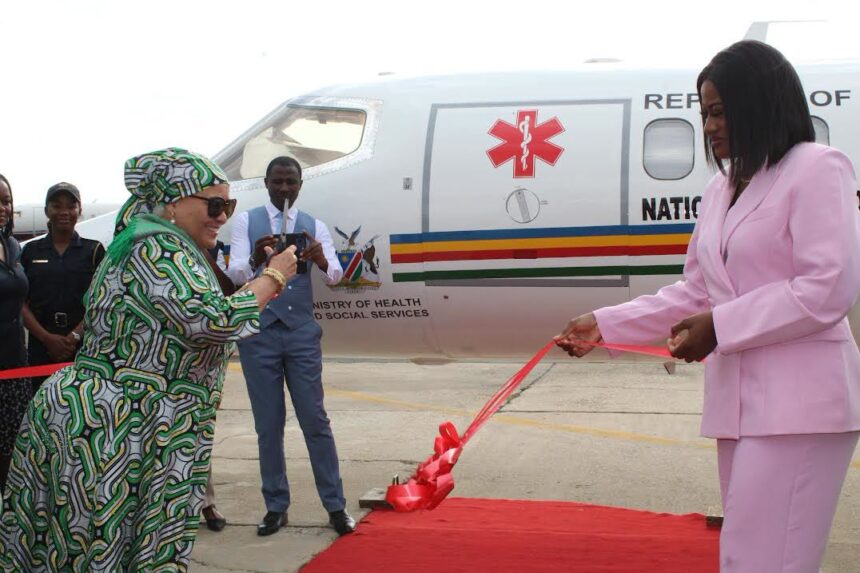
The Government of Namibia has launched a state-operated air ambulance service using a Learjet 31A. The service will include helicopter evacuations through strategic cooperation with the Namibian Police Force and the Namibia Defence Force.
Namibia’s air ambulance is expected to reduce some journeys that take hours by road to minutes or a few short hours by air, depending on the distance and emergency.
Operations of air ambulance services
The operations will be handled by Government Air Transport Services (GATS), which began a five-phase process where the Namibia Civil Aviation Authority (NCAA) will obtain an air ambulance operator certificate.
Health Minister Esperance Luvindao talked about how eligible cases include patients requiring urgent intervention, especially when ground transportation is critically inappropriate or that it would expose them to additional risks. Luvindao clarified that it will not evacuate every patient as those who need urgent specialist intervention will be unable to be referred to hospitals if ground transport is not clinically appropriate for their condition.
Luvindao believes that the country’s first government-owned air ambulance is intended to improve access to emergency medical care in remote communities. The launch follows concerns that were raised in September when patients were dying during transfer between healthcare facilities.
She said:
“Not every single patient is qualified. We are guided by strategic policy documents that allow us to ensure we spend government resources efficiently and effectively.”
Vice-president Lucia Witbooi warned that the initiative’s success in the long term varies depending on sustained funding and specialised medical equipment.
Witbooi said:
“No Namibian should lose their life simply because they live far from a hospital”.
“For many patients, a gruelling, hours-long journey by road will now be reduced to a matter of minutes or a few short hours by air, ensuring they reach the specialised care they need on time”.
Operational readiness and aircraft maintenance will also determine whether the air ambulance service will have long-term success.

The 31A aircraft
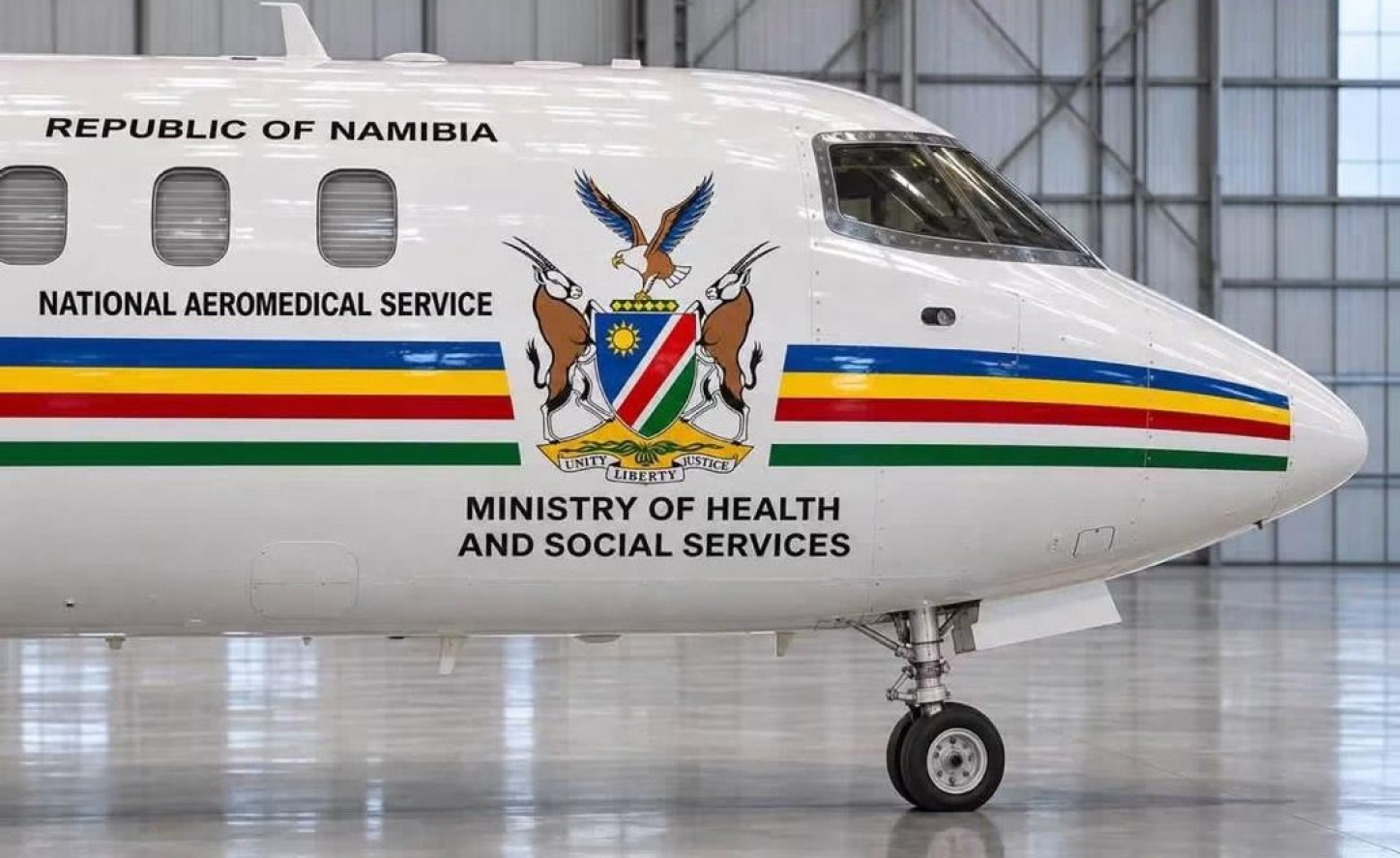
The 31A aircraft, built in 1995, was originally delivered to the Namibian government and was subsequently transferred to the Ministry of Health and Social Services. The air ambulance service will include the Learjet 31A as an air ambulance, which Witbooi described as an intensive care unit in the sky.
Helicopter evacuation will be provided in collaboration with the Namibian Police Force for localised emergencies. The package includes dedicated pilots from the Government Air Transport Services.
Toska Sam, the Executive Director of Civil Aviation at the NCAA, said the certification process began in Feb. 2026, covering documentation reviews and a demonstration flight of the Learjet 31A, registration V5-NAG. The demonstration flight took place on Oct. 3, with GATS securing the AAOC in early November.
A government-operated Learjet 31A air ambulance in a country with long distances adds a state-run aeromedical player alongside private operators. The ministry has also repurposed and activated an emergency call centre as the central point for coordination, communication, referral verification and dispatch.
Do you think this idea for a state-operated aeromedical service will have long-term success? Share your opinions in the comments!