By using this site, you agree to the Privacy Policy and Terms of Use.
Accept
Travel Radar - Aviation NewsTravel Radar - Aviation News
  • Breaking News
  • Aviation
    • Aircraft
    • Airlines
    • Airshow & Events
    • Careers
    • Manufacturing
  • Travel
    • Airports
    • Points & Loyalty
    • Technology
    • Trip Reviews
  • Newsletters
  • Aircraft for Sale
Reading: Managing Air Quality and PM2.5 in Airports
Share
Sign In
Notification Show More
Font ResizerAa
Font ResizerAa
Travel Radar - Aviation NewsTravel Radar - Aviation News
  • Breaking News
  • Aviation
  • Travel
  • Newsletters
  • Aircraft for Sale
  • Breaking News
  • Aviation
    • Aircraft
    • Airlines
    • Airshow & Events
    • Careers
    • Manufacturing
  • Travel
    • Airports
    • Points & Loyalty
    • Technology
    • Trip Reviews
  • Newsletters
  • Aircraft for Sale
Signin Sign In
Follow US
Copyright © Travel Radar Media Ltd. 2025 | All Rights Reserved
Travel Radar - Aviation News > News > Aviation > Aircraft > Managing Air Quality and PM2.5 in Airports
AircraftAirlinesAirportsAviation

Managing Air Quality and PM2.5 in Airports

Dheer-Jayesh Sanghavi
Last updated: 11 December 2024 20:09
By Dheer-Jayesh Sanghavi
3 Min Read
Share
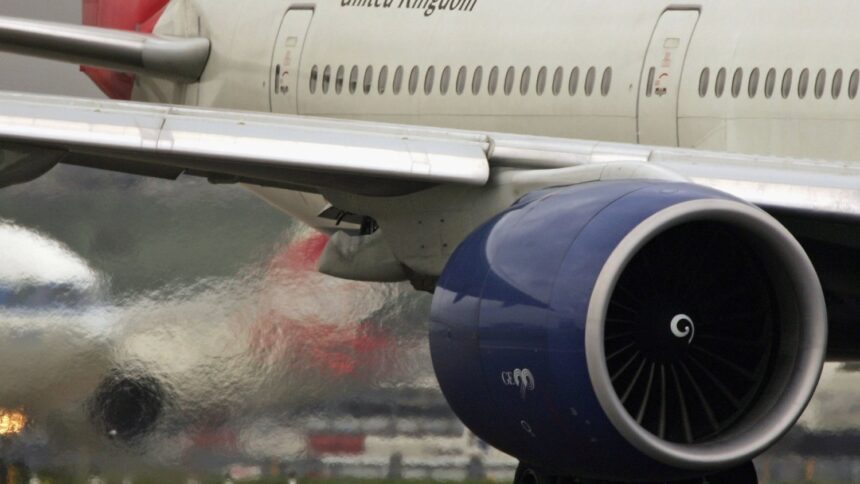
A flight between London and New York
A flight between London and New York © Graeme Paton
SHARE

Diminishing air quality is a pressing concern globally within the aviation industry because of its impact on aircraft performance, passenger health, and operational safety. It is important to monitor and control the emissions released by aircraft, as it can potentially affect aircraft systems and the health of passengers and crew. It is therefore crucial to understand the source, impact, and management strategies required to mitigate particulate matter 2.5 (PM2.5)- emission particles that are less than 2.5 microns in diameter- and their impact on the environment and human health.
WHO releases country estimates on air pollution exposure and health impact
WHO releases country estimates on air pollution exposure and health impact © World Health Organization

Sources and Health Implications

PM2.5 primarily originates from combustion processes associated with aircraft engines and ground support equipment. Aircraft engines emit carbonaceous particles, metals, and soot. On-ground service activities, such as fuel handling and the operation of auxiliary power units (APUs)—small engines located in the tail of an aircraft used to power systems like air conditioning and electrical equipment when the main engines are off—also contribute to emissions. APUs burn jet fuel inefficiently, adding to the pollution.

In addition to these sources, research conducted by the Environmental Protection Agency (EPA) highlights that aircraft engines, particularly during takeoff and landing, are significant sources of PM2.5 emissions. High temperatures within the engines promote the formation of particulate matter as a byproduct of fuel combustion. These emissions contribute to air quality concerns in and around airports, where aircraft operations are most concentrated.

The health risks associated with PM2.5 exposure extend to the aircraft cabin environment. Short-term exposure can trigger respiratory conditions, exacerbate heart diseases, and cause fatigue. A study published in ACP found that the confined nature of aircraft cabins, with limited air exchange and close proximity of passengers, intensifies these risks. With crew members experiencing increased exposure, leading to elevated levels of cardiovascular and respiratory issues,  the need for stringent air quality management in aviation is essential.

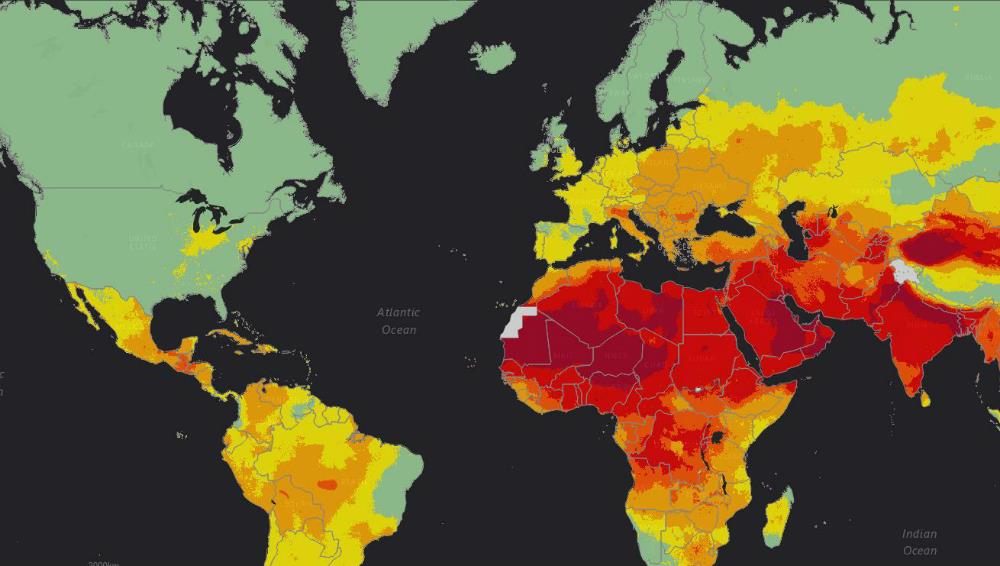
This dataset provides forecasted PM2.5 concentrations at Earth's surface.
This dataset provides forecasted PM2.5 concentrations at Earth’s surface © resourcewatch

Managing PM2.5 Emissions: Improving Air Quality

The effective management of air quality requires a hybrid strategy, involving upgrading aircraft engines to cleaner-burning models and incorporating emission reduction technologies like advanced catalytic converters in APUs, with the use of electric ground support equipment. In addition, thorough involvement across the aviation industry is required with collaboration among regulators, airlines, manufacturers and airports.

What strategies do you think would be most impactful for managing PM2.5 emissions in airports? Share your thoughts in the comments below.


You Might Also Like

Brussels Airlines ‘Atomium’: The Newest Belgian Icon Takes Flight
London City Airport Holds Fifth Women in Aviation Challenge
Air Canada Celebrates Another Year of Autism Aviation Days
JetBlue Passenger Opens Emergency Exit, Delaying Flight at Boston Logan Airport
Korean Air Unveils Newly Renovated Prestige Lounge At Incheon
Share This Article
Facebook Twitter Email Copy Link
What’s your thoughts?
Love0
Sad0
Happy0
Angry0
ByDheer-Jayesh Sanghavi
Hi! I'm Dheer Sanghavi from India, currently studying entrepreneurship & marketing at UOW, Australia. With experience as a content writer, I’m passionate about creativity, learning, and meeting new people. I love sketching, writing, and reviewing movies (big horror fan!)—plus, I’m always up for coffee and good conversations. 😊 Let’s connect! LinkedIn: Dheer J Sanghavi IG: @the_shades_of_a_pencil / @writerinablock
Previous Article Jazeera Airways, long-term stability, purchasing six Airbus A320-200s, the airline’s financial strategy, Kuwait Jazeera Airways strenghthens fleet with strategic aircraft acquisition
Next Article AIX Connect, a strategic push toward growth and profitability, India, the carrier's merger with AIX Connect, Air India Express Air India Express: Strategic fleet expansion amid market growth
Leave a Comment

Leave a Reply Cancel reply

Your email address will not be published. Required fields are marked *


Stay Connected

FacebookLike
TwitterFollow
InstagramFollow
YoutubeSubscribe

Trending News

An Antonov An-124-100 heavy cargo aircraft sits on the runway preparing for takeoff at Manchester Airport, with its large fuselage
Antonov An-124 Helps Airbus and Boeing Expedite Deliveries
Aircraft Manufacturing
Aer Lingus Airline new mobile app interface.
Aer Lingus to cut up to 500 jobs and Dublin routes
Airline Economics Aviation Travel
A Ryanair plane is pictured in flight. The aircrfat has the customary company branding across the side of the fuselage and tail in navy blue and yellow-gold. The jet's underbelly is also navy blue. The nose is facing left and the tail is on the right. In the background of the image is a clear blue sky.
Ryanair Maintains Low Fares As Profit Stagnates
Airlines Aviation Careers Did You Know Travel
An red, white, and blue American Airlines jet flying in front of a cloudy sky.
American Airlines CEO Sets Out Priorities
Airline Economics Airlines Aviation
Silver Cloud Air building in the background with three aircraft in view; one in the centre and one either side of it. Blue sky in the background.
Germany’s Silver Cloud Air Retires its Last Cessna Citation Jet3
Aircraft Airlines Aviation

Travel Radar is the leading digital hub for all things aviation and air-travel. Discover our latest aviation news, aviation data, insight and analysis.


Discover

  • Latest News
  • Subscribe
  • Weekly Digest
  • Contact Us
  • Privacy Policy
  • About Us
  • Advertising
  • Media Coverage
  • Press & Events
  • Join Our Team
  • Our Brands

Signup to our Newsletter!

And get the latest aviation news via our weekly news digest!

© Travel Radar Media Ltd. 2015-2026 | ISSN #2635-0696 | Trademark #UK00003579704
adbanner
Welcome to the TR Community!

Sign in to your account

Not a member? Sign Up